Filming for the historical film project Tây Sơn Thất Hổ Tướng (The Seven Valiant Generals of the Tay Son Dynasty) is scheduled to officially begin on May 20 at a newly built studio inside the Rosa Alba Hầm Hô tourist area in Bình Phú Commune, Gia Lai Province.
Ahead of production, reporters from Gia Lai Newspaper and Radio & Television spoke with Phan Phúc, Deputy Director of Temc Cinema Co., Ltd. in Ho Chi Minh City and founder of the project, about the ambitions behind the film and its broader cultural vision.
* After a long period of preparation, what are your expectations as filming is about to begin?
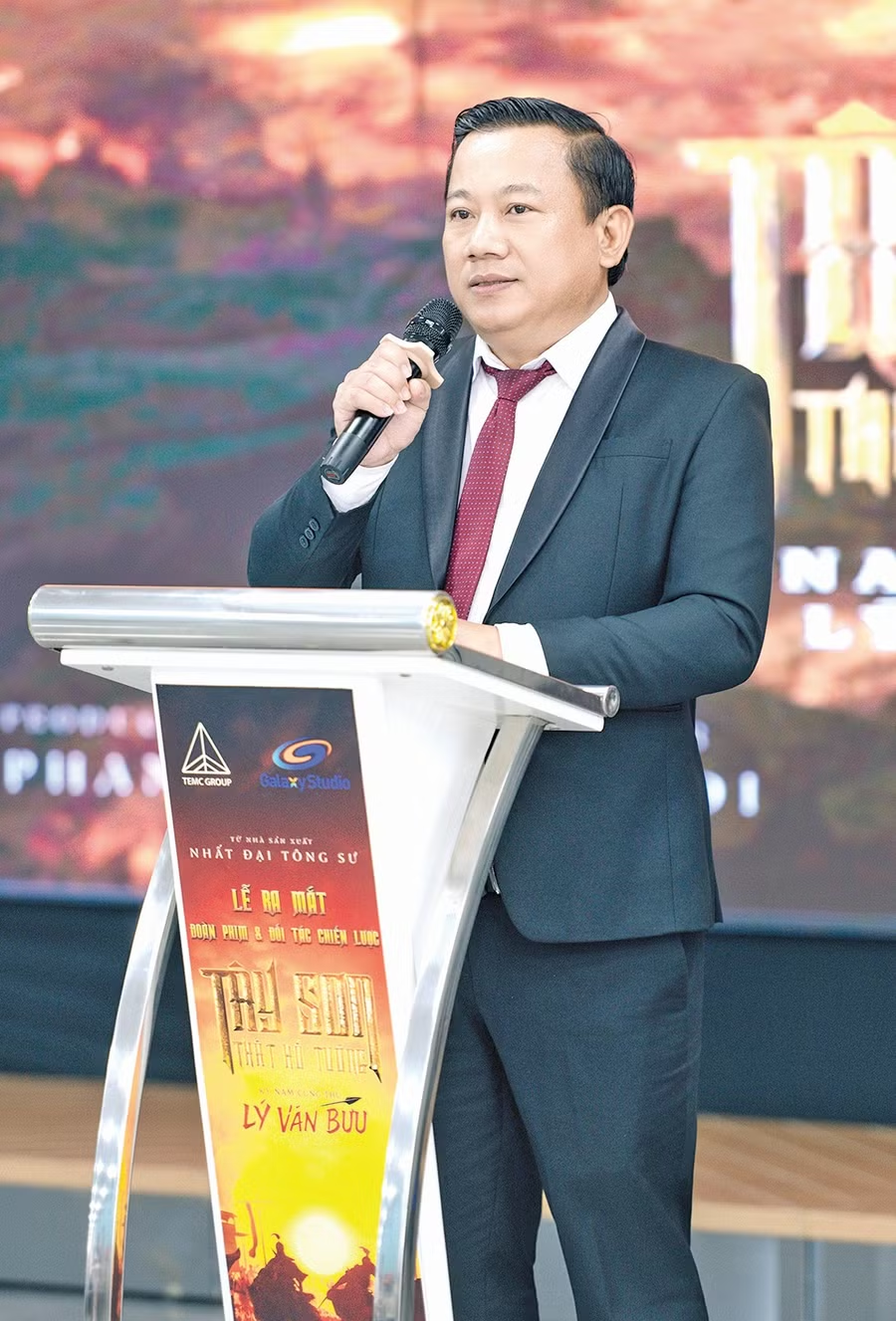
Mr. Phan Phúc, founder of the Tây Sơn thất hổ tướng project, speaks at the launch ceremony for the production team and cast in mid-April 2026. Photo: Provided by the Organizers
- The project has received considerable attention and support from local authorities, investors, partners, and history enthusiasts across Vietnam, particularly those interested in the Tây Sơn era.
Our team is fully aware of the responsibility involved in creating a serious and meaningful production. We hope the film can vividly and authentically recreate a heroic chapter of Vietnamese history on the very land associated with the Tây Sơn peasant movement.
This is not merely an entertainment project. It is also an effort to promote the nation’s historical and cultural values to contemporary audiences.
We expect the film to contribute to local cultural and tourism activities in the coming years, especially during National Tourism Year - Gia Lai 2026.
In the longer term, we hope the project can help open a new direction for the film industry by connecting cinema with cultural tourism in the homeland of the Tây Sơn tam kiệt. When film, history, and tourism are closely linked, it creates a stronger opportunity to promote the region and its people.
* Why did your team decide to focus on the “Seven Tiger Generals” instead of Emperor Quang Trung, as many previous productions have done?
- Emperor Quang Trung - Nguyễn Huệ was a brilliant military strategist whose victories became part of Vietnam’s history. However, behind those achievements stood many talented generals who helped build the strength of the Tây Sơn movement.
We chose to tell the story of the “Seven Tiger Generals” because it offers a broader and richer narrative space. Each general carries a distinct personality, destiny, and martial talent.
For example, the famous general Lý Văn Bưu was known not only for training horses but also for his exceptional archery skills. That diversity allows the film to explore a wider range of characters and emotions.
More importantly, through these stories, we want to highlight the spirit of unity, loyalty, and solidarity among the heroes who contributed to the nation-building process during that period. Those values remain among the most significant legacies of the Tây Sơn movement.
* What impact do you expect from building the film set at the Rosa Alba Hầm Hô tourist area?
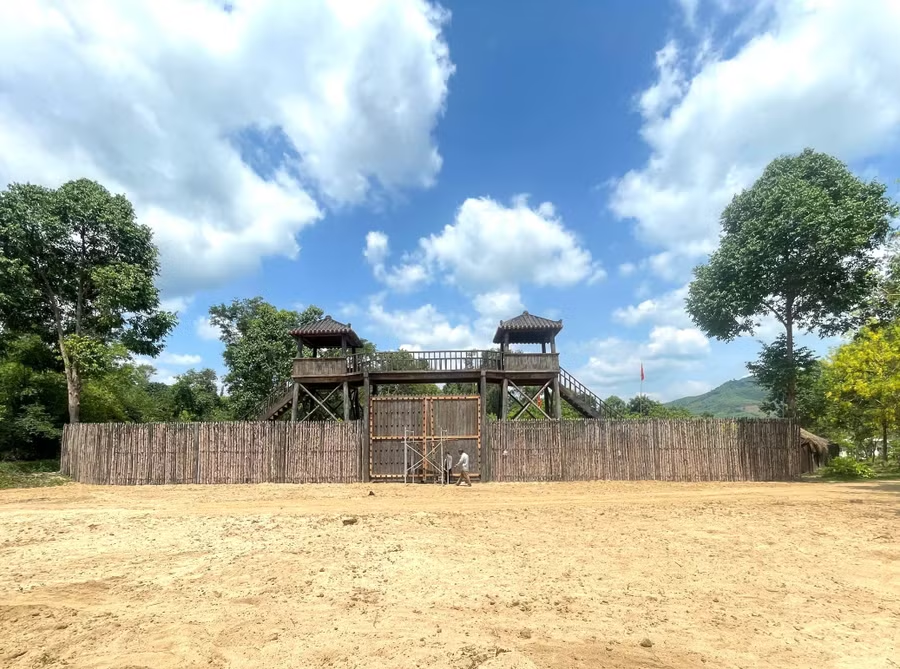
The entrance to the insurgent army’s camp at the film set built in the Hầm Hô Rosa Alba tourist area (Bình Phú commune). Photo: Provided by the Organizers
- The decision to choose Rosa Alba Hầm Hô as the main filming location was carefully considered.
The area offers landscapes that match the film’s requirements and is closely connected to historical sites and stories linked to the Tây Sơn movement.
The set is being developed not only for the production of Tây Sơn Thất Hổ Tướng but also with the goal of becoming a long-term cultural tourism destination.
A number of historical features are being reconstructed, including insurgent camps, training grounds, execution grounds, prisons, secret chambers, and horse stables. All have been carefully researched to recreate the atmosphere of the period.
We hope that after the film is released, visitors will be able to tour and experience the set firsthand. Film tourism has already proven successful in many countries and is also gaining momentum in several parts of Vietnam.
With proper investment, we believe the Tây Sơn Thất Hổ Tướng set could become a new tourism product for Gia Lai and help stimulate related services.
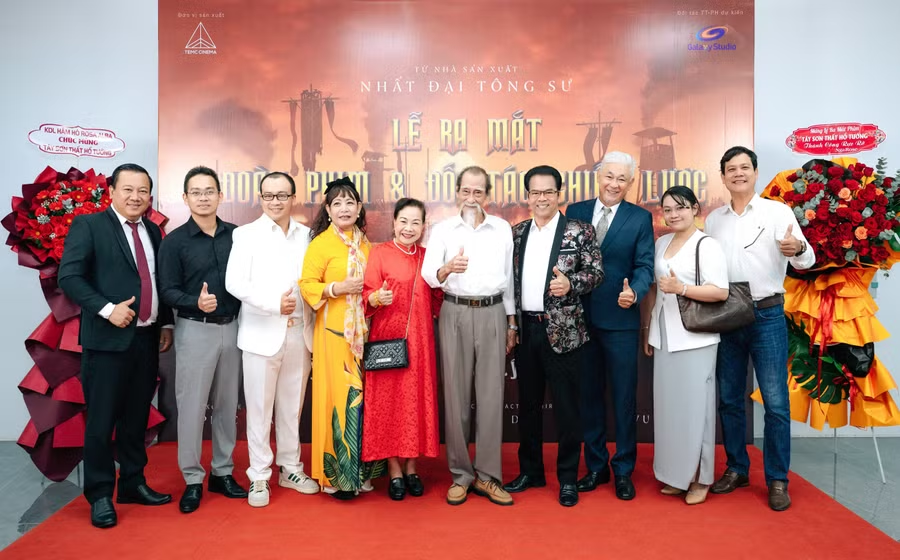
The three project founders (from left): Phan Phúc, Võ Đức, Đỗ Khôi, together with artists and guests at the launch event for the Tây Sơn thất hổ tướng film crew. Photo: Provided by the Organizers
* How will the film help bring the story of the Tây Sơn era to modern audiences?
- We believe history must be told through the language of modern cinema while still preserving its original spirit.
Our team has spent significant time researching historical documents and consulting experts to refine the screenplay. Costumes, armor, weapons, and settings have all been carefully designed to ensure both authenticity and visual appeal.
The film features well-known actors including Doãn Quốc Đam, Lê Hạ Anh, and Hiếu Nguyễn, alongside collaborations with units specializing in traditional costumes and martial arts such as Vạn Thiên Y, Chiêu Minh Các, and Đại Việt Võ Bị.
We hope audiences will not only enjoy the film’s battle scenes and action sequences, but also gain a deeper sense of the martial spirit, courage, and cultural identity of people during the Tây Sơn era.
Two contestants from Gia Lai, Lê Phương Nghi and Trịnh Ngọc Huyền, have secured places in the Miss Vietnam 2026 finals after being named among the top 25 at the national semi-final in Hai Phong on October 10.
Residents of Bahnar and Jrai villages are using smartphones, social media and photography to bring their culture to wider audiences and attract visitors to community tourism destinations.
Gia Lai province will hold cultural performances, exhibitions and hands-on heritage activities throughout November to mark Vietnam Culture Day 2026, with November 24 as the focal point.
A traditional Jrai ceremony celebrating a new communal house will be recreated on the afternoon of October 31 at the foot of Chư Đang Ya volcano, as a highlight of Gia Lai’s International Gong Festival.
Students at Le Loi High School in Gia Lai province have recreated the cultural spaces of Plei Ơp village using 360-degree virtual reality and artificial intelligence, developing a digital tour intended to make its heritage accessible by smartphone.
Women artisans in Bahnar and Jrai communities are preserving traditional music by making bamboo instruments and teaching young people to play gongs, taking on roles long associated with men.
Bahnar Kon K’Đĕh women in Vietnam’s Gia Lai province are finding new markets for their traditional brocade through tourism and adapting their products to customer demand while preserving weaving skills passed down through generations.
Pleiku Museum has agreed a partnership involving 30 schools and seven localities to give students regular opportunities to explore history and cultural heritage during the 2026-2027 academic year.
In the early days of autumn, as the intense Central Vietnamese heat begins to ease and rain becomes more frequent, An Nhơn takes on a gentler character. The Côn River winds through villages, carrying silt and memories of a land that was once an imperial capital.
Gia Lai Province will hold its first province-wide singing contest in October, seeking to discover promising vocal talent and promote cultural and artistic activities across the province.
The first “Hà Thanh Colors - Radiance on Both Banks” Festival has created a new community space along the Hà Thanh River, bringing residents of Quy Nhơn and Quy Nhơn Đông wards together through cultural, sports and recreational activities.
Gia Lai is embracing the Mid-Autumn Festival with colorful lantern displays, lion dance performances and hands-on craft workshops, giving children and families new ways to enjoy the traditional celebration.
A cultural exhibition in Gia Lai is bringing together heritage, traditional crafts, local specialties and artistic performances from across Vietnam, creating a platform to promote destinations and strengthen links between culture and tourism.
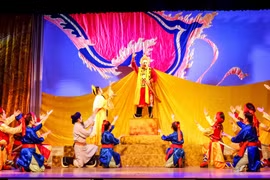
Traditional theater in Gia Lai is turning to history not simply to recount heroic figures and events, but to connect a younger generation with the past through the distinctive language of hát bội and bài chòi opera.
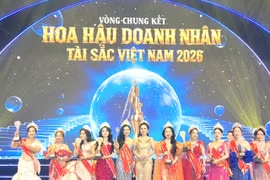
Lê Kiều Oanh was crowned Miss Vietnam Entrepreneur Talent and Beauty 2026 on September 10, as the seventh edition of the pageant concluded at the Gia Lai Provincial Convention Center.
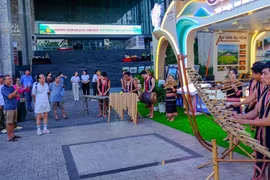
Vinh An Village in Bình Phú Commune, Gia Lai Province, will host the “Weekend Gong Night - Enjoy and experience” program on September 11, offering locals and visitors an opportunity to experience the cultural heritage of the Bahnar people.
An exhibition in Quy Nhon has brought together cultural traditions, heritage and tourism products from 16 provinces and cities, offering visitors a glimpse into Vietnam’s diverse cultural identity.
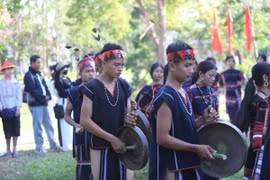
Traditional culture is being brought closer to children in Gia Lai through hands-on activities that allow them to experience gong music, xoang dances and hát bội art rather than simply learn about them through lessons.
Bitterness is the defining taste of traditional Jrai cuisine in Phu Tuc, where forest leaves, bitter vegetables and distinctive cooking methods have shaped dishes closely tied to the community’s way of life.
Gia Lai is seeking to shift its approach to culture from preservation alone towards sustainable promotion of heritage values, with provincial leaders calling for cultural resources to be transformed into distinctive products that support socio-economic development.
Gia Lai has significant potential to turn its centuries-old connections between the Central Highlands and the sea into a new source of economic growth, with maritime heritage, tourism and cultural industries forming part of an integrated development strategy.
Gia Lai artists have emerged as leading contributors to the 30th Regional Fine Arts Exhibition for Region V - South Central and Central Highlands, accounting for three of the nine award-winning artists and the largest number of works submitted by any participating locality.