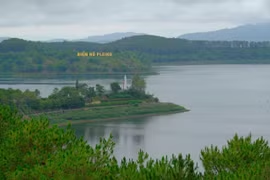
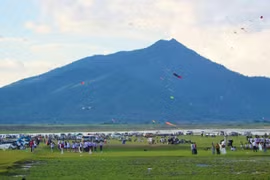
Wild sunflowers remain the most iconic bloom of the Gia Lai plateau, celebrated annually at the Chư Đang Ya volcano festival in Biển Hồ commune. The event transforms the volcanic slopes into a sea of yellow, attracting visitors eager to capture the dazzling scenery.
Beyond sunflowers, Gia Lai’s hillsides showcase a rotating cycle of blossoms. In spring, coffee flowers blanket the plantations in white, while autumn ushers in golden cassia trees and clusters of red canna lilies appearing in the morning mist.

For locals, each season carries cultural meaning, farmers traditionally cultivate canna lilies for their tubers, used in vermicelli production, while their blossoms now lure photographers and travelers.
Residents say the flowers have become a part of their identity. “Every autumn, canna lilies set a corner of the sky ablaze with red.
Not even rain or wind can keep me from going out to see them,” said Bùi Ngọc Ngà, 61, from Diên Hồng ward.
For Nguyễn Thị Hương Thủy, 65, from Đà Nẵng, returning to Gia Lai stirs memories of youth and family reunions along flower-lined roads.

A newer attraction lies along the Tà Má stream in Vĩnh Thịnh commune, where wild ixora blossoms turn the riverbanks into vivid shades of red and orange from February to May.
Tourism planners see potential in developing trekking, photography, and cultural activities around this natural spectacle.
Seasonal flower tourism is gaining traction nationwide, complementing famous landscapes in Sơn La, Tuyên Quang, and Lâm Đồng.
Industry observers say the model enriches travel offerings, enhances socio-economic development in rural regions, and provides locals with opportunities to create unique tourism products.