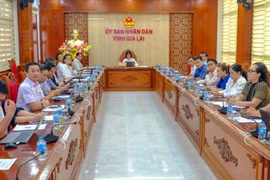
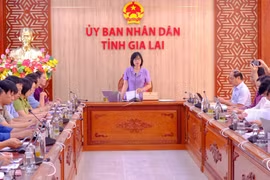
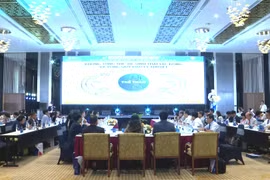
On the morning of December 26 in Pleiku Ward, the Gia Lai Department of Culture, Sports and Tourism, in coordination with the Department of Science and Technology and the Vietnam National Administration of Tourism, held a training session on the implementation of tourism statistics for 2025.
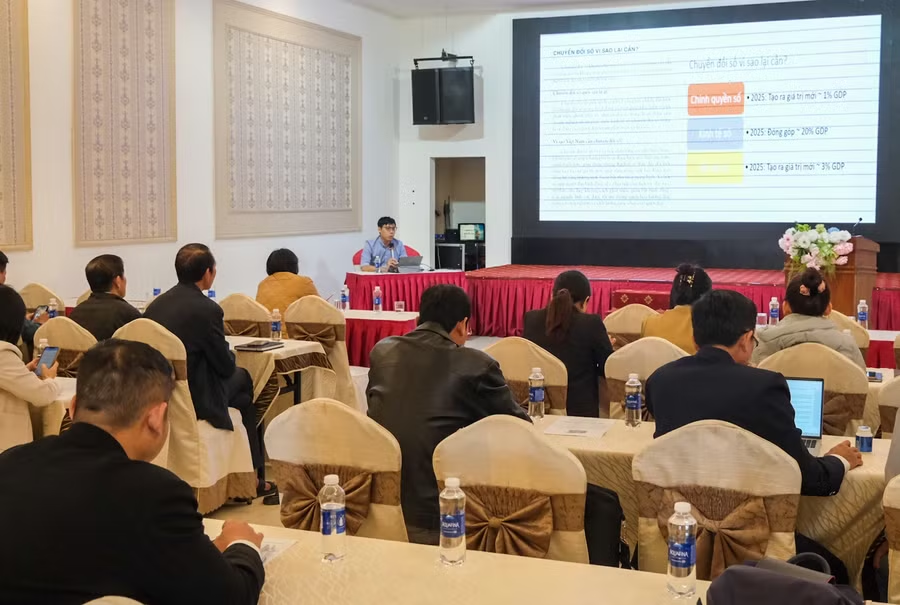
The event brought together officials and civil servants from culture and social affairs divisions at the commune and ward levels, along with representatives of tourism organisations and businesses operating in the province. The training was attended by Nguyễn Thị Thu Hương, Deputy Director of the Department of Culture, Sports and Tourism.
Participants were updated on new regulations governing tourism statistics reporting under Circular No. 18/2021/TT-BVHTTDL. The programme also provided practical guidance on digitising destination data, producing simple promotional videos and content, and publishing information on the provincial tourism portal and other digital platforms.
In addition, attendees were introduced to ways of accessing and using digital platforms and artificial intelligence applications to support tourism-related activities.
According to organisers, the training aims to improve the capacity of state management officials and tourism businesses in tourism statistics reporting, while raising awareness and accelerating the application of information technology and comprehensive digital transformation across Gia Lai’s tourism sector.