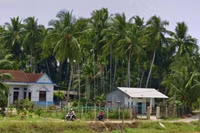
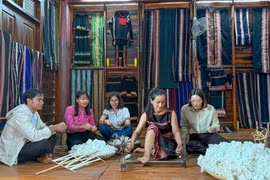
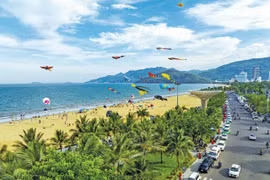
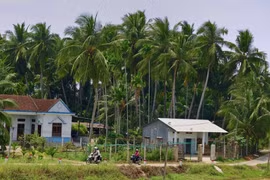
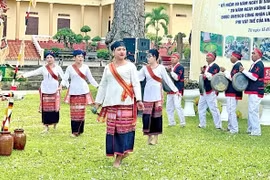
In the highland commune of An Hoa, ventures range from a garden restaurant built with reclaimed materials to a livestock farm offering accommodation and agricultural experiences.
Local authorities plan to assess tourism potential and organise pilot tours, although remote roads, scattered attractions and uneven services remain obstacles.
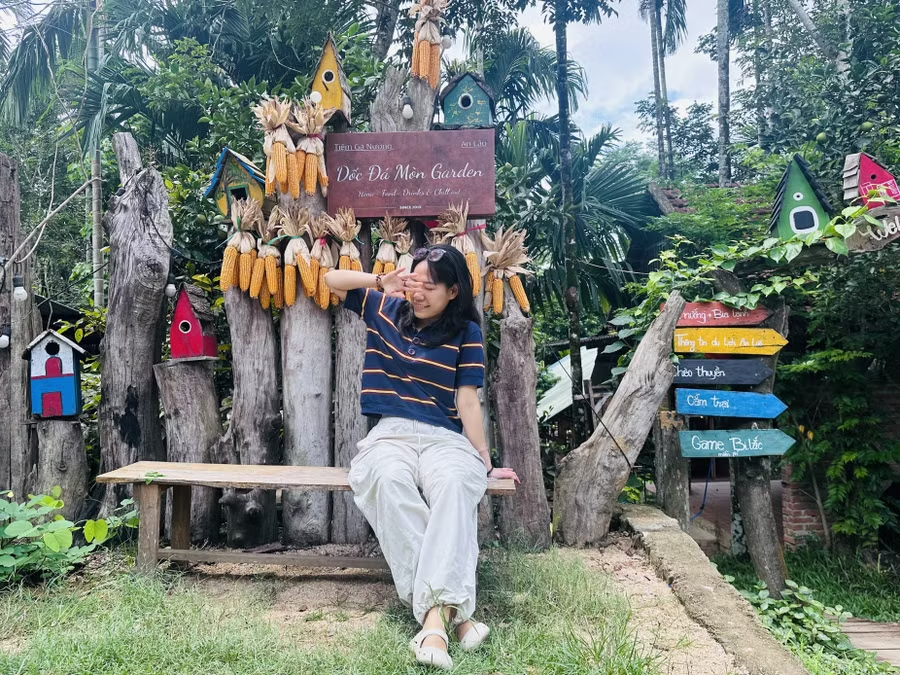
Tran Van Be, 35, returned to An Quang hamlet after graduating from Quy Nhon University in 2021 and established Doc Da Mon Garden on his family’s 1,000-square-metre plot.
Before starting the business, he visited Phong Nha in Quang Tri province to learn about sustainable tourism.
His decision to develop a tourism business in a remote mountainous area initially concerned his family. He nevertheless proceeded, creating a rustic venue along the route to An Toan commune.
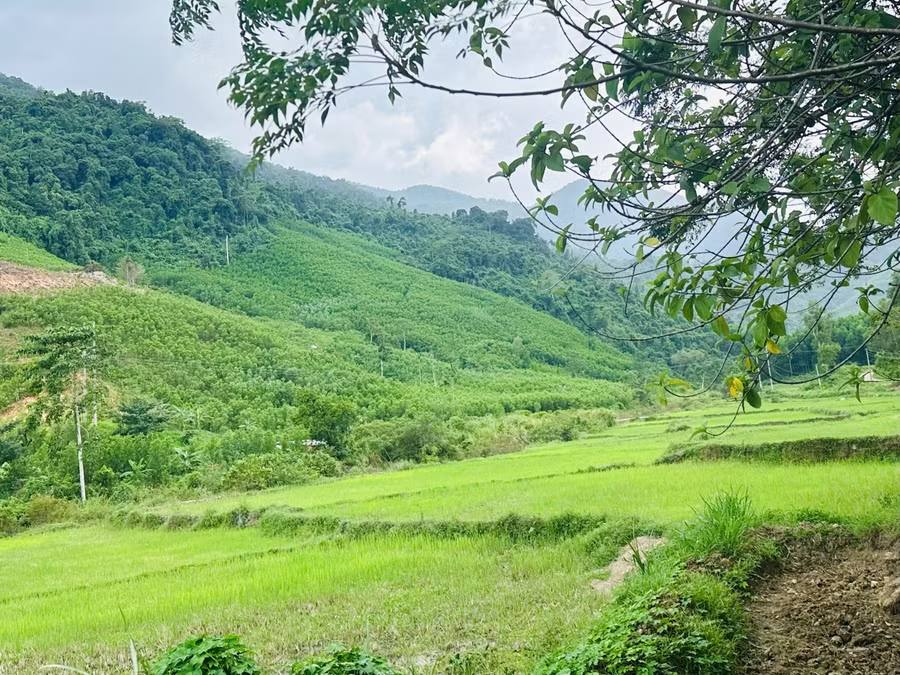
Be bought old wooden houses from ethnic minority communities and reused metal roofing and tiles to build an open space surrounded by gardens and hills, with the Song Xang stream behind it.
He wanted the objects and materials to preserve the area’s character and convey its history.
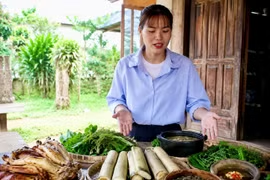
Food is central to the business. Be and his team spent more than a year refining a recipe for cheo, a seasoned salt preparation associated with the Van Kieu people, to accompany their signature charcoal-grilled chicken.
They use local leaves and doi seeds for the dipping sauce and buy chickens raised freely on nearby hillsides.
The birds are prepared, marinated and grilled without using refrigerated meat. The menu has since expanded to include grilled pork belly and wild crab hotpot.
Be said using local ingredients helped give the dishes a distinctive connection to the An Lao highlands.
Elsewhere in An Hoa, Tran Van Quoc, 37, and his friend Vo Thanh Dat developed Ba Chua Farm from their family’s 8,000-square-metre pomelo and banana orchard.
Quoc returned from Ho Chi Minh City to raise black pigs with Dat, building a business around a specialty breed of the former An Lao region. Their Ba Chua Black Pig brand has received a three-star OCOP rating.
The pigs roam freely and are raised for at least six months. A restaurant serves traditionally prepared dishes made from the farm’s produce.
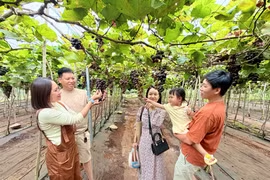
The setting has also become part of the attraction. Visitors can explore the pomelo orchard, bathe in the stream, view the Bahnar community’s terraced rice fields and learn about pig farming. Two wooden stilt houses provide overnight accommodation.
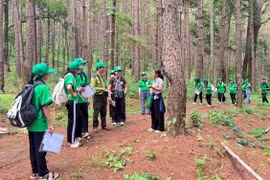
Forest conservation is another element of Be’s work. Near Ma Rung Stream, about seven kilometres from central An Hoa, he has bought land previously used for acacia plantations after harvesting and replanted it with native trees to help protect water sources.
Visitors reach the stream through a 300-metre trail beneath the forest canopy.
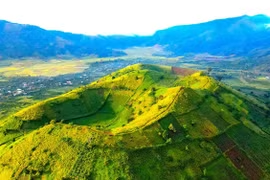
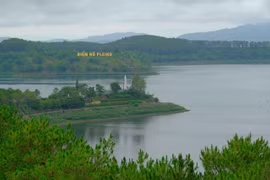
The more than 30-kilometre route between An Hoa and An Toan connects farmland, mountain scenery and several tourism businesses. Waterfalls, reservoirs and cloud-viewing peaks offer scope for a connected itinerary, but infrastructure and services vary between destinations.
Nguyen Van Tuan, standing vice-chairman of the An Hoa Commune People’s Committee, said the commune’s plans for 2026 include surveying tourism resources, identifying areas for development and establishing community groups.
Authorities also plan to review participating households, improve infrastructure and service capacity, and standardise how OCOP products and their origins are presented to visitors.
Pilot tours will combine agricultural and rural experiences with ecotourism and community tourism, while protecting the environment and preserving cultural identity.
Tuan said officials were surveying local sites to help operators complete land procedures for tourism use and prepare investment and support plans under the commune’s tourism development roadmap.