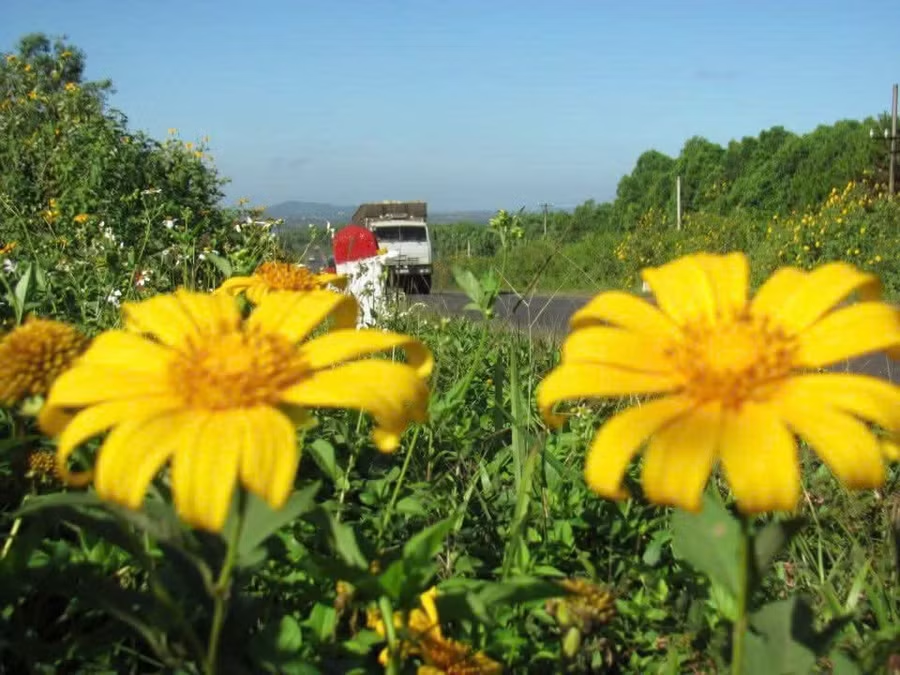
The flowers have become one of Gia Lai’s most recognizable symbols, covering roadsides, hillsides and mountain slopes in brilliant yellow at the end of the rainy season and the beginning of the Central Highlands’ dry season.
For decades, however, few people paid much attention to them. Wild sunflowers were largely regarded as roadside weeds, growing abundantly along streams, field edges, hillsides and cliffs.
That changed over time as the flowers became the focus of promotional campaigns and the annual Wild Sunflower Festival.
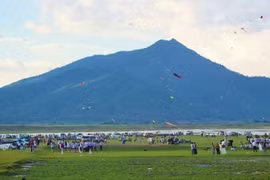
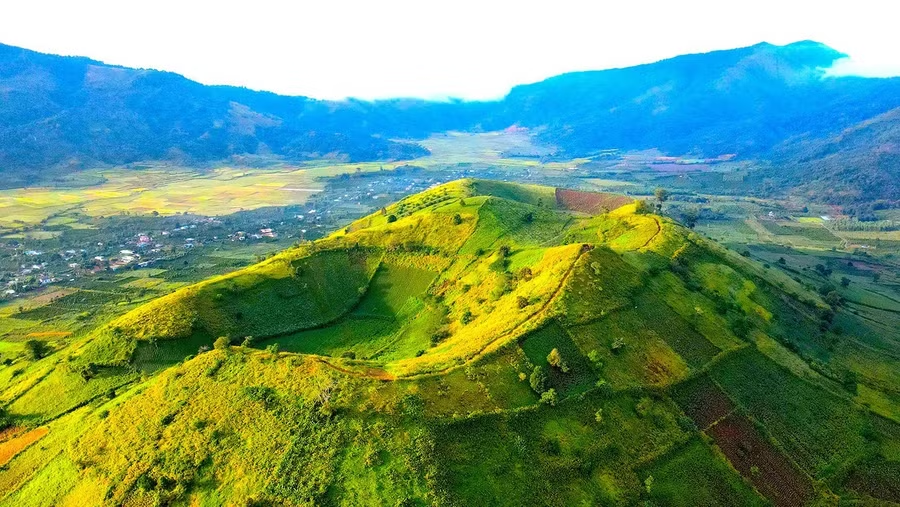
Their image is now closely associated with the region’s pine hills, from Hàm Rồng Mountain and the Chư Đang Ya volcano to the pine hills of Đăk Đoa and the villages of Ia Ly and Chư Păh.
The flowers have since become part of Gia Lai’s cultural identity and tourism image.
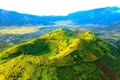
Among the region’s many wild sunflower landscapes, the most distinctive is around Chư Đang Ya, a dormant volcano millions of years old in Ia Gri village, about 30 km northeast of Pleiku.
A decade ago, during field assignments as a television journalist, wild sunflowers frequently appeared in reports and documentaries simply because their vivid yellow blooms were impossible to overlook.
In 2019, the television report “The Golden Season of Chư Đang Ya” made a particularly strong impression.
Much of the report focused on the wild sunflowers and their potential around the volcanic plateau. After it was broadcast, the program received enthusiastic responses and was widely shared by viewers.
By late October, the flowers typically begin to bloom after the final rains, reaching their peak from early to mid-November.
Travelers approaching Pleiku along National Highway 14 from Ho Chi Minh City can already see the transformation. Around Bridge 110, near the border between Gia Lai and Đắk Lắk, wild sunflowers spread in yellow on both sides of the road.
The closer the journey gets to Pleiku, the more intense the color becomes. Looking up at Hàm Rồng Mountain while traveling up its slopes, visitors can see yellow blooms spreading across the mountainside, creating what has become an unofficial visual welcome to Pleiku.
But Chư Đang Ya offers an even more immersive experience.
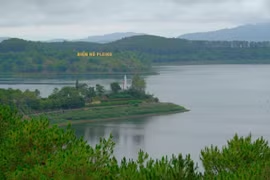
From Biển Hồ, travelers can find different perspectives of the flowers as they approach the volcanic field, whether viewing them directly or through cameras and mobile phones.
The experience is particularly vivid by motorbike. The road winding through the village and up the mountainside is wide enough for vehicles to pass comfortably, while wild sunflower branches line both sides.
After the rainy season, the plants are full of water and burst into bloom. Some branches reach close enough for their petals to brush against a rider’s cheek or shoulder, while the scent of flowers, leaves and stems becomes more noticeable along the road.
Wild sunflowers are not known for having a strong floral fragrance. Their scent is instead slightly pungent, bitter and earthy.
Yet their robust plants, large flowers and intense yellow color give them a distinctive appeal that has captivated generations of visitors.
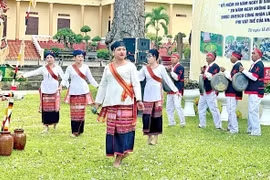
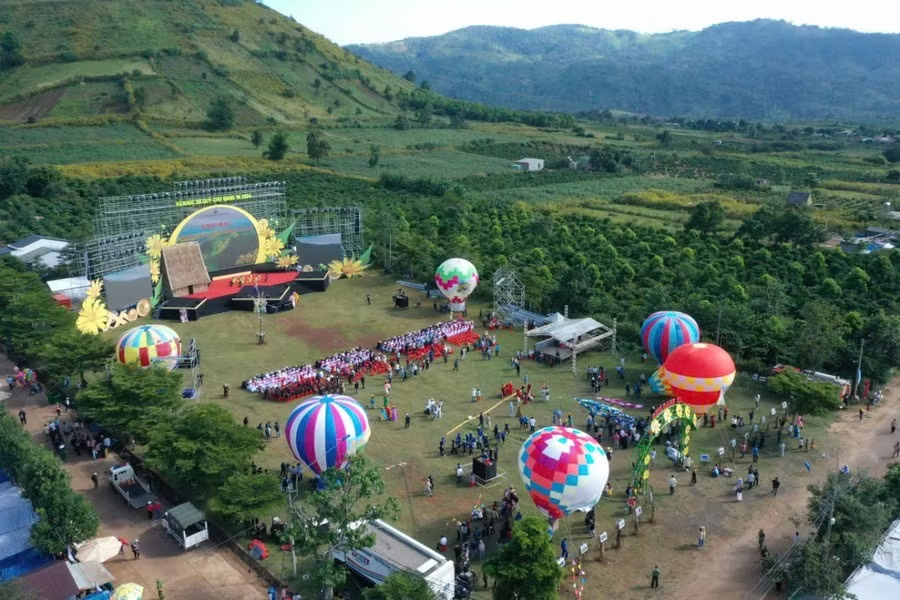
This year’s Wild Sunflower Festival will be held alongside the Gia Lai Gong Festival from November 1 to 8, 2026.
The first three days will feature the Wild Sunflower Festival around Chư Đang Ya volcano, with a range of cultural and recreational activities.
Visitors will be able to explore the area, hike, take photographs and participate in traditional activities.
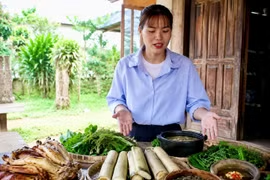
They can also sample local specialties prepared by ethnic communities, including rượu ghè, a traditional fermented rice wine; cơm lam with grilled chicken; cassava leaves with bitter eggplant; one-sun beef with ant salt; stream fish; and heo mẹt, an assorted pork platter.
For those who grew up in western Gia Lai, the return of the yellow blooms is more than a seasonal spectacle.
Former residents who have moved to Ho Chi Minh City still carry memories of the mountain town, its pine hills and its wild sunflowers.
Each year, as the rainy season approaches its end and the first flowers begin to appear around mid-October, they begin making plans to return to Gia Lai for the Wild Sunflower and Gong Festival.