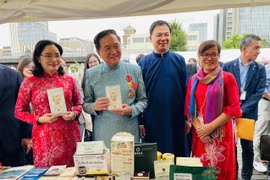
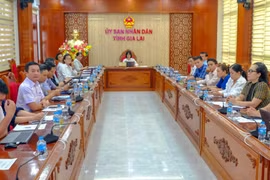
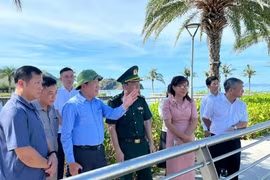
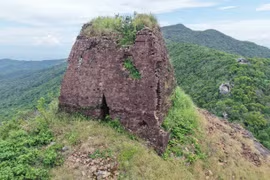
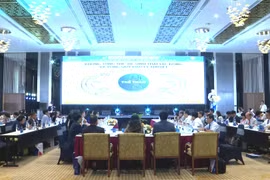
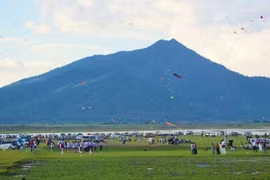
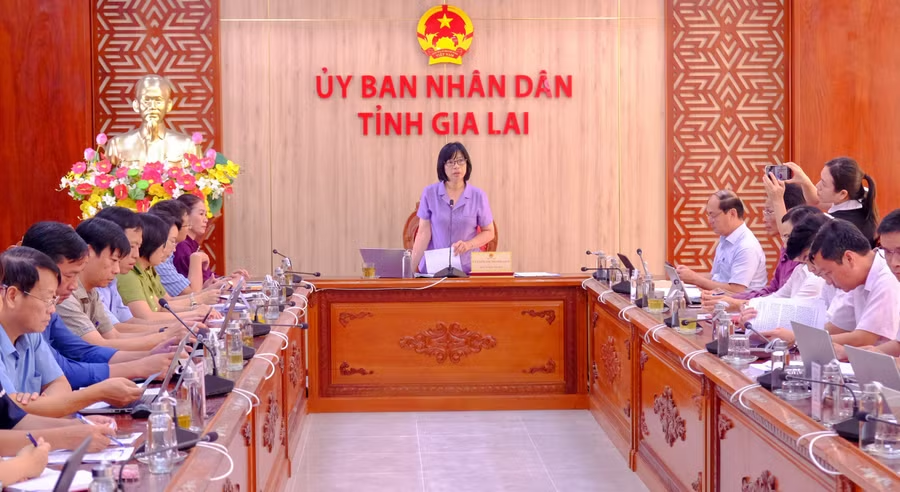
The review took place at a meeting chaired on June 23 by Vice Chairwoman of the Gia Lai Provincial People’s Committee Nguyễn Thị Thanh Lịch.
The meeting was attended by Vice Chairwoman of the Provincial People’s Council Huỳnh Thúy Vân, representatives of relevant departments and agencies, and leaders of the affected communes.
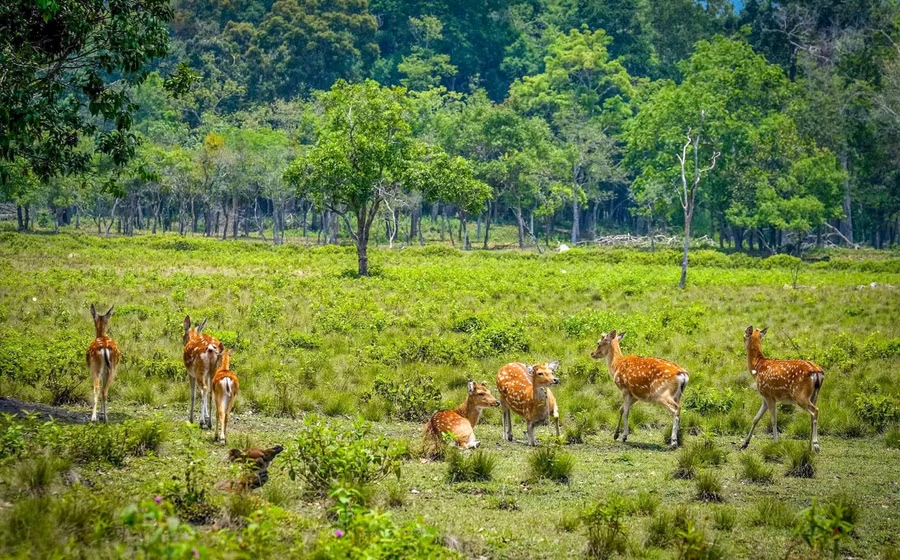
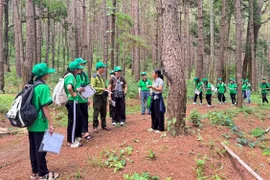
According to the Department of Agriculture and Environment, the proposed ecotourism project for Kon Ka Kinh National Park includes five tourism sites covering more than 1,086 hectares and 12 tourism routes with a combined length of approximately 201 kilometers.
Planned tourism products include ecotourism experiences, trekking to Kon Ka Kinh peak, waterfall exploration, wildlife safaris, wellness retreats, community-based tourism, environmental education and scientific research activities. Total investment is estimated at VND539.3 billion (about USD20.6 million), with funding expected to come primarily from socialized capital sources.
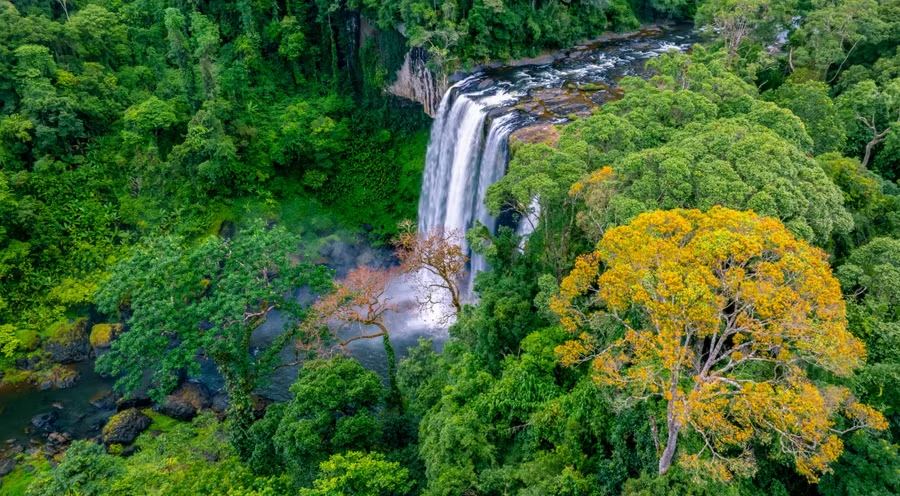
For Kon Chư Răng Nature Reserve, the proposal outlines five ecotourism sites covering 500 hectares and eight tourism routes totaling around 190 kilometers.
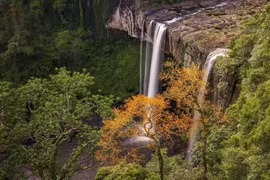
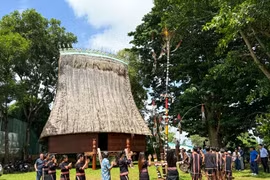
Proposed attractions include forest protection tours, wildlife observation, expeditions to K50 and K40 waterfalls, kayaking and stand-up paddleboarding on the Kôn River, community-based tourism linked to Bahnar cultural heritage, and eco-resort services. Total investment is projected at VND342.6 billion (about USD13.1 million), mainly financed through socialized resources.
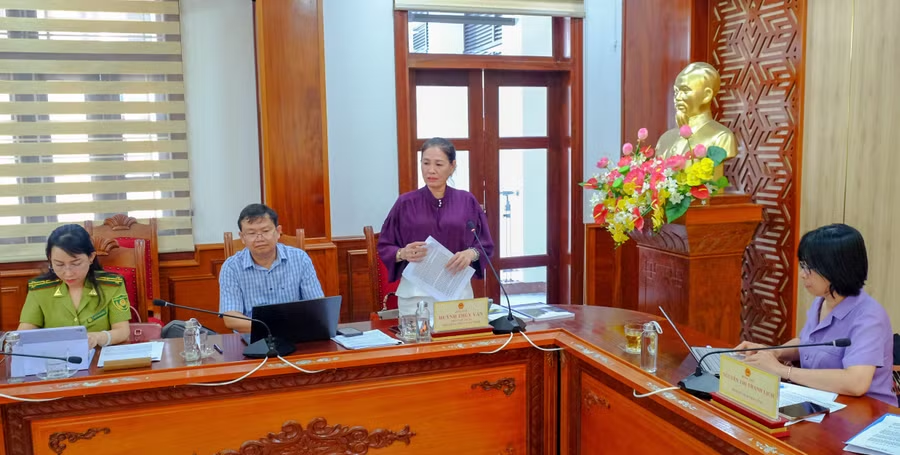
During the meeting, delegates discussed the feasibility of the projects, investment attraction mechanisms, infrastructure development, workforce training and measures to maximize the value of forest resources while protecting biodiversity and supporting sustainable livelihoods for local communities.
Vice Chairwoman of the Provincial People’s Council Huỳnh Thúy Vân said the projects are consistent with the province’s socio-economic development orientation and promote the efficient use of forest resources.
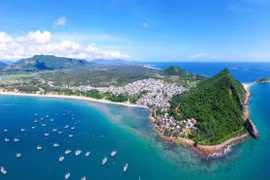
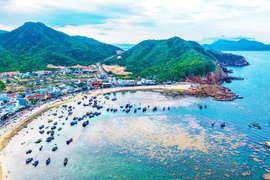
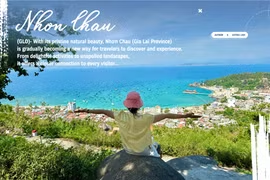
She called on the drafting agency to further refine the proposals to ensure alignment with provincial planning, strengthen connections between forest and marine tourism products, and clarify roadmaps for infrastructure investment, workforce development and measures to balance tourism growth with ecosystem conservation and improved livelihoods for communities in buffer zones.
Concluding the meeting, Vice Chairwoman Nguyễn Thị Thanh Lịch stressed that ecotourism development must be based on forest protection and biodiversity conservation, with all investment and operational activities complying with forestry and environmental protection regulations.
She directed the Department of Agriculture and Environment to incorporate feedback from the meeting, strengthen the legal framework of the proposals, improve the feasibility of investment components, develop mechanisms to mobilize socialized resources and establish management structures for implementation after approval.
She also emphasized the need to develop distinctive tourism products linked to tourist rescue services, forest resource protection, cultural preservation and community livelihoods, with the goal of supporting sustainable socio-economic development in the province.