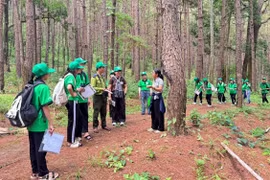
The initiative follows a recent field survey conducted by the commune’s People's Committee in partnership with the provincial Tourism Association and travel businesses to assess opportunities for sustainable tourism development.
Located in the western border region of the province, Ia Dom is home to the Le Thanh International Border Gate, which connects Vietnam with Cambodia, as well as a network of largely untouched rivers, streams and forests.
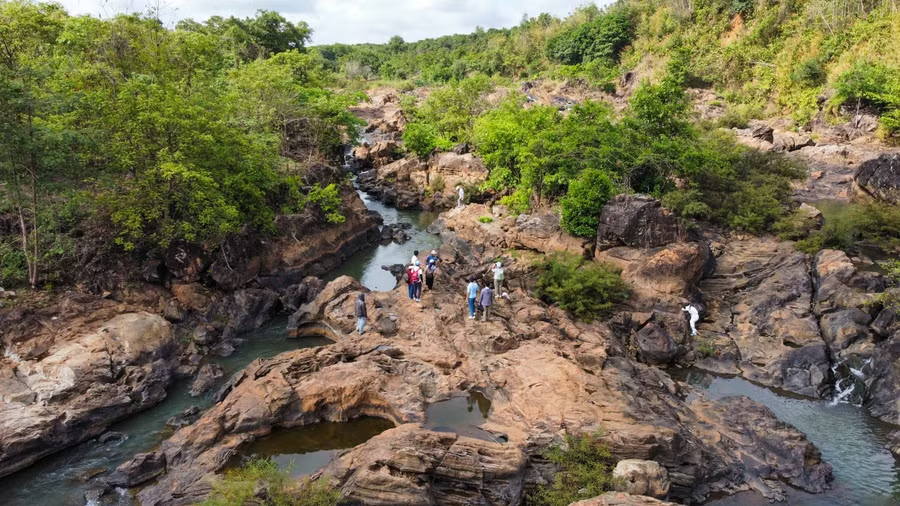
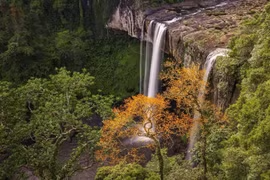
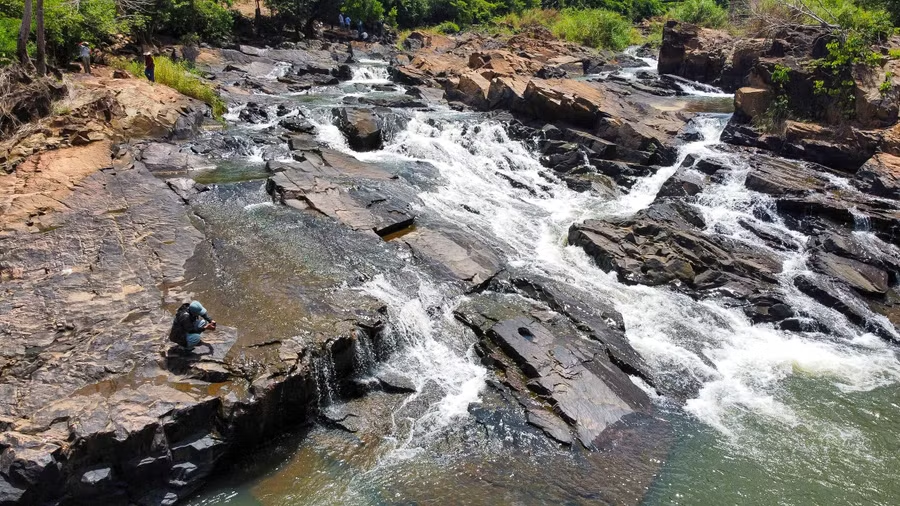
Among its key attractions are the Ia Krêl and Mook Trê streams, which flow through mountainous forests before converging in Ia Dom to form Suối Đôi stream. The waterway later joins the Pô Cô River and continues into Cambodia.
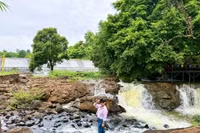
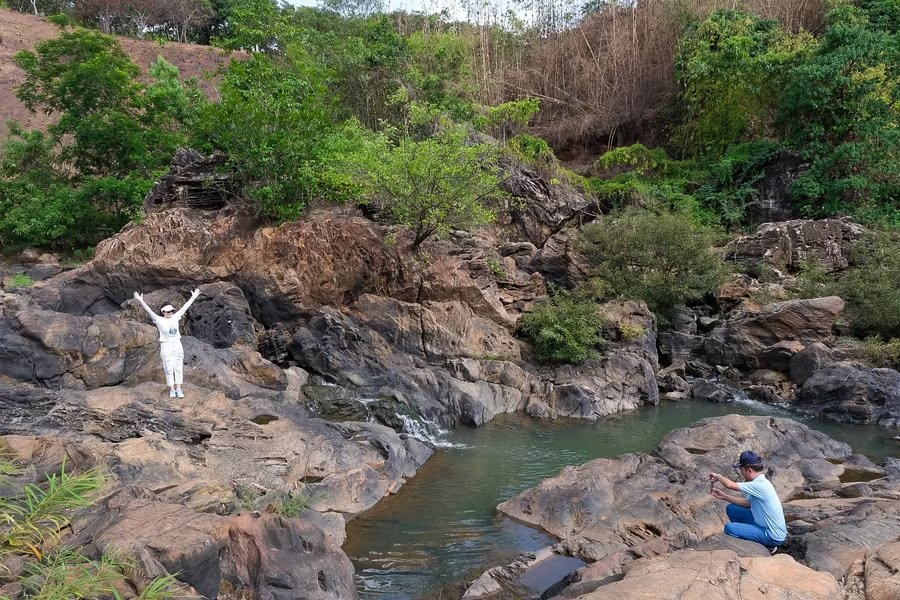
Before reaching Suối Đôi, the Ia Krêl stream winds through border forests, where its broad riverbed is marked by distinctive petrified wood formations. Suối Đôi, meanwhile, features large flat rocks, gentle rapids and clear water beneath a dense canopy of old-growth forest, creating conditions suitable for outdoor recreation, picnics and camping.
The area remains relatively accessible, allowing visitors to combine travel by car or motorbike with short walks through rubber plantations to reach the natural sites.
About 5 km from Suối Đôi lies a 32-hectare teak forest planted in 1997. After nearly three decades of growth, the trees have formed towering rows with interwoven canopies, creating a striking natural corridor within the border landscape.
Nguyễn Tấn Thành, former Chairman of the Provincial Tourism Association and Director of Tân Thành Tourism Services Co., Ltd., said Ia Dom's location on National Highway 19 and its direct connection to the Le Thanh International Border Gate provide a unique advantage for tourism development.
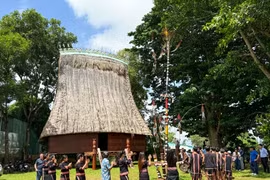
According to Thành, the commune could develop integrated tourism products that combine border gate visits, exploration of Suối Đôi, camping in the teak forest and cultural experiences in Bi Village, where many traditional Jrai cultural values remain preserved.
He noted that Ia Dom is among the few locations capable of combining eco-tourism, community-based tourism and border tourism within a single travel experience. However, he stressed that development should avoid excessive construction and prioritize the preservation of forests, waterways and the area's natural character.
Trang suggested developing landscape features that harmonize with nature while using the area's petrified wood formations as a defining symbol. She also proposed further research into the geological significance and history of the formations to enrich visitor experiences.
Trần Ngọc Phận, Secretary of the Ia Dom Commune Party Committee, said local authorities would incorporate recommendations from tourism experts and businesses while studying successful tourism models elsewhere to gradually integrate the destinations into future planning.
The commune plans to mobilize resources from national target programmes, local budgets and other lawful funding sources to invest in tourism infrastructure.
Phận said tourism development would be pursued alongside environmental conservation, with efforts focused on protecting forests, streams and natural landscapes while creating opportunities for local residents to participate in tourism activities.
Authorities also aim to preserve and promote traditional cultural practices of border communities, including gong culture spaces, rain-praying ceremonies and water worship rituals, while restoring other distinctive customs to strengthen Ia Dom’s identity as an emerging tourism destination.