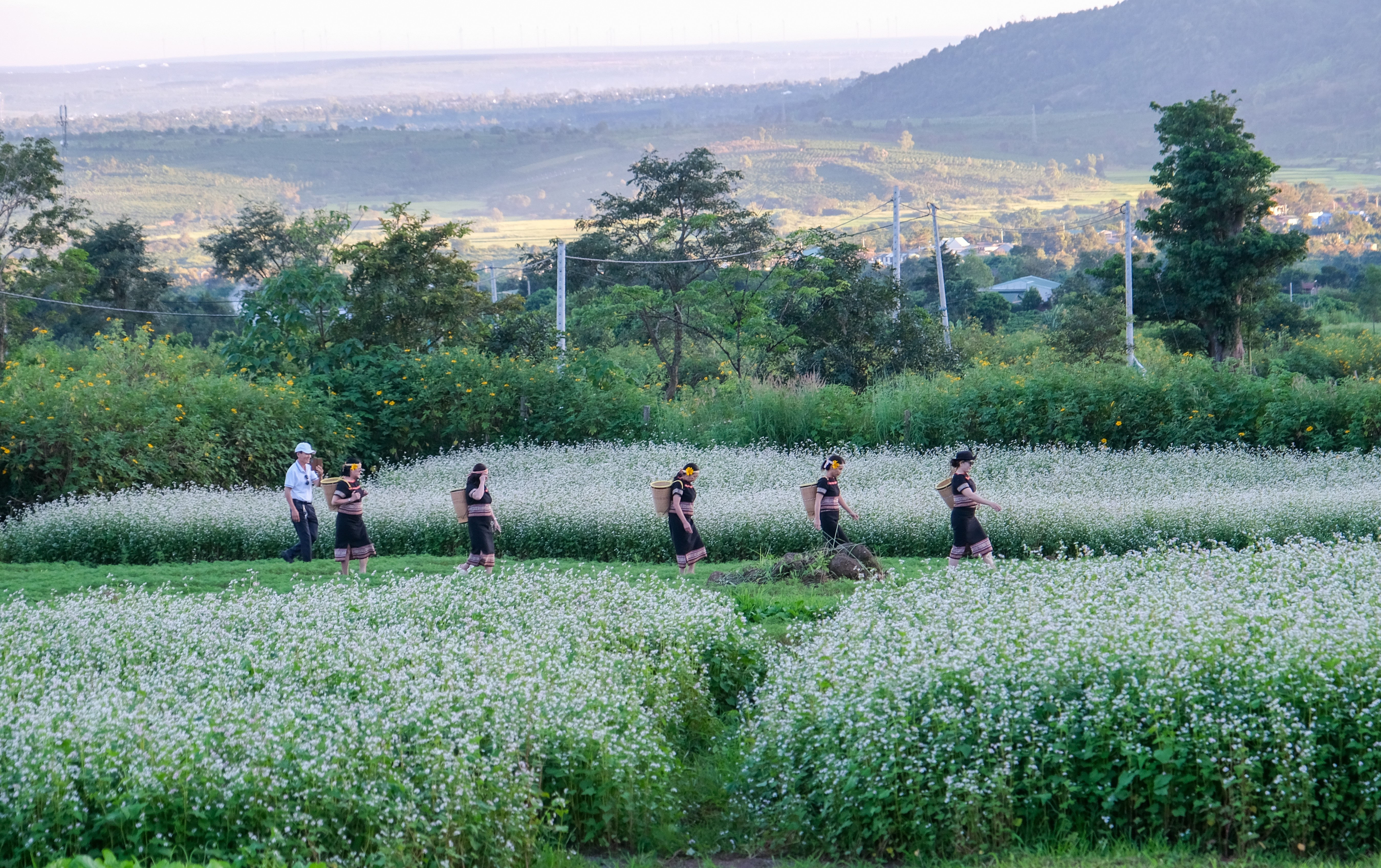
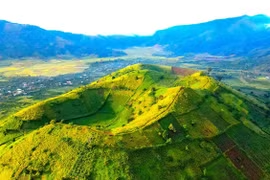
Held as part of the Gong Festival - Wild Sunflower Week - Chư Đang Ya Volcano 2026, the three-day event features traditional cultural exchanges, a street parade and a gong festival, bringing together communities to celebrate their heritage and share their traditions.
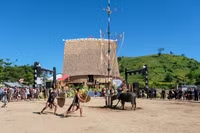
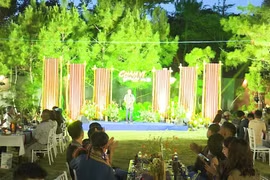
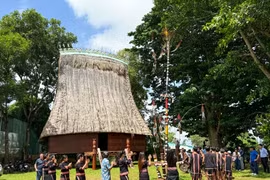
At Dai Doan Ket Square in Pleiku Ward, artisan groups began recreating their cultural spaces on the morning of November 6, filling the square with music, costumes and traditional performances ahead of the official opening of the cultural exchange programme later that afternoon.
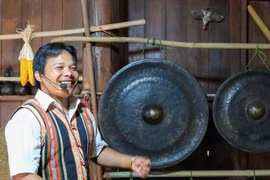
The Cham H’roi artisan troupe from Van Canh Commune attracted attention with its distinctive costumes and performances combining gongs with ktoang drums. The group also plans to reenact the “Le an heo ky” (Pig Feast Ceremony), a Cham H’roi life-cycle ritual associated with the custom of adopting godparents.
Meritorious Artisan Nguyen Thi Ngoc Huong said the festival was particularly joyful because it offered opportunities to meet and learn from ethnic communities both within and outside Gia Lai.
“We get to interact with and learn about the cultures of other ethnic groups,” she said.
Young gong performers preserve cultural traditions
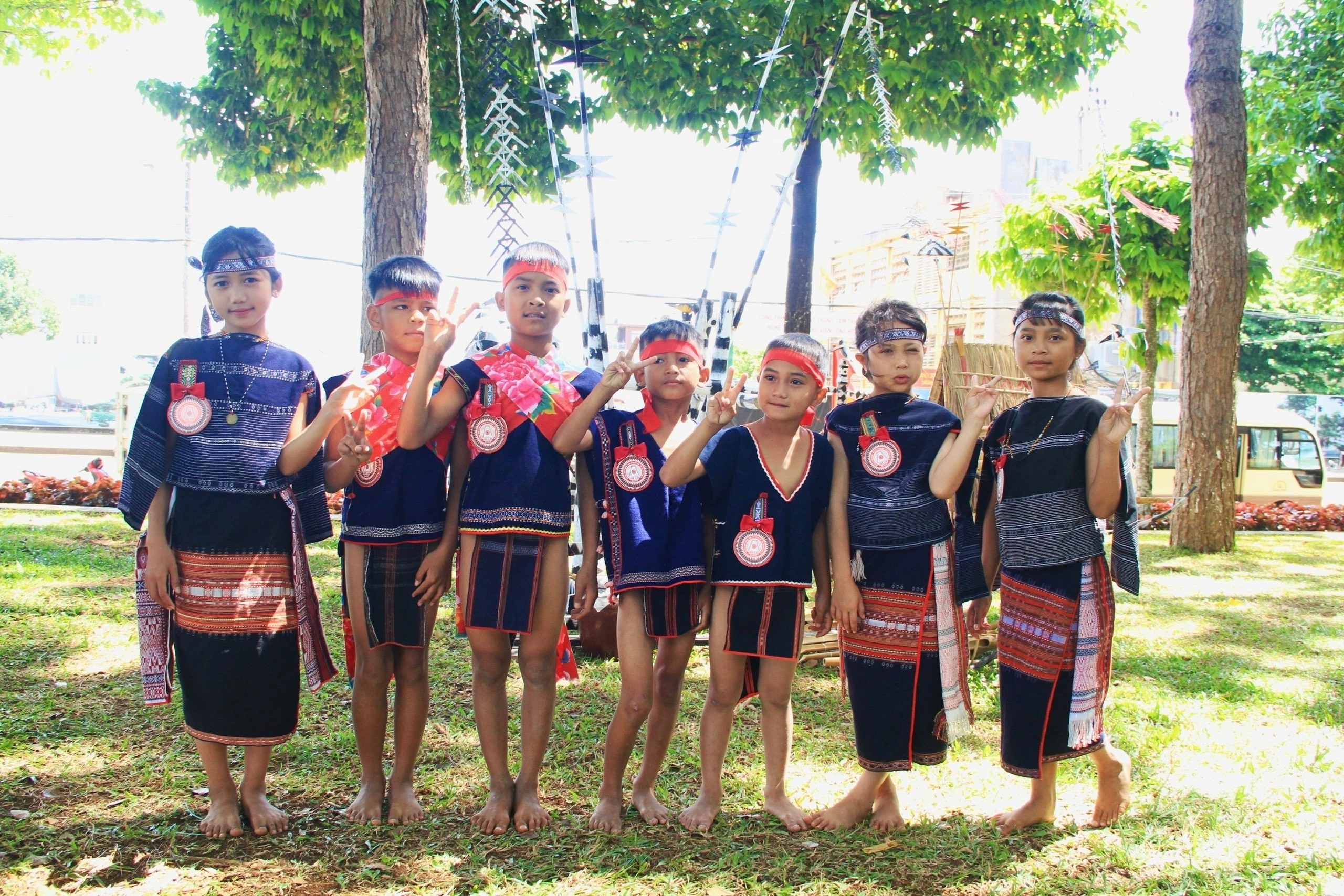
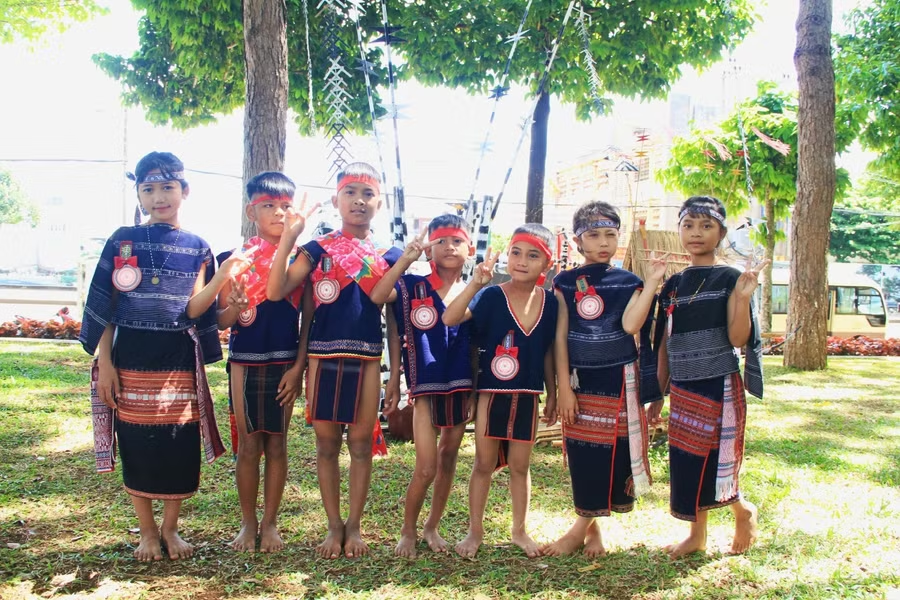
The children's gong team from Dong Tam Village, To Tung Commune, joined the performances shortly after completing a journey of nearly 100 kilometres to the festival.
One of only two children's gong teams in Gia Lai selected to participate, the group has 40 members who have been practising intensively for the event.
Their repertoire includes gong pieces such as “Celebrating New Rice” and “Welcoming Guests”, folk songs including “Lullaby” and “Beautiful as Po Lang Flowers”, and an instrumental performance titled “Echoes of the Great Forest”.
Dinh Phong, 15, said the young performers were proud to represent their village and commune and introduce Bana gong culture to visitors.
Despite the long journey, he said, none of the team members felt tired.
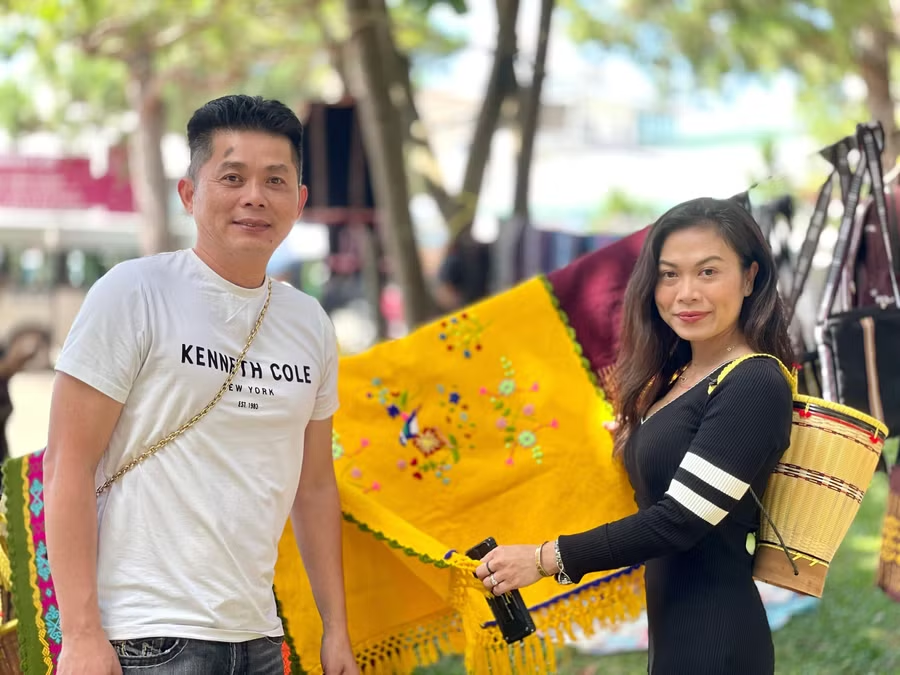
The festival also drew visitors eager to experience the region's cultural traditions. Tran Kieu Mai, a Vietnamese American visiting with her family, praised the craftsmanship of local products, including woven baskets and brocade fabrics.
She said she was impressed by the artisans' skills and the warmth of the people, but regretted having to leave for Ho Chi Minh City that afternoon.
Ethnic communities exchange traditional crafts
Artisan groups from outside Gia Lai also used the festival to introduce their cultural heritage.
The Muong troupe from Thanh Hoa Province presented Sac Bua singing, recognised as a National Intangible Cultural Heritage, alongside a cultural space titled “Hoa dat Muong xu Thanh – The Ancient Beauty Endures”.
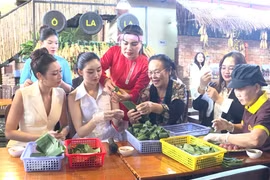
The display recreated traditional Tet activities, including making sticky rice, wrapping banh chung, erecting the New Year’s tree, preparing festive meals and presenting traditional costumes.
Pham Thi Chien, leader of the Muong women's gong team, said participating in a cultural exchange in the Central Highlands Gong Cultural Space was a meaningful opportunity to introduce Muong gong traditions and strengthen solidarity among ethnic communities.
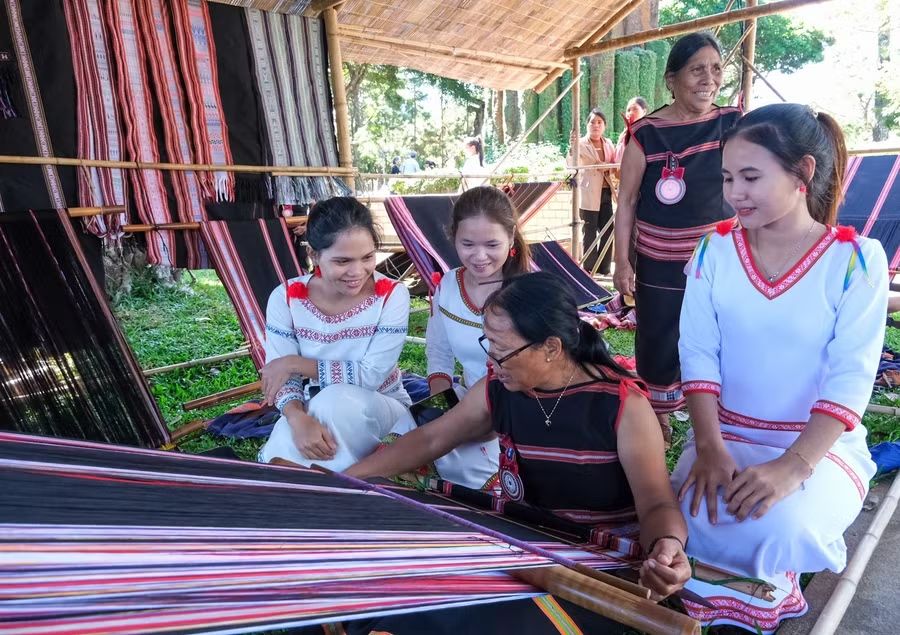
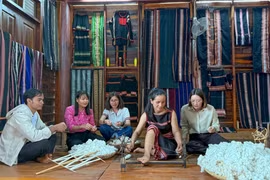
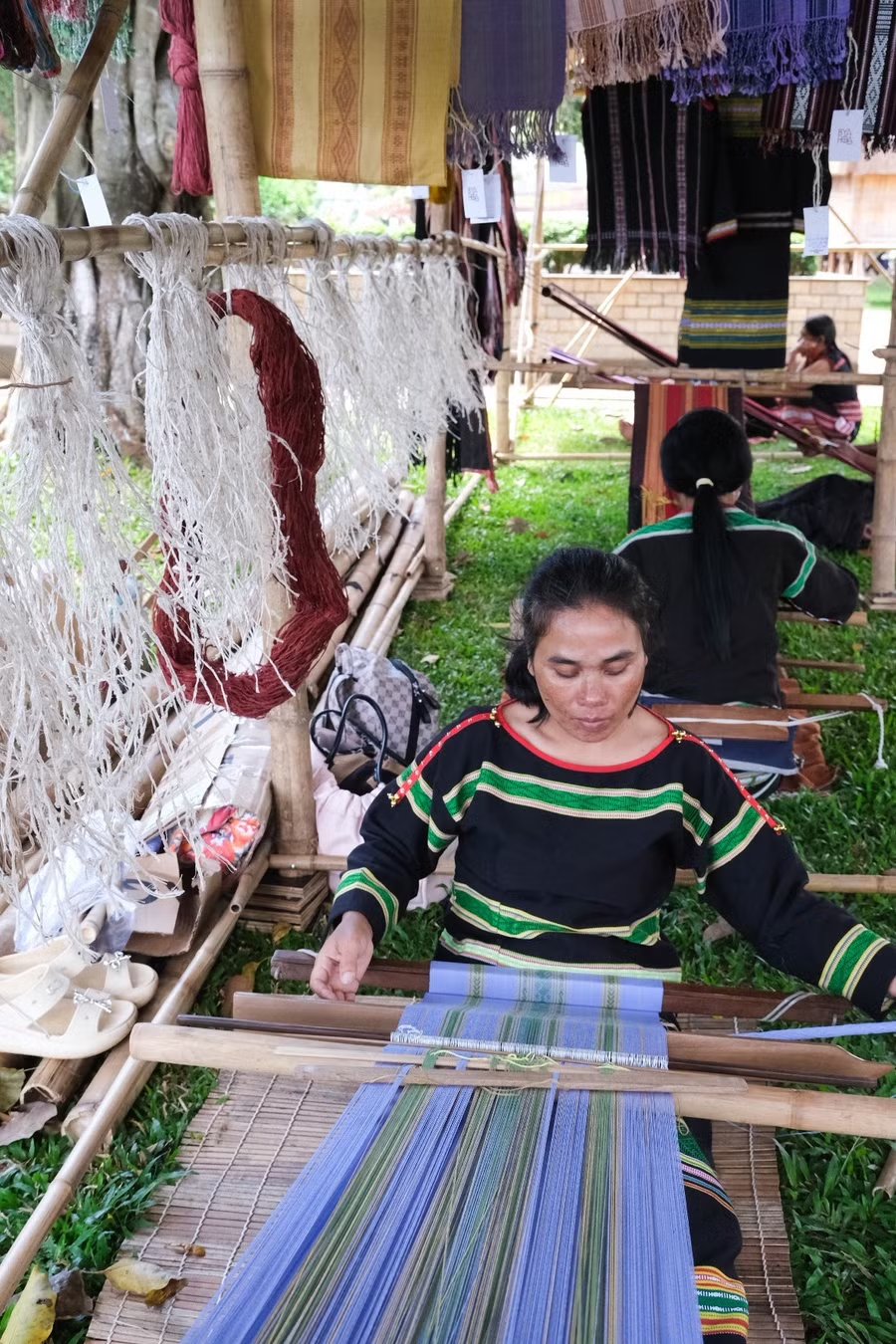
Traditional weaving was another highlight, with female artisan Hsen Hmok Du from the Mnong ethnic group in Dak Lak Province demonstrating techniques using cotton, silk and recycled coffee-ground fibres blended with silk.
The presentation alongside the Jrai brocade weaving space from Gia Lai offered visitors an opportunity to compare the two communities' distinct techniques, patterns and colour combinations.
Artisans also exchanged knowledge about cotton cultivation, spinning, dyeing and ways to develop traditional weaving while preserving its cultural identity.
For Y Van, a young female artisan from the Ro Mam ethnic group in Quang Ngai Province, the festival provided an opportunity to introduce the communal living space of one of Vietnam's smallest ethnic groups.
She said younger generations were proud to inherit gong traditions and committed to preserving their community's cultural identity despite its small population.
Street parade brings cultural celebration to Pleiku
The celebrations continued on the afternoon of November 6 with a street festival featuring a parade of all 39 artisan teams and troupes along Pleiku Ward's main streets.
Each group brought its own cultural story, adding to the festival's diversity and vibrancy.
Beyond performances and demonstrations, the gathering provided a platform for ethnic communities to exchange experiences, deepen mutual understanding and strengthen efforts to preserve and promote their cultural heritage.
It also reinforced pride in the traditions that continue to shape the cultural identity of Vietnam's Central Highlands.