The night-time economy has been identified as a key pillar in the strategy to develop 24-hour cities while maintaining harmony with residents’ daily lives and local cultural identity.
For years, a major gap in tourism across western Gia Lai has been the lack of night-time service offerings. This has limited visitor spending and length of stay, highlighting the need to diversify products not only to stimulate consumption but also to complete the tourism ecosystem and gradually form a 24-hour economic model.
In central western Gia Lai, wards such as Pleiku, Hội Phú and Diên Hồng have been selected as initial launch points, based on existing infrastructure, population density and demand for visitor experiences. Authorities are adopting a cautious, targeted approach, linking night-time economic development with urban renewal and more effective use of public spaces.
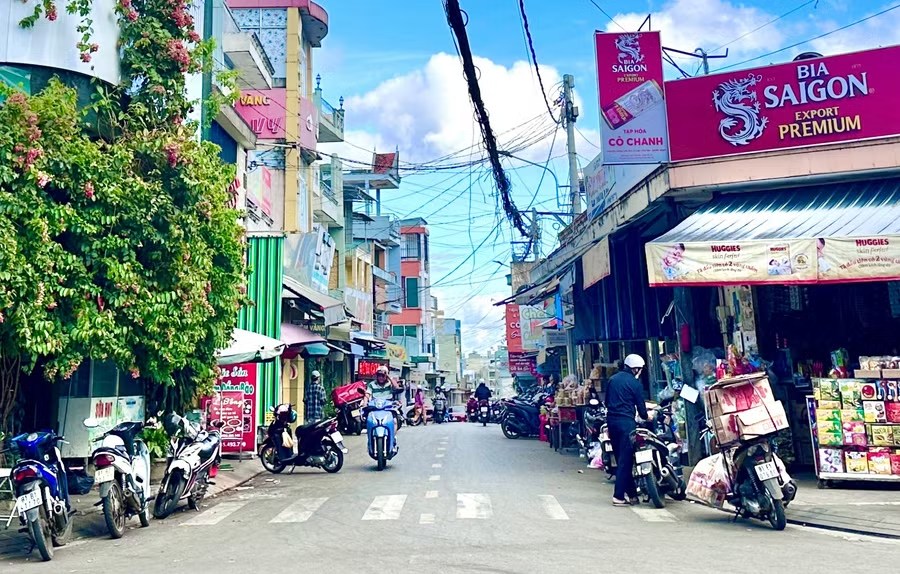
A flagship initiative is the Cho Nho Night Street in Pleiku Ward. Planned as a tourism–culture–cuisine route, it will connect Đại Đoàn Kết Square along Phùng Hưng Street to the Hội Phú stream area.
The night street is expected to operate daily from 6 p.m. to midnight, with around 51 stalls prioritising food and beverages, OCOP products, specialty agricultural goods, souvenirs and fashion items.
Beyond a commercial venue, the project is designed as a community space that introduces a new urban rhythm and enhances Pleiku’s appeal as a night-time destination.
“I hope the project will soon be operational, especially before the Lunar New Year”, said Bui Xuan Dong, a long-time resident of Pleiku Ward. “Once implemented, local residents will benefit directly and it will also create a new highlight for the city”.
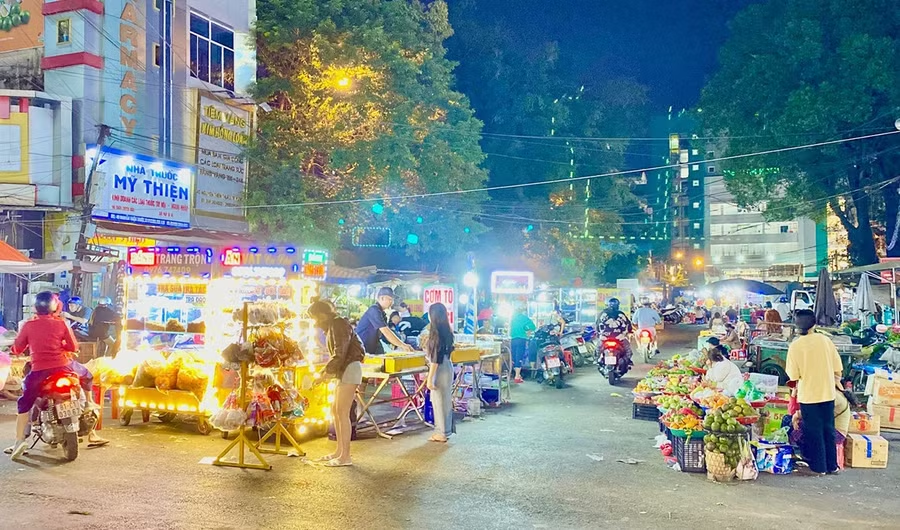
Alongside Cho Nho Night Street, the Night Food Street in Diên Hồng Ward is also expected to give momentum to the local night-time economy. Formerly the night market on Nguyen Thien Thuat, Hoang Van Thu, Tran Phu and Le Lai streets, the project was suspended for more than a year for infrastructure upgrades and is now nearly complete, with total investment of nearly VND 17 billion (about USD 700,000).
The site has been comprehensively upgraded, including parking areas, an operations building, public restrooms, lighting systems and mobile canopies. Once operational, it will host around 100 stalls focusing on local cuisine, OCOP products, souvenirs and handicrafts that reflect the distinctive culture of the Central Highlands.
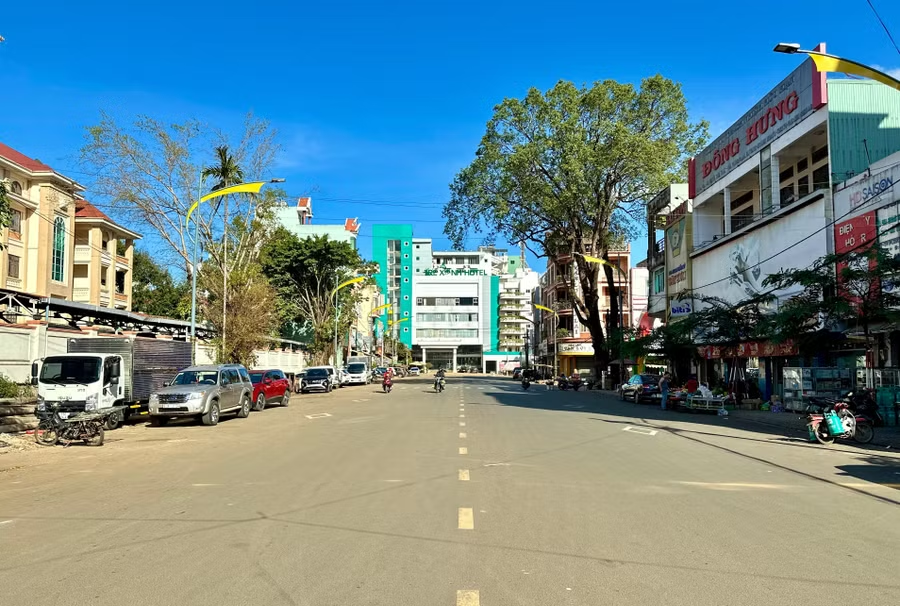
For many vendors, the reopening represents a chance for stable livelihoods. Truong Thi Ngoc Lan, owner of the “Ba Lan” pho stall with 11 years of experience at the former night market, said the temporary closure had caused significant difficulties. “So when we heard the Night Food Street would soon reopen, all the vendors were very excited,” she said.
Nguyen Tuan Thanh, a tourist from Hanoi, said Pleiku’s night market is a familiar stop whenever he returns to Gia Lai, citing local specialties such as “stinky” crab noodle soup and two-bowl pho as experiences unique to the province. A more organised and larger-scale night food street, he said, would further enhance the area’s tourism appeal.
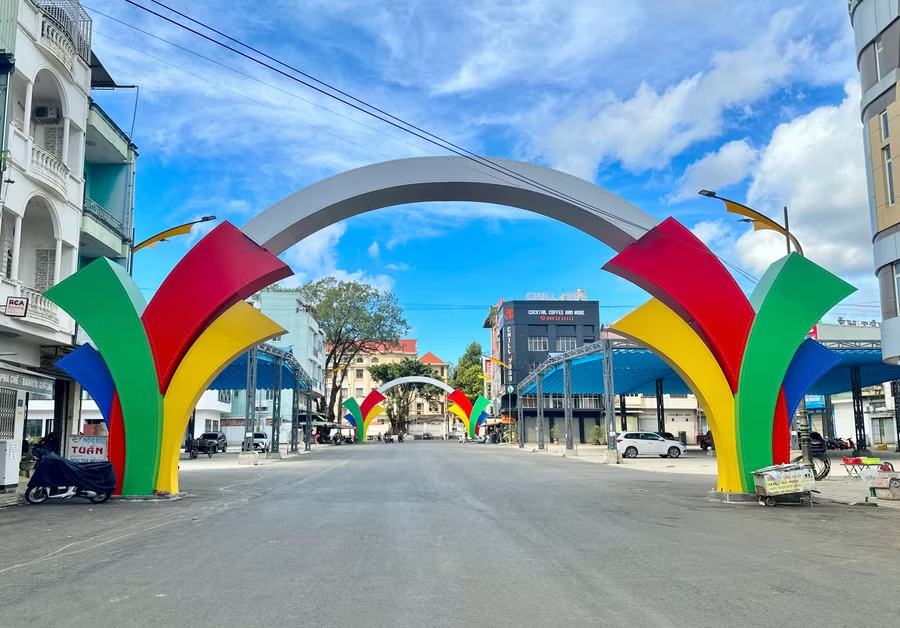
According to Nguyen Ngoc Thong, Vice Chairman of the Pleiku Ward People’s Committee, the night-time economy is not only about raising incomes but also about promoting the city’s cultural and tourism image, gradually shaping Pleiku into a green, civilised and culturally rich destination.
The night-time economy broadly covers commercial, service, cultural and entertainment activities from 6 p.m. to 6 a.m. When well organised, it can extend urban activity hours, optimise infrastructure and labour use, and ease pressure during daytime peaks.
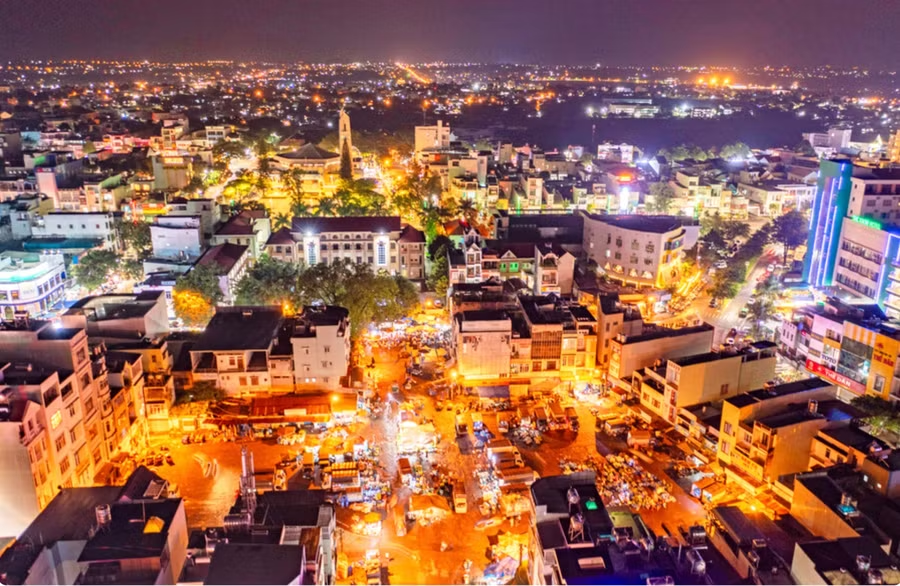
Nghiem The Hung, Vice Chairman of the Diên Hồng Ward People’s Committee, said the Night Food Street would also feature cultural and artistic programmes on weekends and holidays. Showcasing local traditions such as gong performances and xoang dances is seen as a way to differentiate Gia Lai’s tourism offering. The project is completing final procedures and is expected to open before the Lunar New Year.
Despite clear opportunities, authorities acknowledge challenges in urban management, security, environmental protection and infrastructure. Development must therefore be carefully controlled, with clear functional zoning and shared responsibility between local authorities and the community.
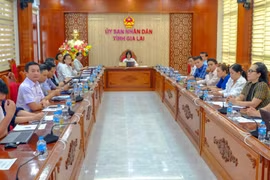
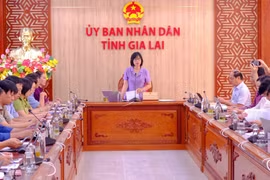
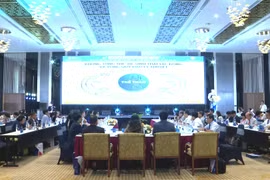
As Gia Lai prepares for the National Tourism Year 2026, the night-time economy is gaining greater strategic importance. At a meeting on night-time economic development in late December 2025, provincial Vice Chairwoman Nguyen Thi Thanh Lich called for thorough surveys and models tailored to the cultural and social characteristics of each area, alongside efforts to attract investors and refine policies to ensure sustainable growth without disrupting residents’ lives.
With a cautious yet determined approach, the gradual “awakening” of night-time spaces is transforming latent urban advantages in central western Gia Lai into tangible economic value, laying the groundwork for a modern, dynamic city that remains rich in identity.