The seasonal bloom, long tied to the cultural identity of the Central Highlands, has turned stretches of the dry-season landscape into a vivid corridor of color.
From Đức Cơ Park to Ia Dom commune, clusters of mature pơ lang trees burst into simultaneous bloom, their thick orange-red petals standing out on leafless branches. Fallen blossoms carpet the ground beneath children playing traditional bamboo dances, a scene locals regard as one of the first signs of spring in the highlands.

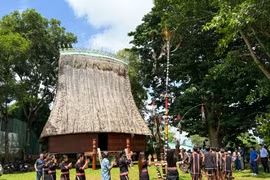
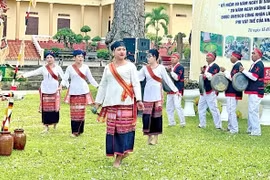
For the Jrai people, the pơ lang tree is a cultural marker as much as a natural one. In Bi village, a towering tree planted three decades ago stands before the communal nhà rông, considered a sacred symbol of spiritual acceptance. Villagers tie offerings at its base during rituals, believing the tree anchors the community’s presence on the land.
Pơ lang trees typically grow in isolation, making the rare “pơ lang forest” in Bi village a notable exception. The grove belongs to farmer Trần Quang Lâm, who planted hundreds of the trees more than 20 years ago as windbreaks for his 15-hectare cashew orchard.
Around 300 remain, rising above the cashew canopy with thorn-covered trunks and scattering blossoms across the orchard floor. “Every year, the flowers paint the sky red. Travellers stop to photograph them—here, it’s the clearest sign of spring,” Lâm said.


The flower’s deep crimson resonates widely in the Central Highlands, a color associated with hearths, brocade, rituals, and festive drumbeats. Its appearance in the dry season brings these cultural layers together, inspiring poetry, music, and village lore. Composer Đức Minh once wrote of it as “the most beautiful flower in the Central Highlands”.

As Lunar New Year nears, the fiery blossoms continue to illuminate the borderlands, signaling renewal across the sunlit, windswept plateaus of Gia Lai.