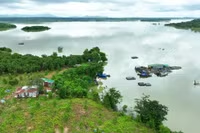
The settlement, located in Tăng village in Ia O commune, Gia Lai province, is home to 17 households with 58 residents, most of whom migrated from southern Vietnam. Without land or legal papers, they have built makeshift homes on the water and depend entirely on fishing for survival.
Local authorities say at least 21 people in the community still lack citizen ID cards, limiting their access to social welfare programmes. Officials are working to resolve documentation issues while considering long-term plans to support aquaculture and eco-tourism in the area.
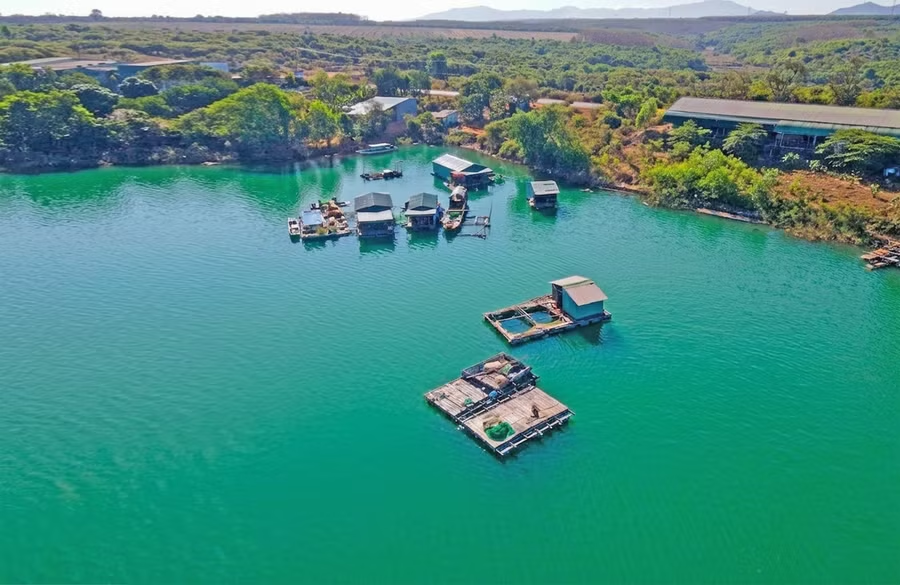
The village began forming around 2013, when a small number of fishermen arrived at the reservoir. Over time, more migrants joined, many of them unable to verify their identities due to years of movement across regions and borders.
Living conditions are basic. Houses made of corrugated metal, wood and oil drums float across the reservoir, with entire families confined to spaces as small as 25-30 square metres. Clean water is scarce, electricity is unreliable and daily life, from cooking to bathing, takes place on the water.
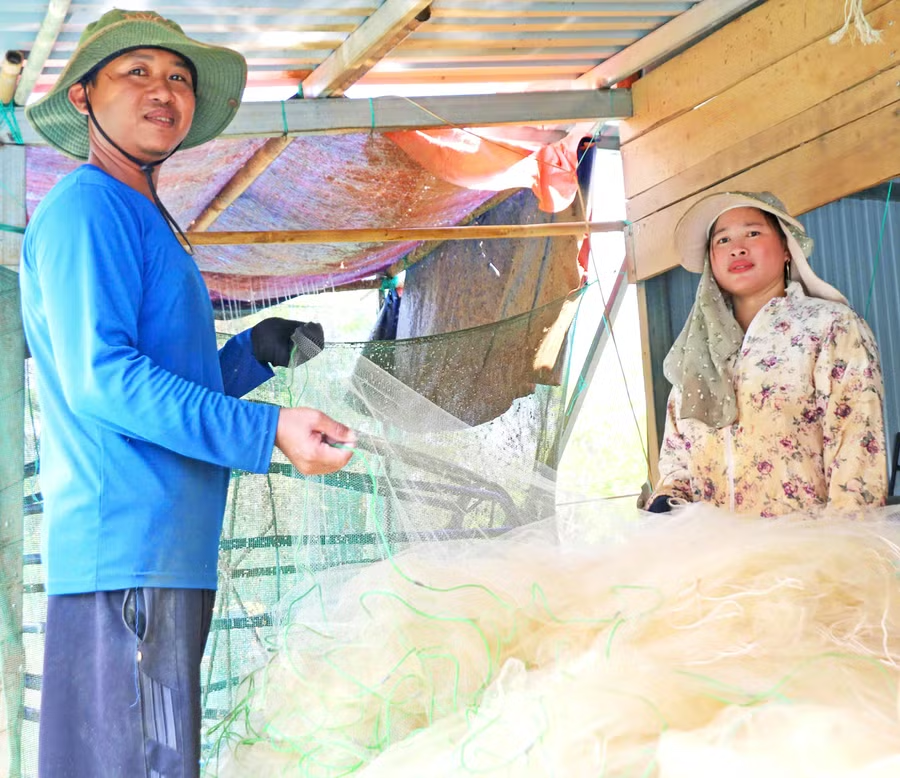
For residents like Nguyễn Thị Oanh, 60, life has been marked by hardship and loss. Living with her sons and grandchild in a small floating home, she relies on occasional fishing while coping with deteriorating health. Last year, her five-year-old grandchild drowned after falling into the water.
Others face similar challenges. Lê Văn Tường, 60, shares a cramped floating house with 10 family members across three generations. With no beds and limited space, some children sleep on boats. During storms, strong winds and rising water pose constant risks.
Younger residents hope for a way out. Lê Thị Kim Tuyền, 18, spends her days preparing fishing gear but dreams of obtaining legal identification to find work on land.
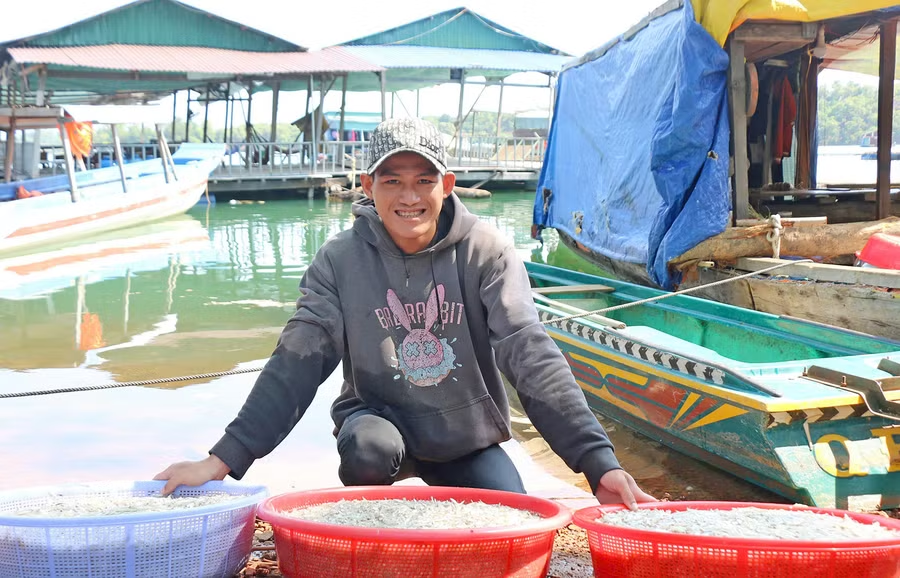
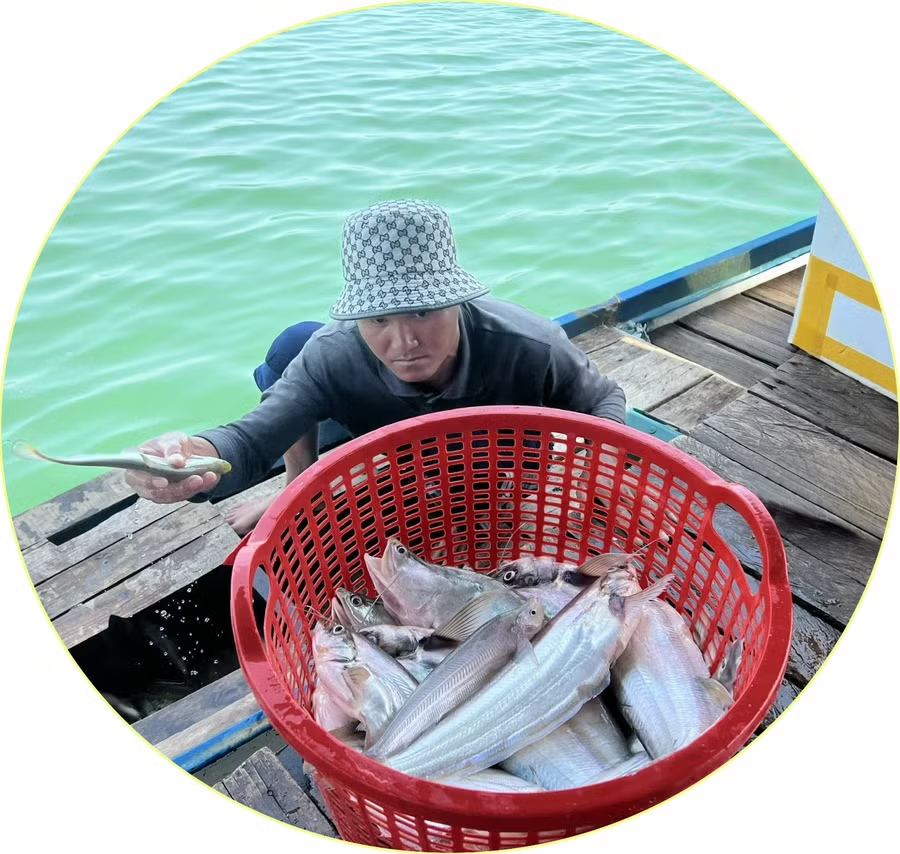
Fishing remains the primary source of income, though it is highly unpredictable. Some nights yield catches of 30–40 kilograms of fish, bringing in over one million đồng ($40), while on other days, families return empty-handed and go hungry.
Many residents arrived after failed attempts to secure stable work elsewhere. Some were born or worked in Cambodia before returning to Vietnam without proper documentation, making it difficult to access formal employment.
Despite more than a decade on the reservoir, long-term stability remains uncertain.
Local authorities acknowledge the challenges of managing a transient population but say efforts are underway to regularise residents’ legal status and improve livelihoods.
Until then, life in the floating village continues to follow the rhythms of the water, boats setting out before dawn, as families navigate another day of uncertainty.