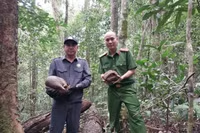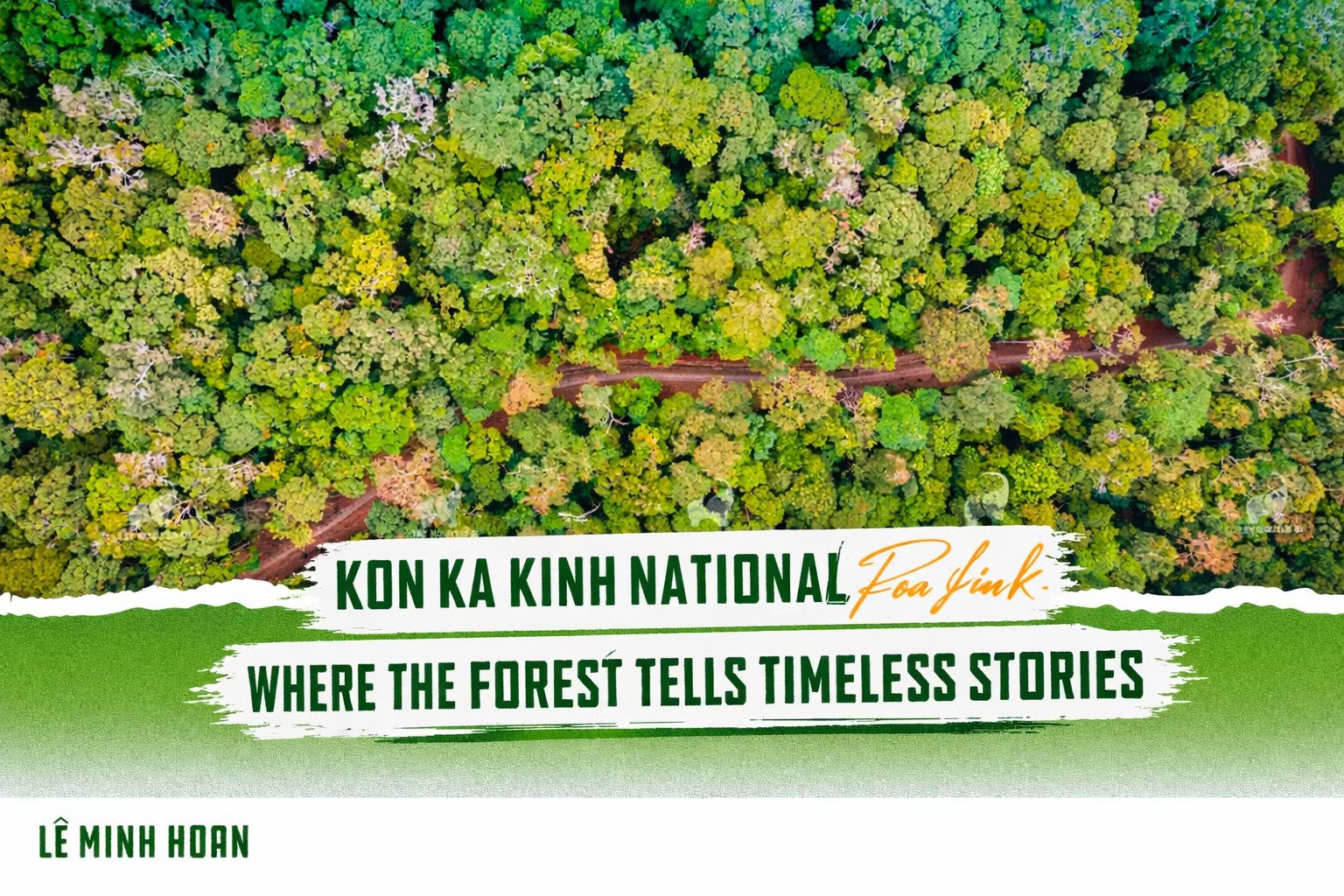
Once, standing atop a high slope in Kon Hà Nừng, watching clouds drift across the forest canopy, a thought occurred:
The forest does not speak in words.
It speaks through the damp scent of decaying leaves, the sound of wind weaving through the trees, the silent footsteps of hidden wildlife.
And in the heart of the Gia Lai plateau, Kon Ka Kinh lies quietly, unassuming, like an elder safeguarding the land’s memories.
We often talk about forests in numbers.
How many hectares.
How many species of flora and fauna.
What percentage of coverage.
But a forest is not a calculation.
A forest is what sustains the Ba River’s flow.
It holds the soil for the fields downstream.
It regulates the climate for the entire highland region.
If we see the forest merely as a resource, we will seek to exploit it.
If we see the forest as a living entity, we will strive to protect it.
Kon Ka Kinh is not just a nature reserve.
It is the “lung” of a vast ecological space.
There was a time when we believed development and conservation were two opposing paths.
To grow the economy meant cutting down forests.
To protect the forest meant sacrificing opportunities.
But the world is changing.
If viewed correctly, forests can become the foundation of a green economy.
Not by selling timber, but by selling experiences, ecological value, and knowledge.
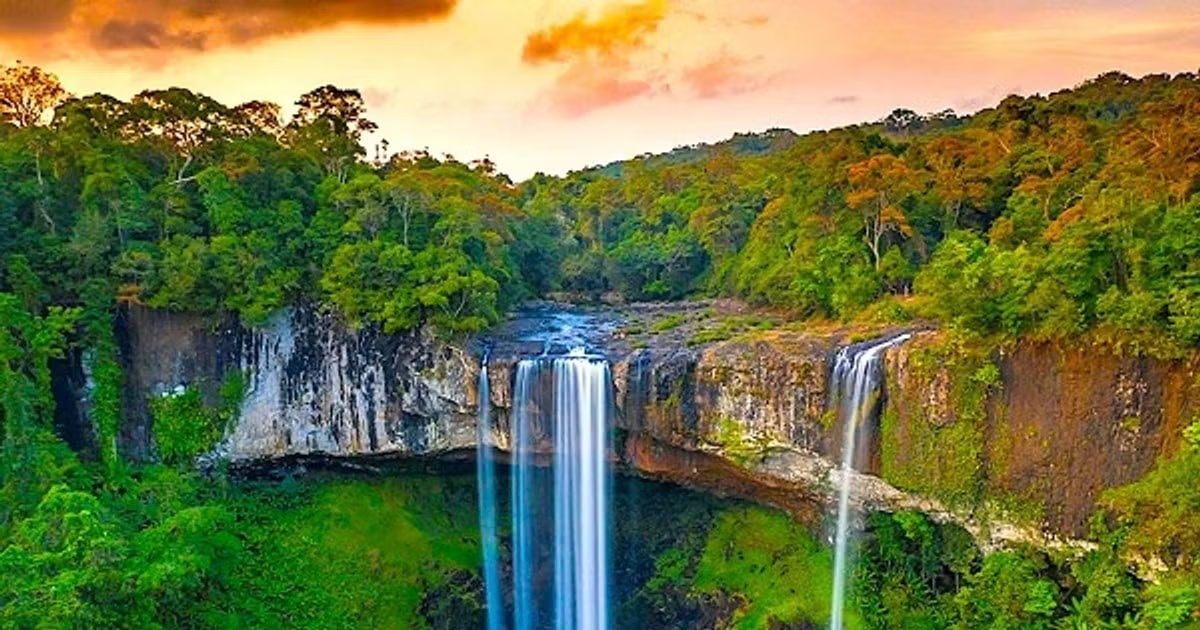
Kon Ka Kinh can be a natural classroom.
A living museum of biodiversity.
An ecotourism destination intertwined with local culture.
Development is no longer about taking away.
Development can mean making existing values more visible.
Forests cannot be protected by prohibition signs and rangers alone.
Forests are protected when local people see themselves as part of the forest.
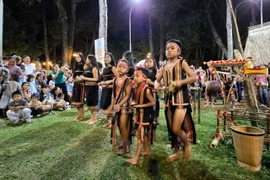
For the Jrai and Bahnar communities living at the foot of Kon Ka Kinh, if they have sustainable livelihoods from community tourism, ecological services, and non-timber forest products, they will protect the forest out of their own self-interest.
Perhaps it is time we see a National Park not just as a “resource management unit,” but as a center for ecological innovation.
Here, digital technology can be applied to monitor forests, build digital biodiversity maps, create online conservation education platforms, and connect scientists with the community.
The forest is not outside the digital transformation. It can enter the digital space through data, stories, and images.
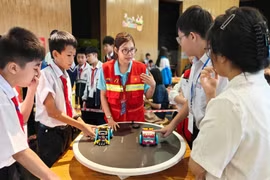
When a student in the city can join an “online classroom in the forest,” when a tourist can understand the ecosystem before setting foot there, the value of Kon Ka Kinh is expanded.
Amidst the ancient trees, humans suddenly seem small.
Small enough to realize we are not the center of everything.
Small enough to recognize that reckless development can leave lasting scars.
Kon Ka Kinh teaches us a lesson in patience.
A forest does not grow in a single term of office.
An ecosystem cannot be restored with just a few decisions.
Sustainable development requires a vision that transcends short-term interests.
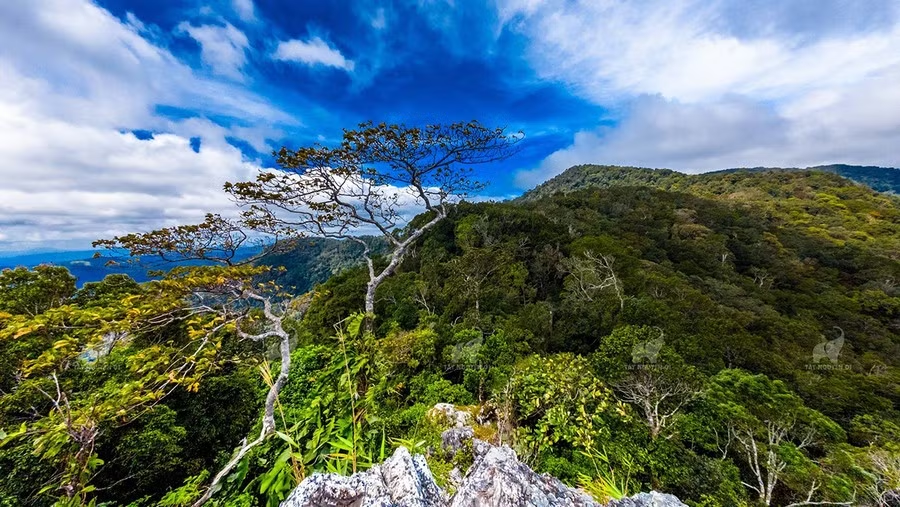
Imagine one day, Kon Ka Kinh is not just a point on the map, but a symbol of a new development mindset in the Central Highlands.
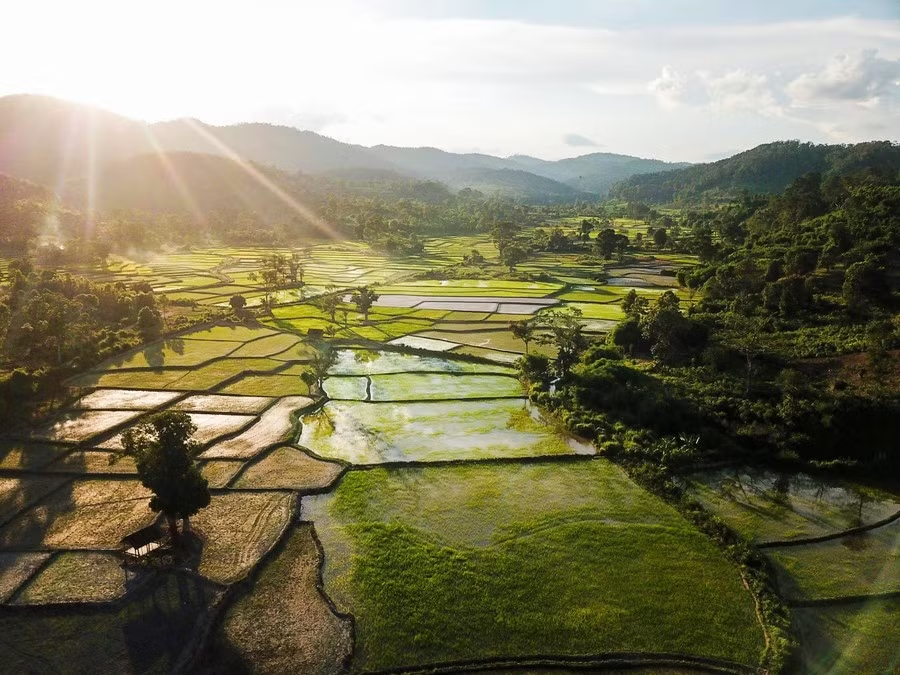
Where the forest is preserved.
Where local people have livelihoods.
Where tourists find experiences.
Where scientists have data.
Where children learn about nature.
A National Park is not just a place to protect forests.
It is a place that preserves the belief that humans can live in harmony with nature.
As the evening clouds descend over the Kon Hà Nừng range, the forest returns to its quiet rhythm of breathing.
And the question for us is not how much the forest is worth, but whether we have the open-mindedness to truly see its value.