For nearly two decades, Trần Thị Sương, 50, has set out before dawn from An Lão commune. At around 5 a.m., she loads baskets of goods onto her motorbike and begins the winding journey to the most remote hamlets of An Vinh commune.
Her cargo includes pork, beef and fresh fish, along with prepared foods such as bánh hỏi, bánh xèo and sweet soups. Vegetables, fruits, cooking oil, fish sauce, MSG, salt and spices fill the rest of the baskets strapped to the bike.
By about 6 a.m., after navigating steep mountain slopes for nearly an hour, Sương reaches Hamlet 5, one of the farthest settlements in An Vinh commune. Villagers are often already waiting at her usual stop, ready to buy ingredients for the day’s meals or supplies for several days ahead.
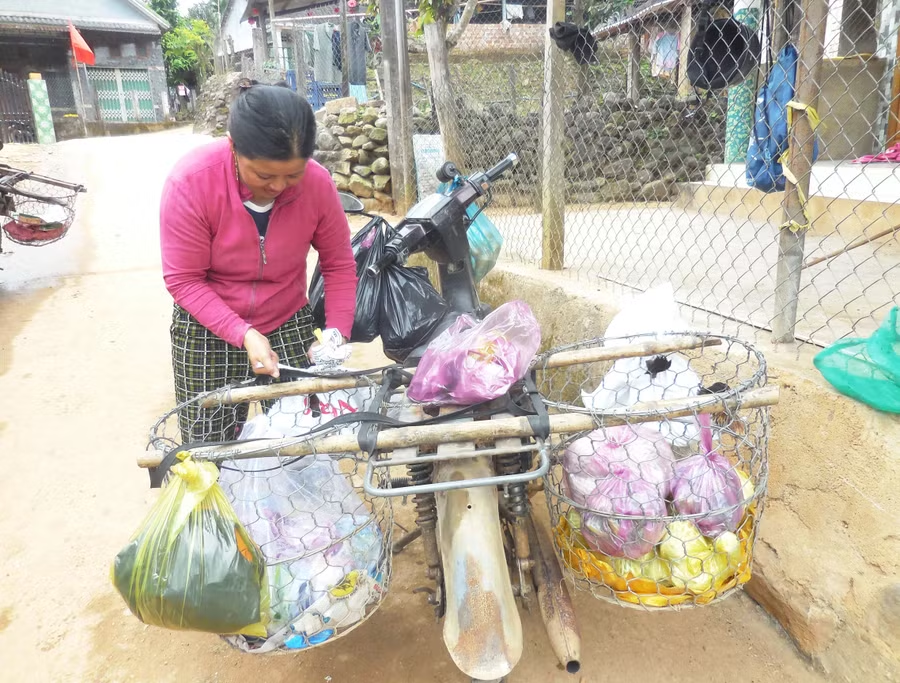
Year after year, Sương’s motorbike market travels regularly to Hamlets 5, 6 and 7, providing fresh food and essential items to households in the highlands.
She says selling in the mountains is more demanding than in the lowlands, but the income has become more stable over time. In the past, poor roads and difficult living conditions made trading unpredictable. As infrastructure and living standards improve, demand has grown and business has become easier.
For local residents, the travelling vendors are an important convenience.
“Having someone bring food right to the village means we don’t have to trek over hills to the central market just to buy a fish or a piece of meat,” said Đinh Thị Niết, a resident of Hamlet 5 in An Vinh commune. “If a few days go by without the women from the lowlands coming up, people start looking out for them and calling to check in”.
In nearby Vĩnh Sơn commune, Nguyễn Thị Lài, 48, from Vĩnh Thạnh commune, has spent nearly a decade supplying highland communities in a similar way. Her motorbike carries fresh meat, fish, vegetables, spices and other daily necessities.
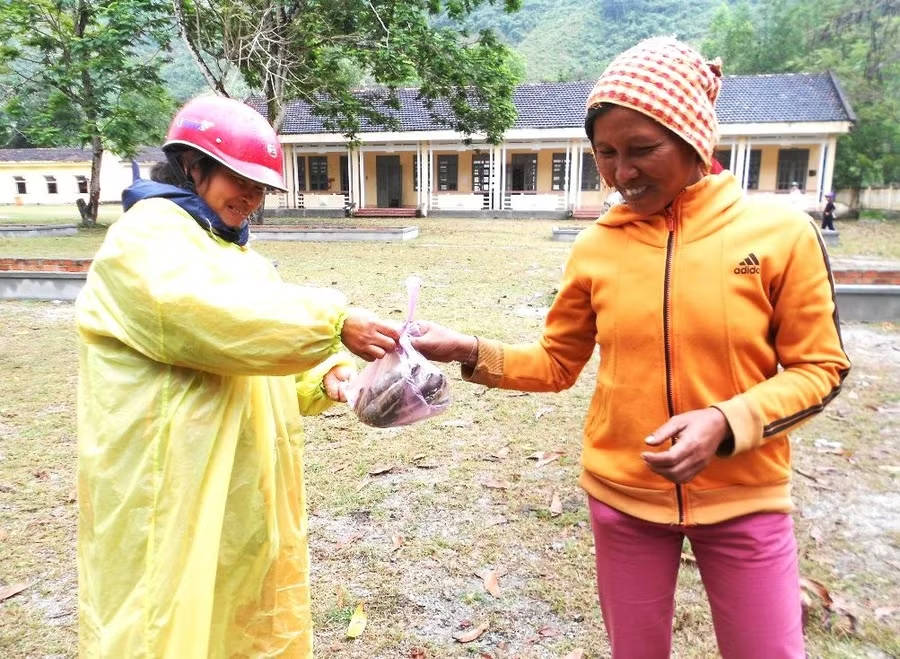
Lài’s trading model also includes barter. Residents from hamlets K2, K3, K6 and O5 often bring bananas, wild honey or poultry to roadside meeting points to exchange for meat, fish, vegetables or salt.
The arrangement means that Lài’s motorbike returns to the lowlands laden with mountain produce.
“At first, I was exhausted after each trip and thought I couldn’t keep going,” she said. “But over time I got used to it. Now if I miss a day in the village, I feel like something’s missing”.
Sương and Lài are among many women who have taken up the role of running mobile markets to highland communes such as Vĩnh Sơn, An Vinh, An Toàn and Canh Liên.
Across the mountainous landscape, motorbikes stacked with baskets of goods weaving along narrow slopes have become a familiar sight.
The travelling markets help residents avoid journeys of dozens of kilometres along forest roads to reach central markets. At the same time, barter exchanges allow agricultural products and local specialties from the villages to reach outside buyers, creating additional income for households.
Despite the risks and hardship of mountain travel, the women who run these mobile markets say the work brings both steady earnings and strong ties with the communities they serve.
In an era of rapid modernisation, the quiet routine of the motorbike market continues to link Vietnam’s lowlands and highlands, supporting daily life and small-scale trade across remote mountain regions.