From small villages nestled along narrow bays to alleyways draped in bougainvillea, the world's most beautiful villages for 2025 have just been announced, with one location in Vietnam making the list.
From fjord-fringed hamlets to bougainvillea-draped alleys, here are the world’s most beautiful villages for 2025 - according to Unforgettable Travel Company.
Below are the top 10, along with a Vietnamese village featured on the list, according to Forbes:
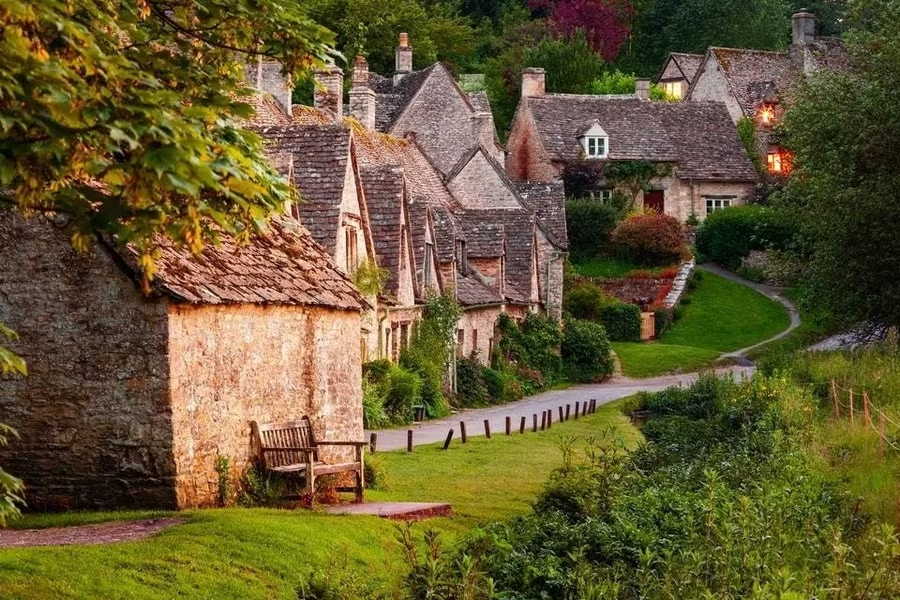
1. Bibury, England
Nestled in the heart of the Cotswolds, Bibury unfurls like a watercolor dream—where honey-slicked cottages line Arlington Row; their mossy roofs whispering tales of 14th-century weavers. The River Coln murmurs gently here—weaving through golden buttercups and forget-me-nots, while plump ducks paddle lazily beneath canopies of willow. Nearby, Bibury Trout Farm invites visitors to feed fish or enjoy a riverside picnic, and St. Mary’s Church offers a moment of stillness amid ancient stone—while the air carries the smell of blooming lavender, mingling with freshly-baked scones. PHOTO: GETTY
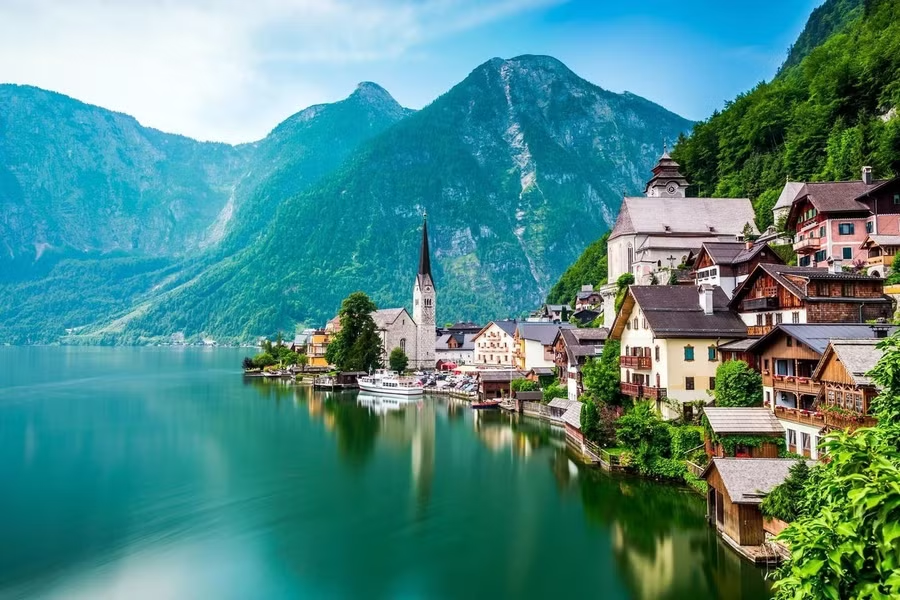
2. Hallstatt, Austria
Cradled between forested peaks and shimmering Lake Hallstatt, this Austrian village glows like a storybook reflection, where centuries-old timbered houses cling to the steep mountainside and flower-boxed balconies spill with scarlet geraniums. Church bells echo across the lake as swans drift in elegant arcs, while nearby, the panoramic Hallstatt Skywalk offers breathtaking views of of the Dachstein Alps and the glassy lake below, as Salzwelten Hallstatt, home to the world’s oldest salt mine, allows you to sink deep into mountain tunnels to discover 7,000 years of mining history. Stroll past the Marketplace Hallstatt (perfect for buying wooden figurines, local cheeses, and salt crystals) and the Hallstätter Wasserfall, a dramatic cascade nestled in the lush Echerntal valley, or explore the World Heritage Museum, where prehistoric artifacts and Celtic relics trace the region’s ancient legacy, before settling into a cozy lakeside café for cinnamon-laced strudel. PHOTO: GETTY
3. Reine, Norway
Tucked beneath jagged peaks and wrapped in Arctic light, Reine rests like a scattering of rubies on slate. Crimson fishermen’s cabins perch along the fjord’s edge as snowmelt threads past violet-drenched lupines and silvery sea thrift—while nets hang, stiff with salt, and wicker baskets overflow with cloudberries from its guarding hills. At the harbor, a single boat named Nordlys bobs gently—its hull scarred by winter crossings. Meanwhile, nearby, Reinebringen beckons hikers with panoramic views of knife-edged ridgelines and the mirror-like surface of Reinevatnet, as kayak tours glide through glassy waters. Be sure to visit its bakery, Bringen Kaffebar, where you’ll fall in love with the smell of cardamom buns and dark Sunnmørsbrød rye bread. PHOTO: GETTY
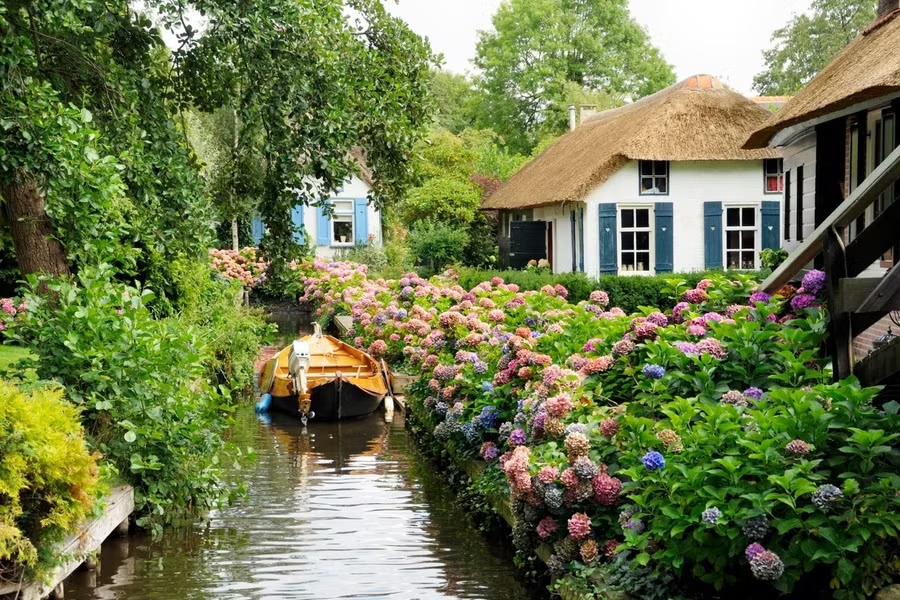
4. Giethoorn, Netherlands
Threaded through the watery veins of Overijssel, Giethoorn glimmers like a secret kept by the Dutch lowlands. Thatched-roof cottages huddle beside narrow canals, their reflections trembling in the wake of whispering punts—as arched bridges stitch the pretty village together like lace, and riotous gardens spill geraniums and lavender over its cobbled paths. Local kids pedal past on creaking bikes, wicker baskets rattling with loaves and tulips—while visitors explore the Museum Giethoorn ’t Olde Maat Uus (with its tales of peat-cutters and fishermen) or wander into the wild De Weerribben-Wieden National Park—where reed beds, swamp forests, and rare otters thrive. PHOTO: GETTY
5. Gásadalur, Faroe Islands
Perched on the edge of Vágar Island, Gásadalur clings to cliffs like a half-remembered legend where turf-roofed homes dot the glacial valley—framed by the towering silhouette of Árnafjall—the highest peak on Vágar (at 722 meters) known as the “eagle’s mountain”. Meanwhile, Múlafossur Waterfall tumbles into the Atlantic below—its roar softened by Northern Fulmars wheeling overhead. A single lane winds through the village, once isolated until the tunnel carved through rock in 2004—where locals sip Ethiopian Yirgacheffe on stoops, watching pillowy clouds drift across the fjord, or trace paths to the edge—where a red mailbox stands alone.” PHOTO: GETTY
6. Oia, Greece
Sitting on the northern tip of Santorini, Oia spills like a tumble of mirror-like infinity pools, bougainvillea-draped balconies, and whitewashed cliffside homes—carved into the caldera like sugar cubes—toward the Aegean. By day, bohemian art galleries and chic boutiques beckon with hand-thrown ceramics and billowing kaftans—while shaggy donkeys clatter along stone paths and church bells echo across the caldera. At dusk, sun-chasing crowds gather at the ruined Venetian castle, cameras poised, as the sky ignites in tangerine and rose. Below, Ammoudi Bay glows with lantern-lit tavernas serving freshly-caught octopus and calamari beside lapping, moonlit waves—as lazy cats stretch along warm stone ledges—and lovers linger over chilled Assyrtiko. PHOTO: GETTY
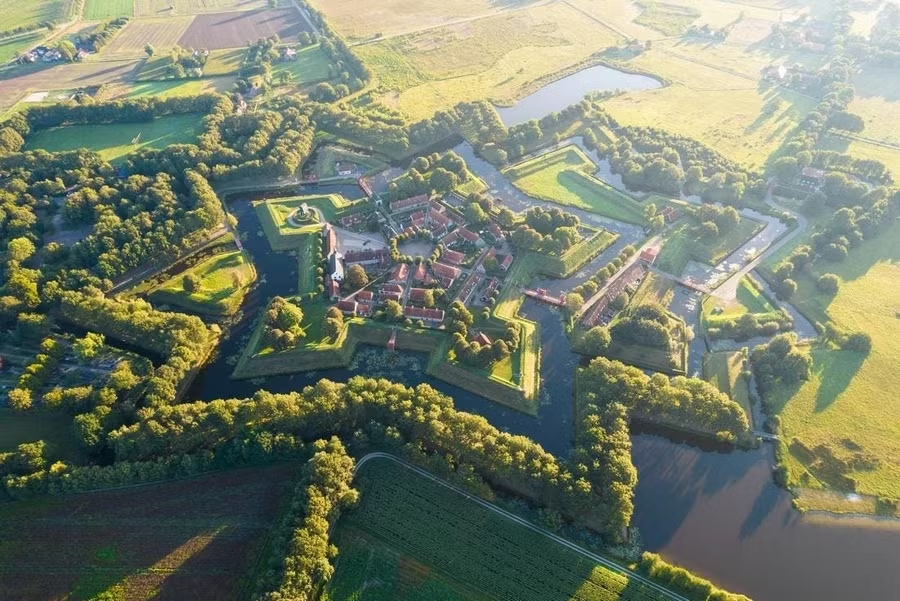
7. Bourtange, Netherlands
Shaped like a star and stitched into the marshy plains of Groningen, Bourtange dazzles with its symmetry and storybook charm. Here, brick ramparts and grassy bastions radiate from the heart of the fortress—where 17th-century cannons rest beside tulip-filled courtyards and the smell of fresh stroopwafels drifts from cozy cafés. Meanwhile, its cobbled square hums with brimming market stalls (selling hand-forged cutlery, linen maps, and spiced cheeses) and the Museum of Fortifications reveals tales of siege and strategy with restored barracks, musket dueling halls, and cannon-firing demonstrations that echo across the moats. PHOTO: GETTY
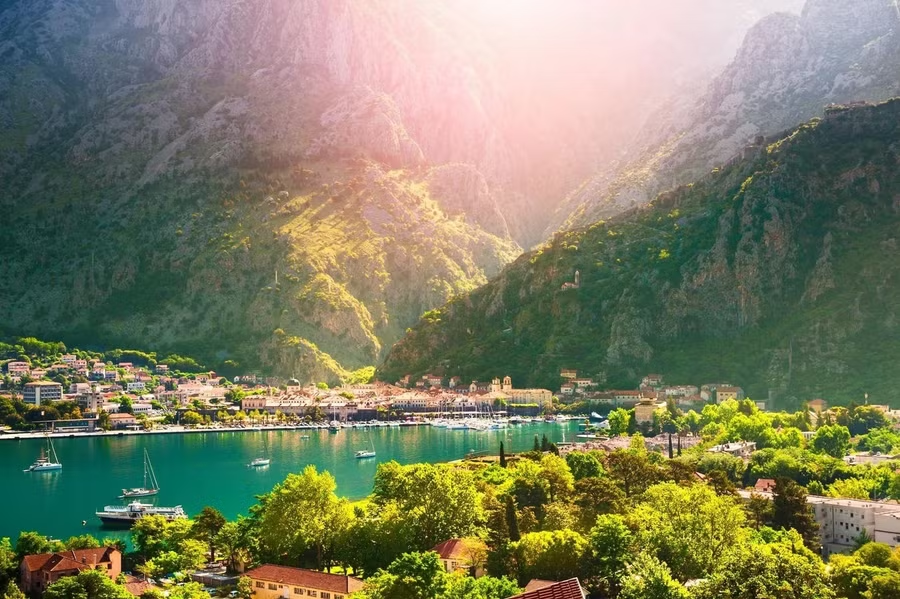
8. Kotor, Montenegro
Kotor rises in a swirl of stone and shadow—its medieval heart beating through tangled alleys where lazy tabbies reign and bells toll from centuries-old chapels, like St. Nicholas—as sunlight dances on the bay where sailboats drift past Venetian facades and ivy-clad balconies. Climb the fortress trail to San Giovanni—a crumbling hilltop citadel that once guarded the city from Ottoman sieges—where the vistas stretch like a myth across fjord-like waters. Down below, the palm-lined marina hums with clinking glasses and grilled squid while the scent of pine and salt lingers in the dusk. PHOTO: GETTY
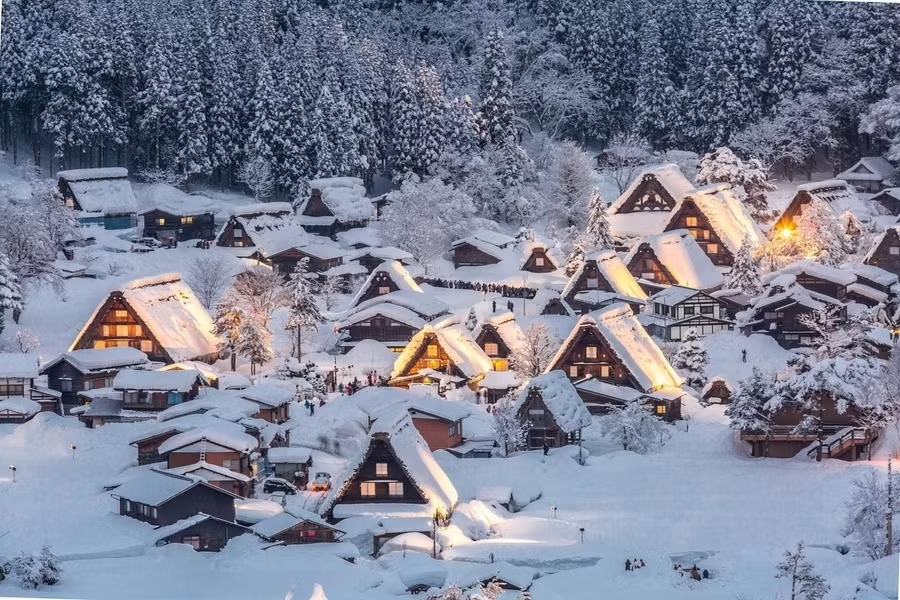
9. Shirakawa-go, Japan
Blanketed in alpine silence, Shirakawa-go emerges like a fairytale—its steep thatched roofs rising against forested slopes built to cradle heavy snow. Smoke curls from sunken irori hearths inside centuries-old farmhouses—as fires crackle and miso simmers in clay pots. By day, visitors wander past mirror-like rice paddies and mossy waterwheels—pausing at Wada House to glimpse Edo-era life with silkworm trays, saltpeter trade ledgers, and a grand Buddhist altar glowing in the hearthlight. Later, as dusk falls, lanterns flicker along quiet lanes, and the air thickens with woodsmoke. Exploring in winter? You’ll catch illumination nights casting a golden glow on snow-laden eaves—like stars fallen gently to earth. PHOTO: GETTY
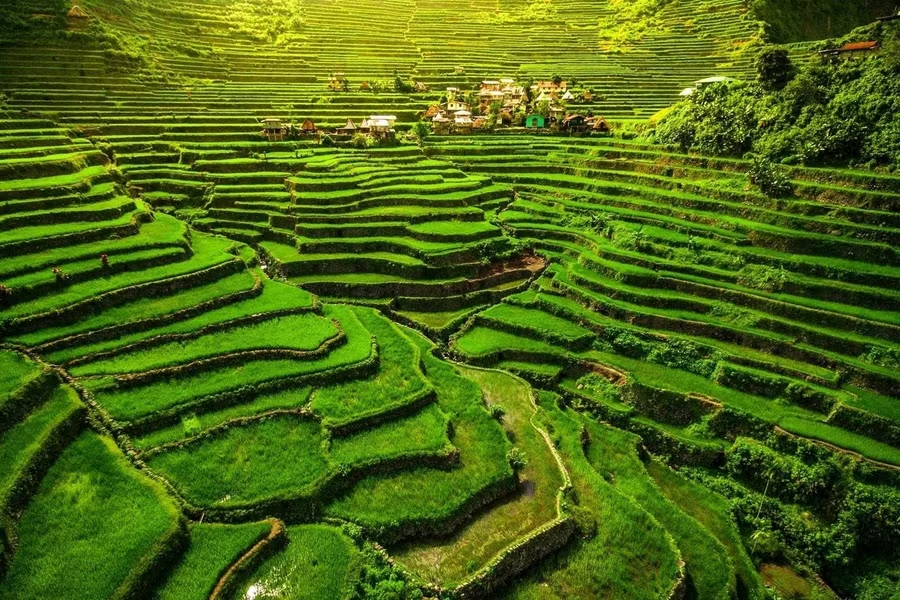
10. Batad, Philippines
Unfurling like a green amphitheater, Batad’s 2,000-year-old rice terraces rise in perfect symmetry—carved into the steep folds of the Cordillera mountains. Stone footpaths snake past handwoven Ifugao huts, where elders in feathered headdresses pound rice and hum ancestral chants. Meanwhile, a steep descent leads to Tappiya Falls—thundering into a jade basin as mist clings to lichen-slick boulders. At sunrise, Saddle Point glows gold—a scenic overlook where jeepneys drop off travelers before the final descent into Batad—casting long shadows over the terraces, while roosters crow and woodsmoke curls from tin-roofed kitchens. There are no cars—only footsteps and silence. PHOTO: GETTY
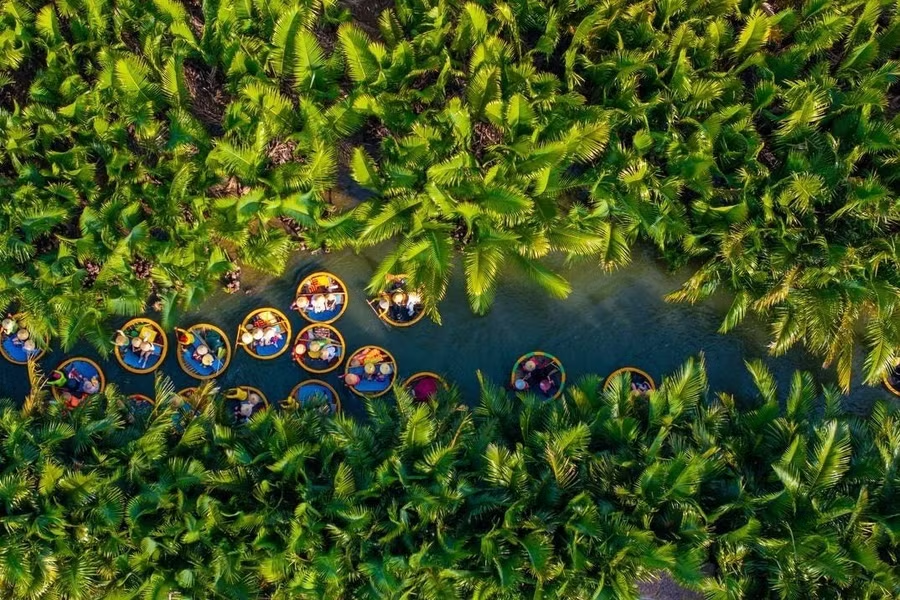
20. Cẩm Thanh, Vietnam
Woven between coconut groves and tidal creeks, Cam Thanh hums with the rhythm of river life. Bamboo basket boats swirl through the Bay Mau nipa palm forest—their skippers casting nets in the shade of swaying fronds. Meanwhile, on the banks, cooking classes sizzle with lemongrass and tamarind—as water buffalo graze lazily beside stilted homes. Cyclists drift past shrimp farms and lotus ponds—the air thick with the scent of grilled squid and sweet jackfruit—but as the sun dips low, the Thu Bồn River glows bronze, and the village exhales. PHOTO: GETTY
Hotels and accommodation providers in Quy Nhon are stepping up preparations for the September 2 National Day holiday, upgrading facilities, refining services and offering promotions as advance bookings continue to rise.
The five-day National Day holiday from August 29 to September 2 offers travelers an opportunity to explore Gia Lai through a journey linking its forests, cultural heritage and coastline.
The 2nd Vietnam Travel Day 2026 opened in Gia Lai on August 15, bringing together tourism authorities, associations and businesses from Vietnam and overseas to strengthen market connections, develop new products and showcase the province’s evolving tourism landscape.
Hundreds of domestic and international tourism businesses surveyed attractions, cultural experiences and facilities in Gia Lai on August 14, exploring opportunities to develop new travel programs and partnerships in the province.
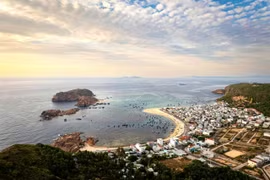
Mui Vi Rong, a dramatic rocky promontory jutting into the East Sea, is attracting a growing number of visitors to Phu My Dong, bringing new tourism opportunities to the centuries-old fishing community of Tan Phung.
Three whales were spotted simultaneously hunting for food off the coast of Vũng Bồi in An Lương commune at around midday on August 5, marking a rare wildlife sighting that has attracted widespread public attention.
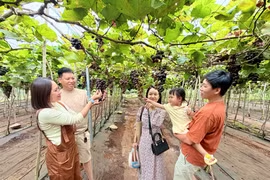
A 1.2-hectare organic vineyard in Gia Lai province has evolved into a leading agritourism destination, attracting between 20,000 and 30,000 visitors annually while demonstrating how organic farming and experiential tourism can generate sustainable rural livelihoods.
Cù Lao Xanh is leveraging its abundant marine resources and distinctive seafood cuisine to strengthen island tourism, while promoting sustainable fishing practices and protecting its coastal ecosystem.
Gia Lai's Department of Culture, Sports and Tourism, in coordination with Hanatour Vietnam Co., Ltd., conducted a familiarization (famtrip) tour on July 26 to assess cultural and natural attractions in the province's western region to develop a new tourism route for South Korean travelers.
National Tourism Year 2026 offers Gia Lai more than an opportunity to attract visitors. It provides a foundation for the province to establish a lasting tourism brand by transforming its rich cultural and historical heritage into distinctive visitor experiences.
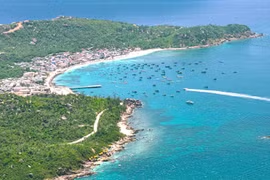
Nhơn Châu island commune is reshaping its tourism strategy by focusing on authentic cultural experiences, environmental protection and community participation, as it seeks to create a distinctive destination while preserving its natural and cultural heritage.
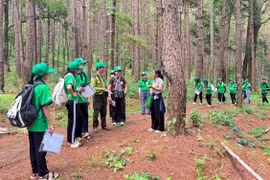
Deep inside the Kon Ka Kinh forest, students are leaving behind mobile phones and internet access to learn practical outdoor skills through immersive experiences as Kon Ka Kinh National Park develops a new school tourism program focused on life skills and nature conservation.
The People's Committee of Gia Lai Province has approved a 12-month pilot program for jet skiing and motorized paragliding in Quy Nhon Ward as part of efforts to promote marine tourism development. The pilot will begin once the activities receive official authorization to operate.
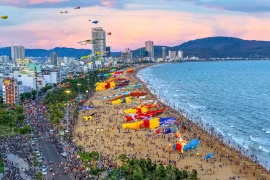
Hundreds of colorful kites, including giant whale, crocodile and stingray designs, filled the skies above Xuan Dieu Beach during the 2026 Quy Nhon-Gia Lai Artistic Kite Festival, drawing thousands of residents and tourists and adding to the city's summer tourism appeal.
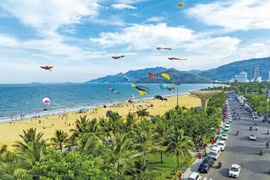
Quy Nhon, located in Gia Lai province, has been recognized as Vietnam's sole representative among the ideal destinations for beach exploration journeys, according to a recent announcement by Lonely Planet.
Authorities in Gia Lai Province have reviewed proposals to develop ecotourism, resort and entertainment projects at Kon Ka Kinh National Park and Kon Chư Răng Nature Reserve through 2030, with a long-term vision extending to 2045.
Tourism is steadily reshaping life on Cu Lao Xanh, a small island commune about 20 kilometers off Vietnam’s coast, as fishermen and their families diversify their livelihoods while local authorities seek to build a sustainable tourism industry around the island’s natural attractions.
Gia Lai Province officially launched the “Gia Lai Welcomes Summer 2026” Tourism Festival on June 20 with a large-scale arts programme that combined traditional culture, contemporary music and tourism promotion, drawing residents and visitors to Nguyen Tat Thanh Square in Quy Nhon Ward.
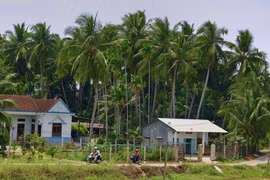
Gia Lai’s Hoài Nhơn Ward is seeking to transform its extensive coconut groves into a distinctive tourism asset, combining cultural heritage, community-based experiences and coastal attractions to create a unique destination in central Vietnam.
Authorities in Quy Nhon have launched a dedicated passenger pick-up and drop-off point at Mui Tan Wharf for tourist boats serving Nhon Chau Island, replacing the previous departure point at Ham Tu fishing port as part of efforts to improve service quality, enhance safety and tourism management.
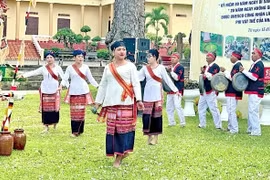
The 6th Cham Ethnic Cultural Festival will be held in Khanh Hoa Province from June 26 to 28, 2026, bringing together Cham communities from seven provinces and cities across Vietnam to celebrate and promote their cultural heritage.
Gia Lai is seeking closer cooperation with South Korea’s leading travel company HanaTour to expand tourism links and promote charter flight services, as the province prepares to host Vietnam’s National Tourism Year 2026 and increase international visitor arrivals.
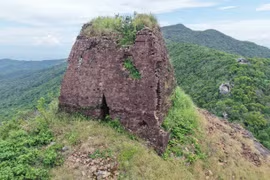
After a nearly 10-hour trek covering more than 8 kilometres through dense forest, visitors were only able to approach within just over 10 metres of Hon Chuong Tower before thick fog obscured the solitary Cham structure perched atop Hon Chuong Mountain in De Gi Commune, Gia Lai Province.
Gia Lai is well positioned to become a leading sports tourism destination in Vietnam’s central and highland regions, experts said at a national scientific conference held on June 5 in Quy Nhon Ward.