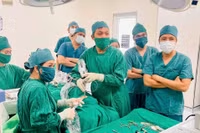
The plan, recently approved by the Gia Lai Provincial People’s Committee, comes as many local health stations face increasing workloads despite limited medical personnel and an uneven distribution of doctors across the province.
Gia Lai currently has 135 commune and ward health stations operating a total of 369 outposts. A total of 293 doctors are assigned to these facilities, providing primary healthcare, preventive medicine, community health services and implementing public health programs.
However, four health stations, Thống Nhất, Hội Phú, Ia Grai and Chơ Long, currently have no doctors, while 76 outposts remain without a physician.
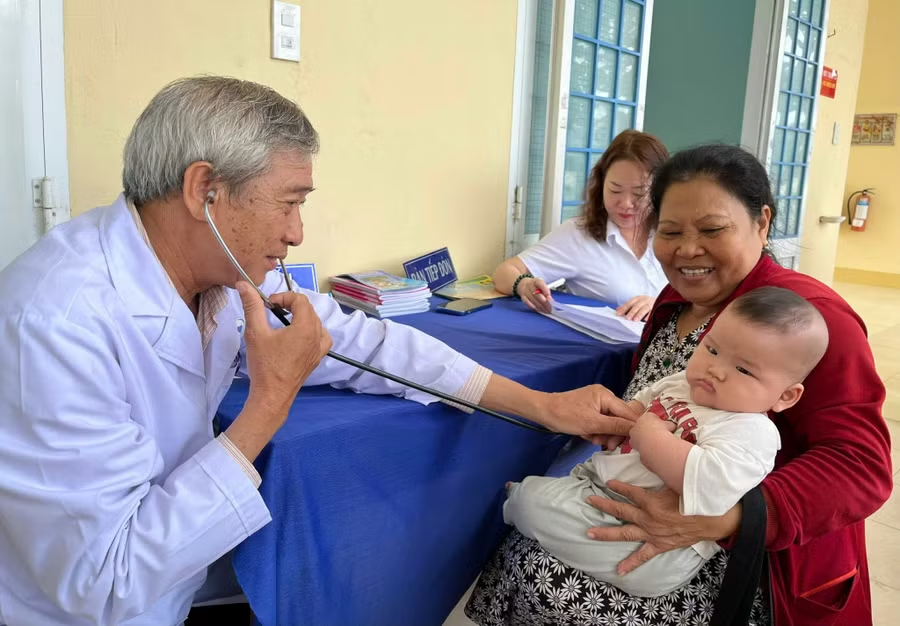
A provincial review found that 74 of the 135 health stations have requested additional doctors. These facilities have an average of only 1.97 doctors per station despite being responsible for a broad range of services, including medical examinations and treatment, disease prevention and control, immunization programs, management of non-communicable diseases, maternal and child healthcare, and population health management.
According to the Provincial People’s Committee, some health stations oversee multiple outposts, cover large geographical areas, serve dispersed populations or manage particularly heavy workloads, making it difficult to maintain a regular doctor presence.
Under the 2026 plan, 38 doctors from hospitals, medical centers and public healthcare facilities under the Department of Health will be assigned to support 30 priority communes and wards.
From 2027 to 2030, the Department of Health will assess actual demand and recruitment capacity before advising provincial authorities on the scale, locations and implementation of future doctor rotation programs.
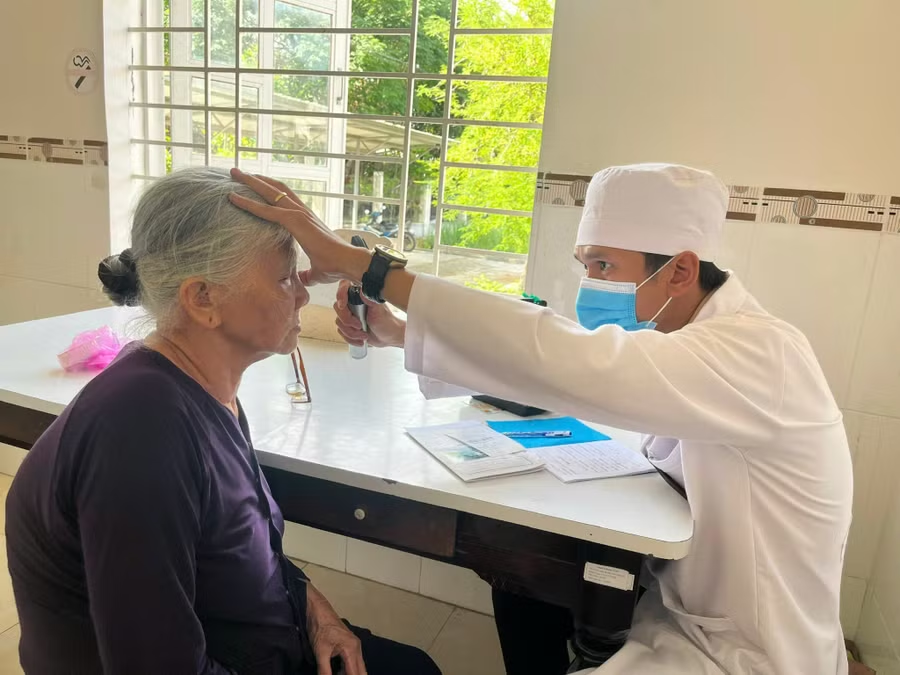
Doctors may be assigned to health stations on a full-time basis or through scheduled professional support arrangements, depending on local needs. Rotation terms will range from six to 12 months. For assignments conducted in multiple phases, doctors must work at least three days per week or one week per month, with service time accumulated to meet rotation requirements.
The additional medical personnel will provide primary healthcare services, support the management of non-communicable diseases and deliver care for older adults, pregnant women and children. They will also assist with preventive medicine, immunization, disease control and community health education.
In addition to clinical duties, rotating doctors will provide professional guidance, transfer practical skills to commune-level healthcare workers and support the standardization of electronic health records.
Priority will be given to localities facing particularly difficult socio-economic conditions, remote and isolated areas, ethnic minority communities, and regions with widely dispersed health outposts or limited access to higher-level healthcare facilities.