Following an administrative merger, the provincial health system now employs more than 9,670 staff, including 3,230 doctors. Doctors are present at 95.5% of commune-level health stations, reflecting efforts to strengthen frontline care and reduce pressure on higher-tier hospitals.
Following an administrative merger, the provincial health system now employs more than 9,670 staff, including 3,230 doctors. Doctors are present at 95.5% of commune-level health stations, reflecting efforts to strengthen frontline care and reduce pressure on higher-tier hospitals.

To address growing healthcare needs, the sector continues to recruit and attract doctors and pharmacists, with a focus on building a high-quality workforce at all levels, particularly at the grassroots. Recruitment is being implemented in parallel with training, professional development and technology transfer, which have become key measures to enhance treatment capacity across the system.
Continuous medical education, specialist training and staff rotation between different levels of care are being prioritised, helping to narrow professional gaps and ease congestion at provincial and central hospitals. According to the Department of Health, workforce development is being pursued evenly, from commune health stations and regional centres to general and specialised hospitals.
As medical science advances and digital transformation accelerates, demand for professional training has intensified. The sector is focusing on mastering advanced techniques at the provincial level while ensuring essential diagnostic and treatment capabilities at the grassroots, enabling patients to access care locally and limiting unnecessary referrals.
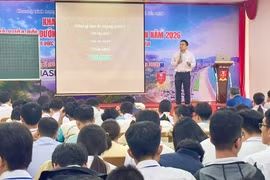
As the province’s top-tier facility, the Provincial Central General Hospital regularly sends doctors for specialist training at major hospitals nationwide. It also collaborates with leading central hospitals and medical universities to receive technology transfers.
In 2025, the hospital expanded international cooperation by sending two doctors to Japan for training in vascular embolisation techniques for cancer treatment, supporting the introduction of minimally invasive procedures for liver, kidney and lung diseases at the local level.
The hospital aims to add around 30 postgraduate-trained doctors each year to meet advanced professional requirements. Systematic training and timely technology transfer have already enabled many provincial facilities to master new techniques, leading to improved treatment outcomes.
In 2025, Bong Son Regional General Hospital recorded significant surgical advances, including endoscopic lithotripsy, endoscopic ear, nose and throat procedures, and haemodialysis.
An assessment conducted one month after the transfer of haemodialysis techniques from the Provincial Central General Hospital showed safe and stable results. The hospital has also successfully received ENT techniques under the Ministry of Health’s Project 1816.
Hospital leaders say technology transfer has helped doctors gradually master specialised skills at the regional level, allowing patients to receive advanced care closer to home, reducing referrals and cutting costs.
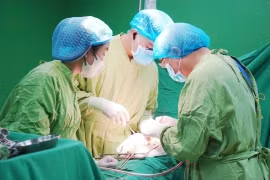
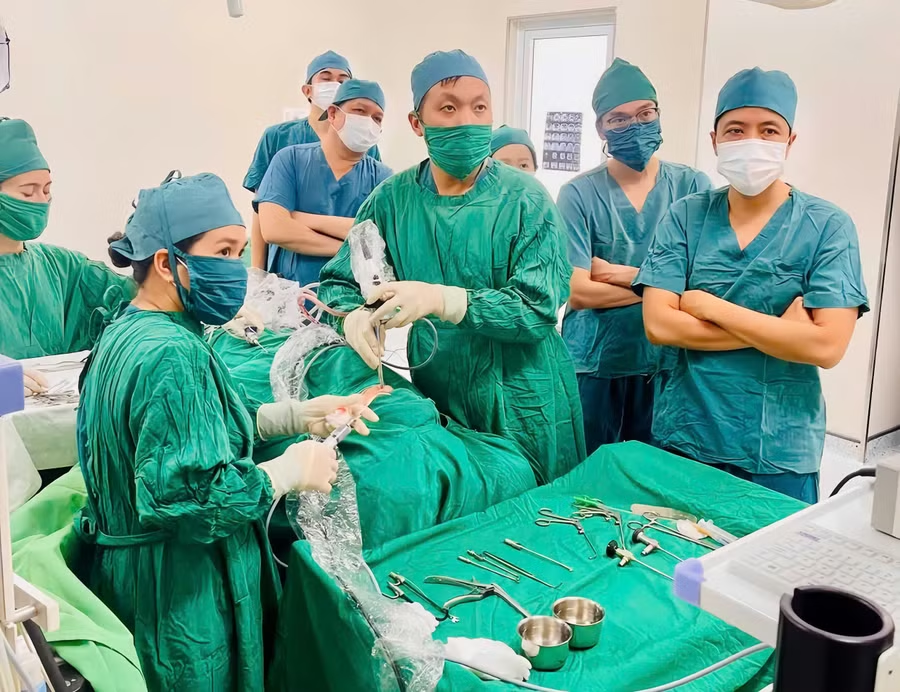
At the provincial Central General Hospital, minimally invasive procedures are now routinely performed, including combined gallstone treatments and endoscopic surgery with ERCP in a single operation. Since 2022, hundreds of patients have been treated successfully using newly adopted techniques, significantly reducing treatment time and expenses.
In intensive care, blood filtration and plasma exchange techniques have been applied since 2024 after specialist training at a major central hospital. The department now treats around 100 severe cases annually using these methods, contributing to higher survival rates among critically ill patients.
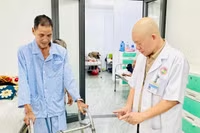
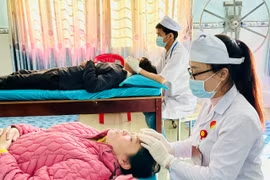
Alongside modern medicine, traditional medicine in the province has also been modernised through technological application. Medical facilities have invested in infrastructure and equipment while sending staff for specialised training.
Techniques such as electroacupuncture, laser acupuncture, electrical stimulation and movement therapy are being applied effectively, improving treatment quality, shortening recovery times and reducing reliance on medication.