From fiery maples to golden ginkgos, here’s where Asia puts on its best autumn show
Leaf-peeping, where people travel to see fall foliage in all its glory, has recently become popular in places like the US.
However, admiring autumn leaves has long been a tradition in parts of Asia – take Japan, which has a special term for it called momijigari.
Take it from us: Asia’s autumnal hues are less advertised but no less spectacular. If you’re keen to see what it’s all about, here are seven places to see gorgeous fall foliage across the region.
Ibaraki Prefecture, Japan
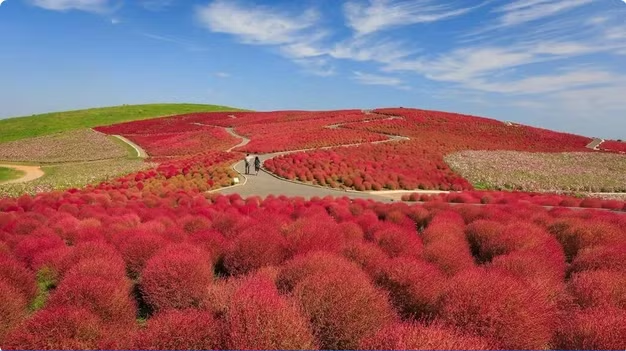
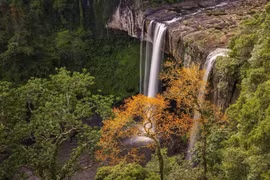
A short distance from Tokyo, Ibaraki prefecture is a leaf-peeper’s dream. Blood red kochia bushes paint the hillside a fiery red at Hitachi Seaside Park in Hitachinaka City. The Ginkgo Festival in Mito City in November is a great time to experience the Museum of History’s avenue of ginkgo trees carpeted in yellow. Head to the Fukuroda falls and Eigenji Temple (called Momiji-dera, or Autumn Foliage Temple) in Daigo, or up to Mount Tsukuba, which celebrates a Momiji Festival when the hills are lit up at night, which can be viewed by cable car. At Ryujin Lake, you can canoe or paddleboard amidst fall foliage, or bungee jump off the Ryujin Suspension bridge with a view of the colourful gorge below.
Nami Island, South Korea
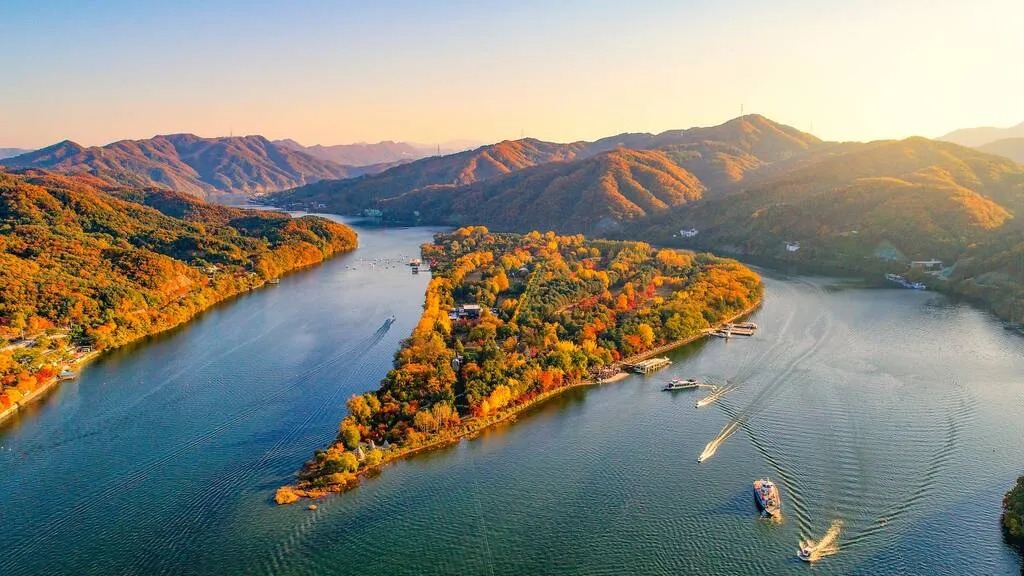
The 2002 K-drama Winter Sonata brought attention to Nami Island’s gorgeous fall foliage. The half-moon island is a short distance from Seoul, and can be accessed by ferry, speedboat or a zipline (yes, you read that right). On the island, admire the Metasequoia Lane’s towering conifers, which form a canopy of orange in fall, while the Ginkgo Tree Lane’s tunnel of gold looks spectacular both in real life and on the gram. Picnic under the trees, cycle around the island or take in the gigantic Maternal Love sculpture by sculptor Yu Qing Cheng. There is also a handicraft studio on the island that offers workshops in glassblowing, ceramics and woodworking.
Alishan Scenic Area, Taiwan
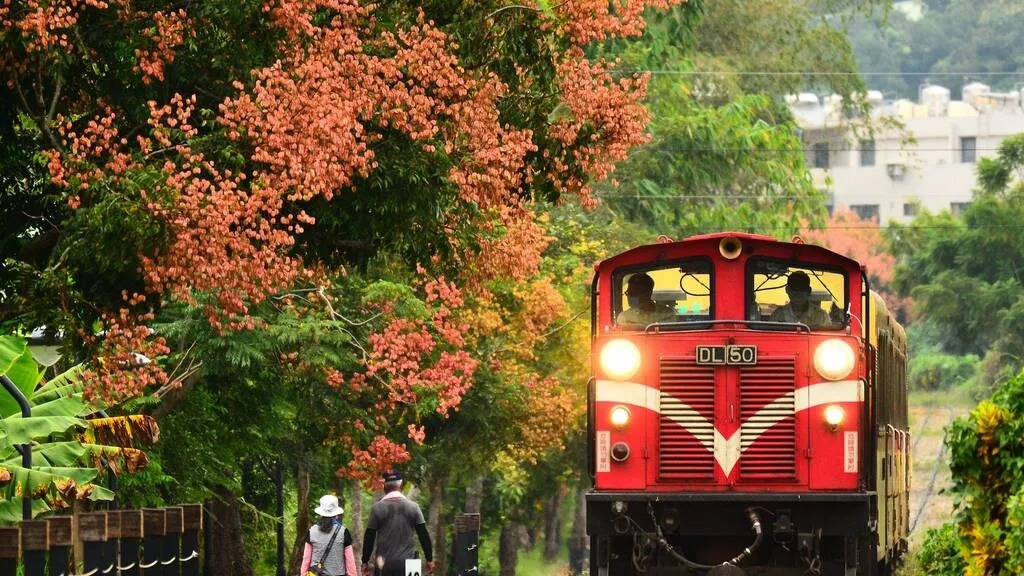
Home to gigantic red cypresses, maples and red pines, Alishan forest is stunning in autumn. Maple foliage viewing is a popular activity, with the best spots being from the observation decks of Mount Ogasawara, Mount Duigaoyue and Ciyun temple. The century-old Alishan Forest Railway, which reopened in 2024, is a steam railway that winds around the mountains and opens up the forest landscape. Hike the Eryanping trail, known for its sunset sea of clouds, or chase the train along the Manzhu cycling trail. Also sample the famous Alishan mountain oolong tea and millet donuts at Fenqihu Old Street.
Zhangjiajie National Forest Park, China
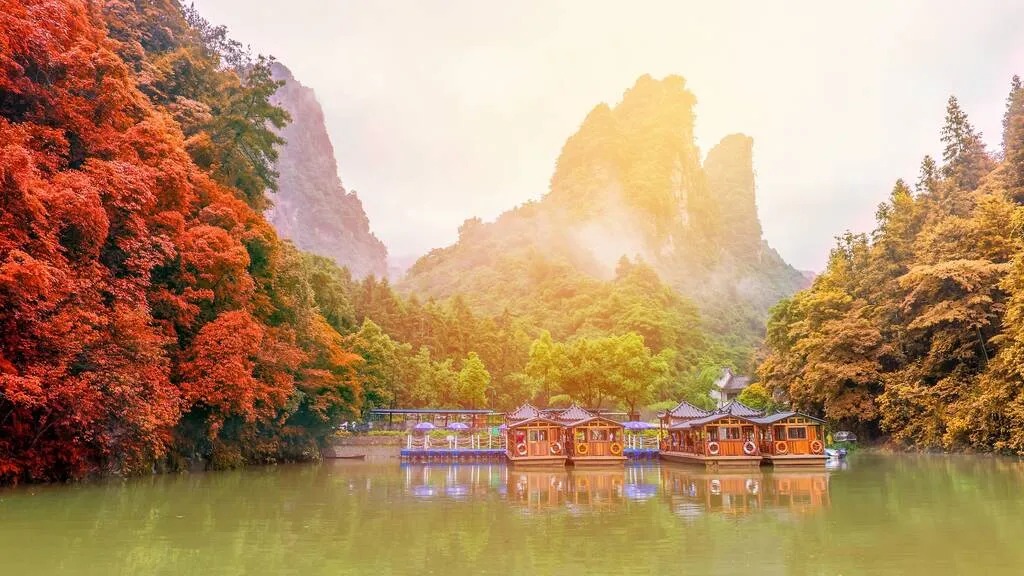
Famed as the mountains that inspired Avatar’s otherworldly landscape, the column-like rocky outcrops in China’s first national park have exploded in popularity. In autumn, the forests below the towering columns are clothed in red and orange hues. Walk along the Golden Whip stream, take a boat tour of Baofeng lake or head to viewpoints at Yuanjiejie or the Tianzi mountain to witness the leaves of the maple and ginkgo trees change colour. For hungry souls, the mountain has a food court on top and an elevator (Bailong Elevator, the world’s tallest outdoor lift) to head up.
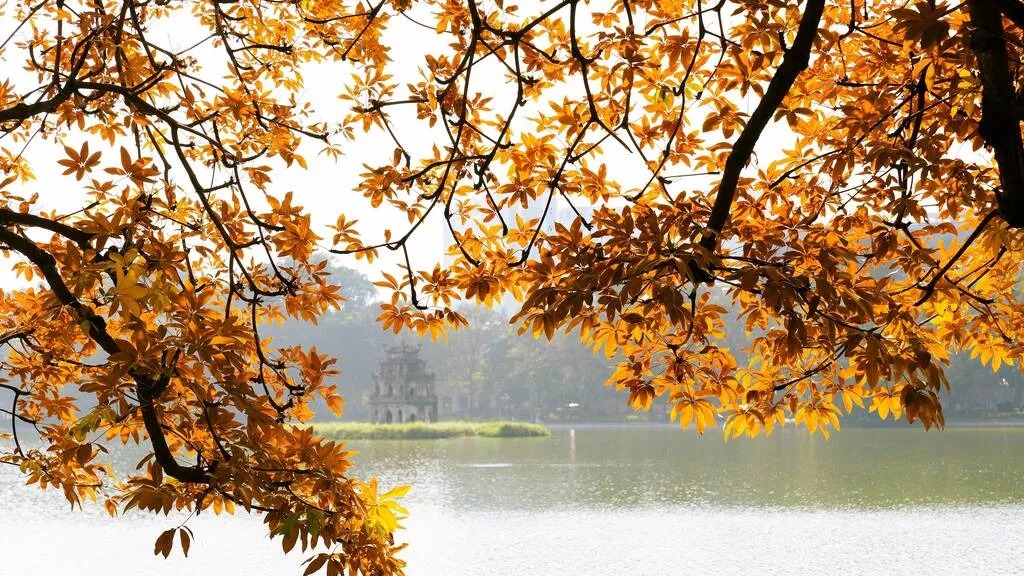
A lesser-known city for viewing fall foliage, Hanoi’s Old Quarter brings out the colours as the temperature dips. Taking a stroll around the Hoan Kiem Lake is the best way to take in the reds and golds of the fall. The mid-autumn festival celebrates the end of harvest season with traditional music, lion dances and lots of mooncakes (round pastries filled with ingredients like lotus seeds, salted egg yolk and mung beans). In the evening, the streets are lit up by lanterns of all shapes and sizes, making for a truly mesmerising sight.
Kyoto, Japan
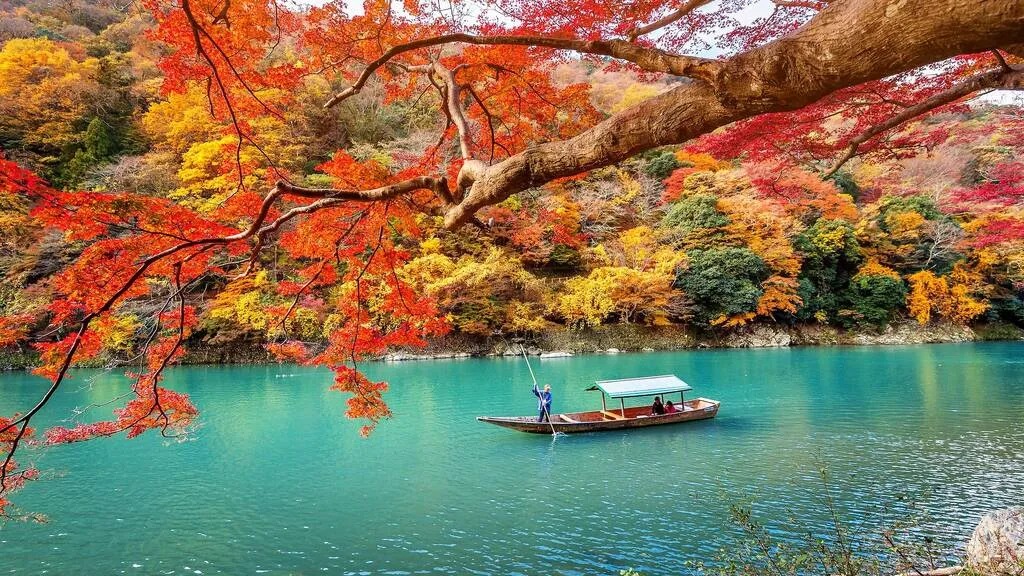
Autumn was one of the favourite topics for Kyoto’s courtly poets. The changing colour of trees around major temples like Kiyomizu-dera, Tofuku-ji and Kodaiji has attracted fall lovers for centuries. The Arashiyama Momiji festival in November hosts several events like a Heian-era cruise procession, traditional tea ceremonies and hikes. The Gion Odori festival is one of the few times to see public dance performances by geisha, while the Hitaki-sai Fire Festival is a centuries-old fire purification ritual held in Fushimi Inari to thank the deities for the harvest. Autumn is also a time to enjoy seasonal produce, such as chestnuts (steamed and paired with rice), matsutake mushrooms (grilled) and Japanese pumpkin (added to soups).
Jiuzhaigou Valley National Park, China
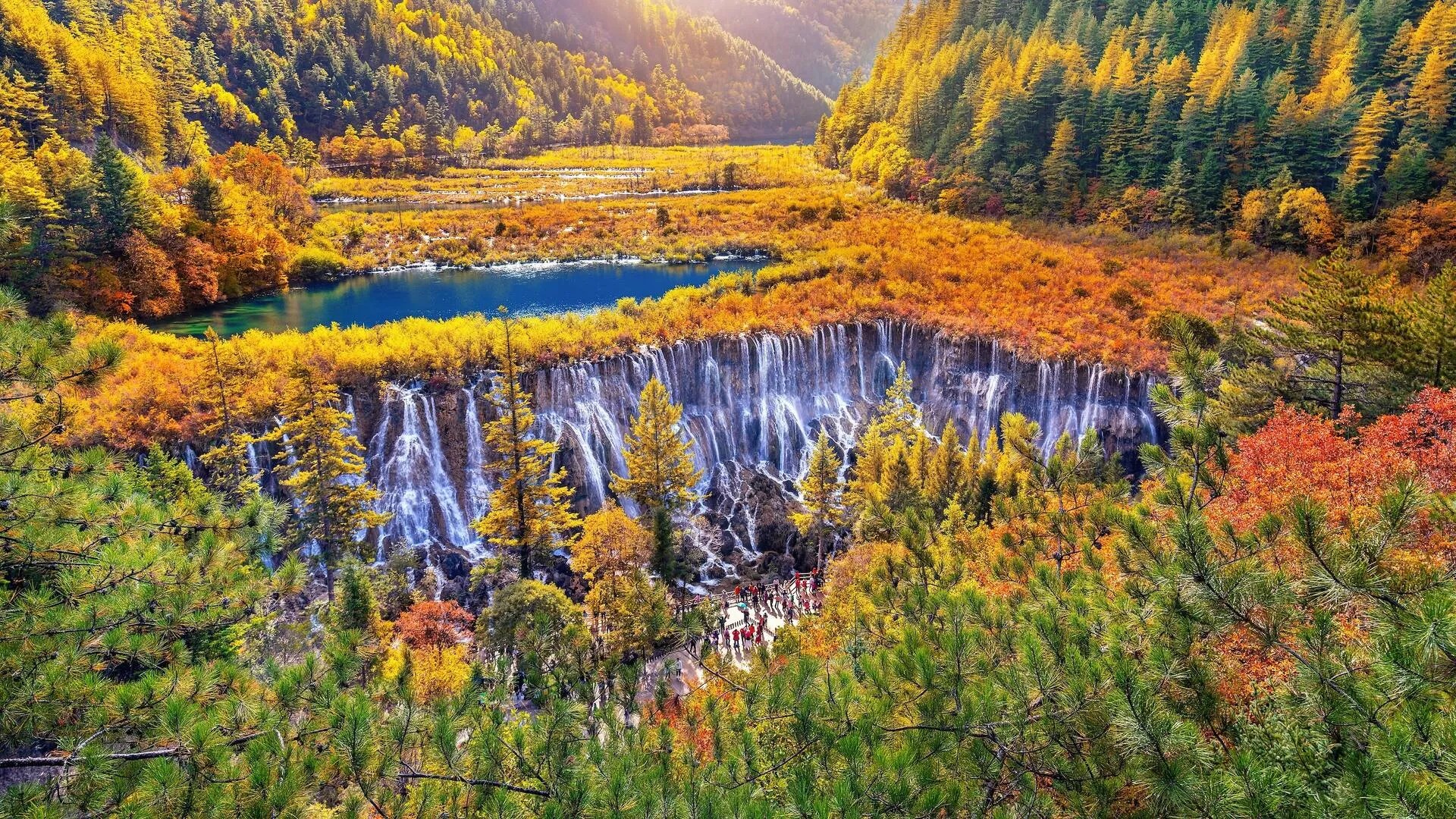
In the north of China’s Sichuan province is Jiuzhaigou Valley, a UNESCO World Heritage site that has some of the most beautiful autumn scenes in China. Jiuzhaigou is composed of three valleys arranged in a Y shape across the park. The Rize valley’s lakes – Five Flower Lake, Mirror Lake, Panda Lake – offer splendid vistas of red and gold reflected in azure waters. The Shuzeng Valley is home to Nuorilang Waterfall, the area’s tallest, and the Shuzeng Lakes, whose fall foliage can be viewed from the Tibetan Shuzeng Village. The Zechawa valley is the highest part, and has both the largest lake in the region (Long Lake) and the smallest (Five Colour Lake).
Hotels and accommodation providers in Quy Nhon are stepping up preparations for the September 2 National Day holiday, upgrading facilities, refining services and offering promotions as advance bookings continue to rise.
The five-day National Day holiday from August 29 to September 2 offers travelers an opportunity to explore Gia Lai through a journey linking its forests, cultural heritage and coastline.
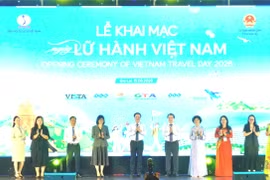
The 2nd Vietnam Travel Day 2026 opened in Gia Lai on August 15, bringing together tourism authorities, associations and businesses from Vietnam and overseas to strengthen market connections, develop new products and showcase the province’s evolving tourism landscape.
Hundreds of domestic and international tourism businesses surveyed attractions, cultural experiences and facilities in Gia Lai on August 14, exploring opportunities to develop new travel programs and partnerships in the province.
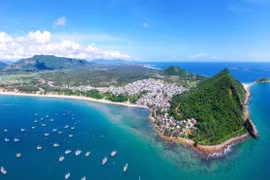
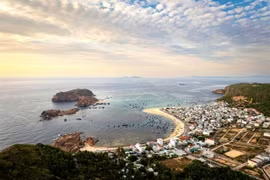
Mui Vi Rong, a dramatic rocky promontory jutting into the East Sea, is attracting a growing number of visitors to Phu My Dong, bringing new tourism opportunities to the centuries-old fishing community of Tan Phung.
Three whales were spotted simultaneously hunting for food off the coast of Vũng Bồi in An Lương commune at around midday on August 5, marking a rare wildlife sighting that has attracted widespread public attention.
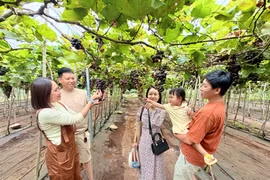
A 1.2-hectare organic vineyard in Gia Lai province has evolved into a leading agritourism destination, attracting between 20,000 and 30,000 visitors annually while demonstrating how organic farming and experiential tourism can generate sustainable rural livelihoods.
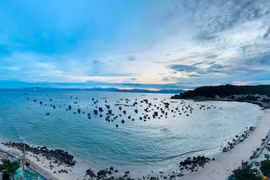
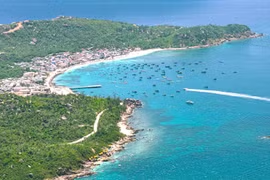
Cù Lao Xanh is leveraging its abundant marine resources and distinctive seafood cuisine to strengthen island tourism, while promoting sustainable fishing practices and protecting its coastal ecosystem.
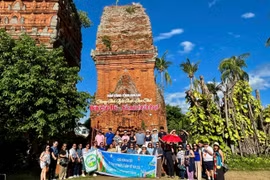
Gia Lai's Department of Culture, Sports and Tourism, in coordination with Hanatour Vietnam Co., Ltd., conducted a familiarization (famtrip) tour on July 26 to assess cultural and natural attractions in the province's western region to develop a new tourism route for South Korean travelers.
National Tourism Year 2026 offers Gia Lai more than an opportunity to attract visitors. It provides a foundation for the province to establish a lasting tourism brand by transforming its rich cultural and historical heritage into distinctive visitor experiences.
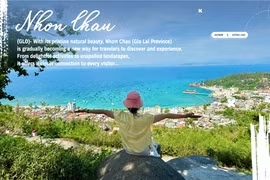
Nhơn Châu island commune is reshaping its tourism strategy by focusing on authentic cultural experiences, environmental protection and community participation, as it seeks to create a distinctive destination while preserving its natural and cultural heritage.
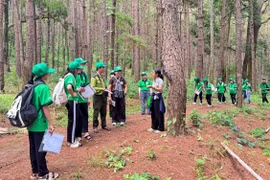
Deep inside the Kon Ka Kinh forest, students are leaving behind mobile phones and internet access to learn practical outdoor skills through immersive experiences as Kon Ka Kinh National Park develops a new school tourism program focused on life skills and nature conservation.
The People's Committee of Gia Lai Province has approved a 12-month pilot program for jet skiing and motorized paragliding in Quy Nhon Ward as part of efforts to promote marine tourism development. The pilot will begin once the activities receive official authorization to operate.
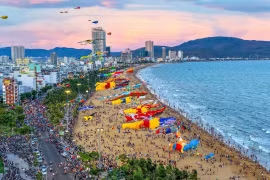
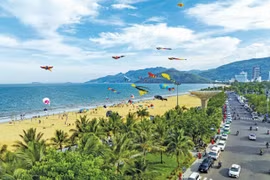
Hundreds of colorful kites, including giant whale, crocodile and stingray designs, filled the skies above Xuan Dieu Beach during the 2026 Quy Nhon-Gia Lai Artistic Kite Festival, drawing thousands of residents and tourists and adding to the city's summer tourism appeal.
Quy Nhon, located in Gia Lai province, has been recognized as Vietnam's sole representative among the ideal destinations for beach exploration journeys, according to a recent announcement by Lonely Planet.
Authorities in Gia Lai Province have reviewed proposals to develop ecotourism, resort and entertainment projects at Kon Ka Kinh National Park and Kon Chư Răng Nature Reserve through 2030, with a long-term vision extending to 2045.
Tourism is steadily reshaping life on Cu Lao Xanh, a small island commune about 20 kilometers off Vietnam’s coast, as fishermen and their families diversify their livelihoods while local authorities seek to build a sustainable tourism industry around the island’s natural attractions.
Gia Lai Province officially launched the “Gia Lai Welcomes Summer 2026” Tourism Festival on June 20 with a large-scale arts programme that combined traditional culture, contemporary music and tourism promotion, drawing residents and visitors to Nguyen Tat Thanh Square in Quy Nhon Ward.
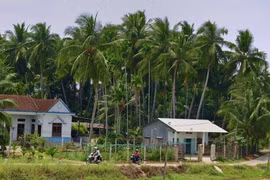
Gia Lai’s Hoài Nhơn Ward is seeking to transform its extensive coconut groves into a distinctive tourism asset, combining cultural heritage, community-based experiences and coastal attractions to create a unique destination in central Vietnam.
Authorities in Quy Nhon have launched a dedicated passenger pick-up and drop-off point at Mui Tan Wharf for tourist boats serving Nhon Chau Island, replacing the previous departure point at Ham Tu fishing port as part of efforts to improve service quality, enhance safety and tourism management.
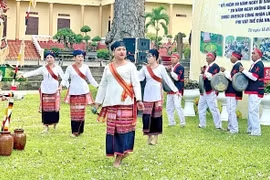
The 6th Cham Ethnic Cultural Festival will be held in Khanh Hoa Province from June 26 to 28, 2026, bringing together Cham communities from seven provinces and cities across Vietnam to celebrate and promote their cultural heritage.
Gia Lai is seeking closer cooperation with South Korea’s leading travel company HanaTour to expand tourism links and promote charter flight services, as the province prepares to host Vietnam’s National Tourism Year 2026 and increase international visitor arrivals.
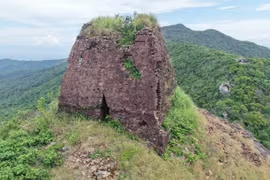
After a nearly 10-hour trek covering more than 8 kilometres through dense forest, visitors were only able to approach within just over 10 metres of Hon Chuong Tower before thick fog obscured the solitary Cham structure perched atop Hon Chuong Mountain in De Gi Commune, Gia Lai Province.
Gia Lai is well positioned to become a leading sports tourism destination in Vietnam’s central and highland regions, experts said at a national scientific conference held on June 5 in Quy Nhon Ward.