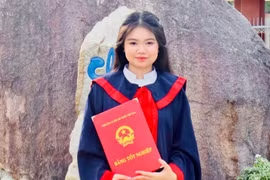
Speaking with Gia Lai Newspaper and Radio & Television ahead of Lunar New Year 2026, she discussed a new approach designed to make cancer treatment more humane and accessible.
* What is the most notable innovation of your project?
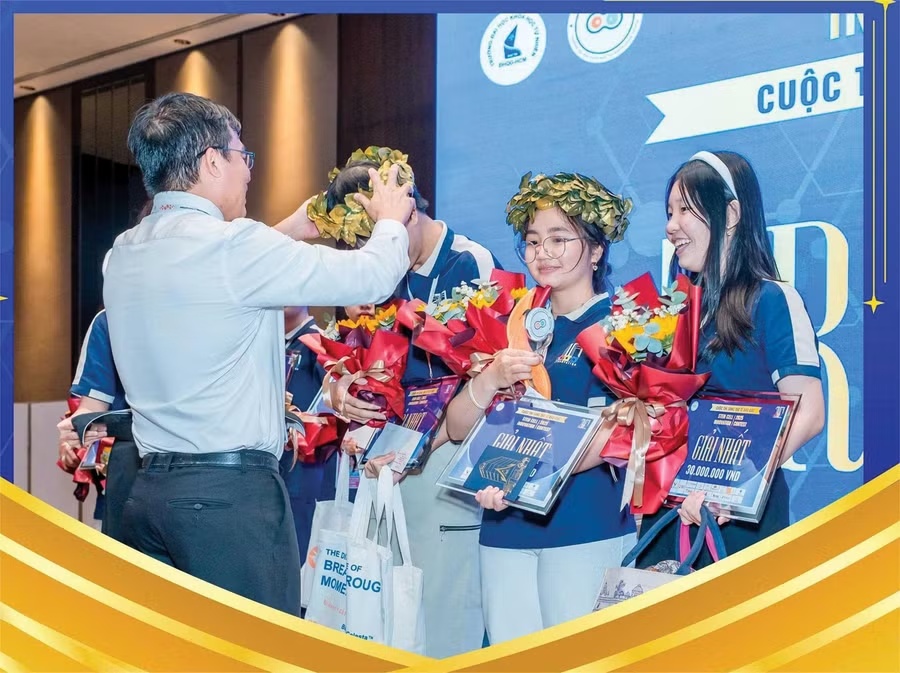
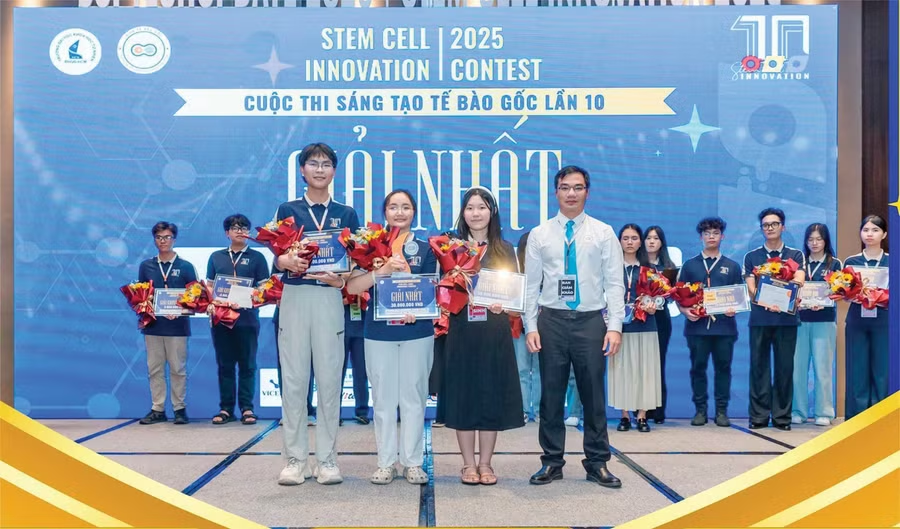
- At the 10th Stem Cell Innovation Contest 2025, organized by the Stem Cell Institute of the University of Science – Vietnam National University Ho Chi Minh City, our team presented “Designing Extracellular Mimetic Vesicles (EMVs) to Deliver hTERT-siRNA for Targeted Inhibition of Cancer Stem Cells”.
The project originated from research into Telomerase, an enzyme active in 85–90% of cancers that allows malignant cells to divide indefinitely. We selected hTERT-siRNA, which “silences” the hTERT gene, as a mechanism to interrupt this process.
Our key innovation is the delivery system. Instead of synthetic carriers that may be toxic, we designed EMVs that mimic natural cell membranes.
They are highly biocompatible, stable in the bloodstream, less likely to trigger immune rejection, and capable of precisely targeting tumors. This allows siRNA to act selectively on cancer stem cells while minimizing collateral damage to healthy tissue.
* How did this evolve from a personal idea into a group research effort?
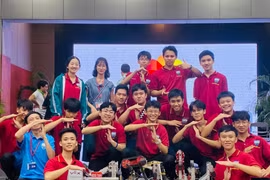
- The idea began with several months of self-study during early competition rounds. After advancing to the top six, I was appointed team leader and connected with two collaborators from other universities: Nguyễn Hoàng Minh Nhật from the University of Science in Ho Chi Minh City and Trần Võ Gia Hân from the Ho Chi Minh City University of Education.
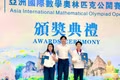
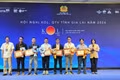
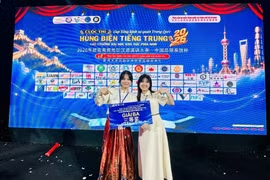
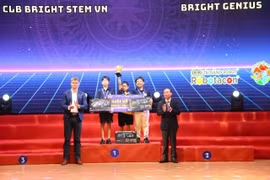
This inter-university cooperation strengthened both the theoretical and experimental elements of our project. Thanks to this teamwork approach, Aurora Prime secured first prize.
* How has your goal of creating “gentler cancer treatment” been realized?
- We believe “gentle” medicine means treating disease while safeguarding the patient’s quality of life. Current treatments such as chemotherapy and radiation can effectively destroy tumors but often harm healthy cells, causing severe side effects including hair loss, vomiting, and exhaustion.
Our team pursued targeted therapy instead. By using EMVs, the therapeutic agent is delivered directly to cancer stem cells, the source of recurrence, rather than attacking indiscriminately. This approach reduces the physical burden on patients.
We also considered Vietnam’s practical needs. Natural exosomes, while effective, are expensive and challenging to produce at scale. EMVs, by contrast, can be manufactured more efficiently and at significantly lower cost, expanding access to treatment for more patients. Ultimately, our aim is human-centered medicine: enabling patients not only to recover but to retain their hair, their smiles, and their optimism during treatment.
* What skills did you have to self-learn beyond your formal curriculum?
- Because the project is interdisciplinary, we had to strengthen our ability to read, analyze, and interpret international scientific literature.
Critical thinking, scientific debate, and presentation skills were also essential, especially when defending our concepts before expert judges.
I once struggled with “impostor syndrome,” but this experience taught me that failure is not an endpoint—it is a redirection that fosters growth.
* From your perspective, how is the current university environment for students pursuing research?
- I am fortunate to study in a fully English-language environment at the International University - Vietnam National University Ho Chi Minh City, which gives me access to the latest global research.
Additionally, my foundation at Lê Quý Đôn High School for the Gifted—particularly in the Biology specialization—introduced me to new scientific concepts and gradually built my confidence. The willingness of teachers to let students experiment, fail, and learn is crucial for nurturing a research mindset.
* What are your future plans?
- I hope to continue pursuing advanced biomedical research and to bring “gentler” cancer treatment concepts into real-world application. I believe that young Vietnamese researchers, even starting in modest laboratories, can make meaningful contributions to national science when driven by passion.