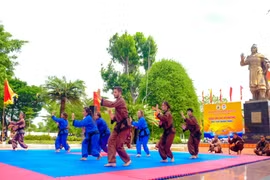
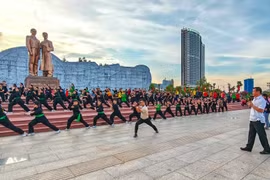
Local authorities and martial arts organizations have begun applying digital technology to manage records, archive techniques and promote traditional martial arts more effectively, as the movement continues to expand across the province.
Gia Lai currently has more than 200 martial arts clubs and dojos with a large number of regular practitioners. However, most student records, coaching data, promotion exam documents and club information have traditionally been stored manually on paper, creating challenges for management and verification.
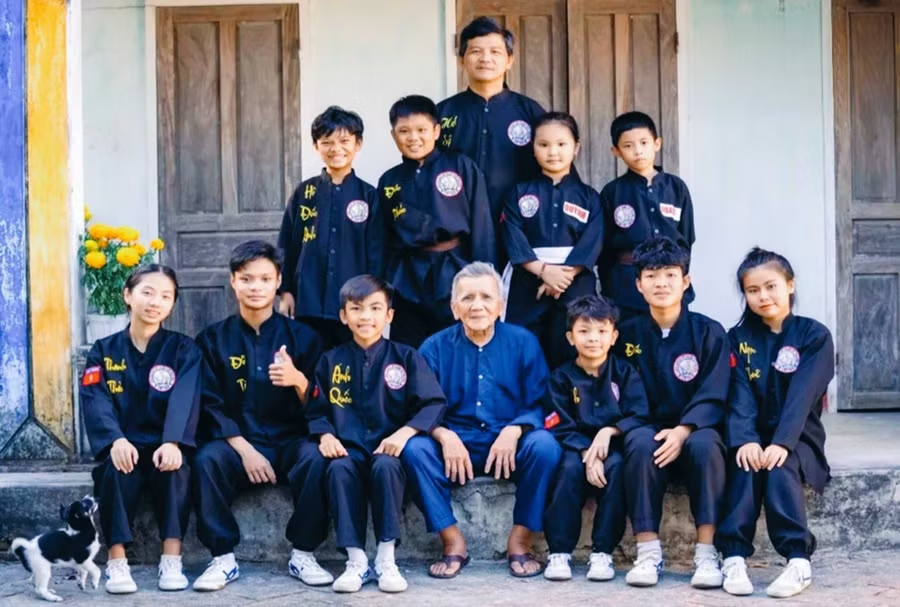
“Previously, whenever we needed to review student records or compile statistics on club activities, we had to manually gather information from various sources,” said Senior Master Phan Thị Diệu Hằng, Chief of Office of the Provincial Traditional Martial Arts Federation. “This was time-consuming and prone to errors. As the number of clubs continues to grow, applying technology to address these limitations has become essential”.
Traditional martial arts in Vietnam rely heavily on forms and techniques passed down orally through generations. Martial arts masters warn that without systematic digital archiving, valuable materials and technical accuracy could gradually be lost.
“Many ancient forms are now only preserved by a few elderly masters,” said Master Văn Xuân Toàn, Head of Văn Xuân Thông Dojo in Pleiku ward. “If we do not promptly record, digitize and archive them, there is a high risk of loss. I believe digital transformation will help better preserve the original values”.
The digitization effort extends beyond converting paper records into electronic files. Authorities are building a digital “heritage archive” using images, videos and online databases to preserve forms, weapon routines, traditional techniques and training methods in a scientific and long-term format.
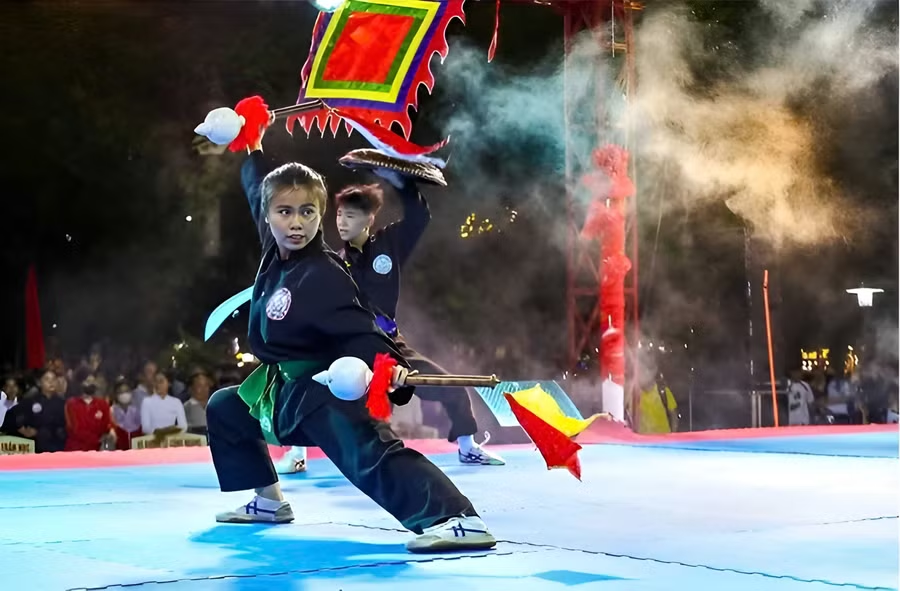
Officials say the process also helps reduce inaccuracies that can emerge during oral instruction and makes it easier to introduce traditional martial arts to wider audiences in Vietnam and abroad.
Since 2024, the provincial Traditional Martial Arts Federation has coordinated with the Department of Culture, Sports and Tourism to launch several digitalization projects. Information for 175 dojos and martial arts clubs has been updated on the digital map platform at voduongbinhdinh.vr360.com.vn.
Five prominent dojos specializing in Bình Định traditional martial arts performances now feature introductory videos online, while three leading dojos have been presented through VR360 panoramic technology, allowing viewers to explore them virtually.
Professional monitoring and archival activities are also being updated through the website vothuatbinhdinh.vn. The provincial Traditional Martial Arts Federation has introduced professional regulations and is gradually standardizing digital information related to clubs, masters, coaches and students.
Under the system, each dojo or club receives its own account to independently update information before submitting it to the federation for review and approval. Several clubs have already begun using digital platforms to manage student records, track training progress, update promotion exam data and archive martial arts forms through video and image documentation.
Authorities say the digital system is contributing to a more transparent and professional martial arts environment by enabling easier monitoring of coach certifications, student data, training processes and club operations. The system also helps limit unqualified or non-compliant training activities.
The transition to digital management has additionally simplified administrative procedures for registering provincial martial arts competitions and improved the organization of professional examinations and martial arts events.
“Young people adapt to technology very quickly”, said Nguyễn Hồ Ngọc Như, a student at Phi Trung Quyền Dojo in Tuy Phước commune. “If traditional martial arts have an online learning and information lookup platform, it will help attract more teenagers and young adults to learn and practice”.