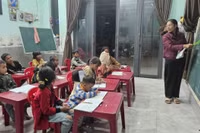
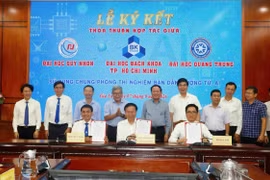
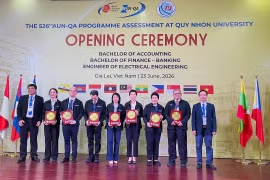
The programs, part of the National Target Program for Socio-Economic Development in Ethnic Minority and Mountainous Areas (2021–2025), have so far opened 735 literacy classes for around 23,500 learners, helping the region achieve Level 1 literacy eradication standards in 2024.
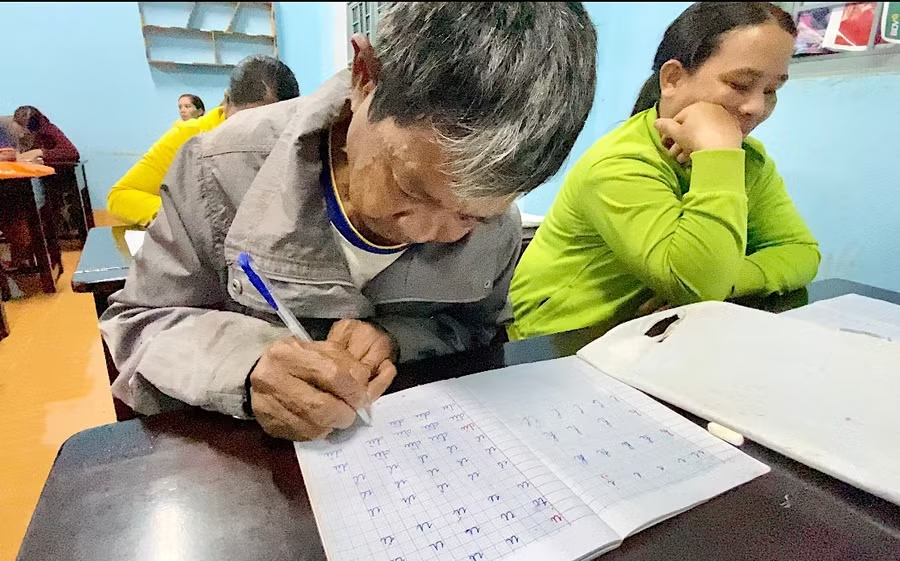
Across communes and wards in the western region of the province, evening literacy classes have become a familiar sight. In Nẻh Village of Ia Krêl Commune, elderly and middle-aged residents gather five nights a week to study.
Among them is 60-year-old Siu Ya, who never had the chance to attend school due to poverty. Holding chalk with steady determination, he attends every class, driven by a desire to read books and newspapers and to set an example for his children and grandchildren.
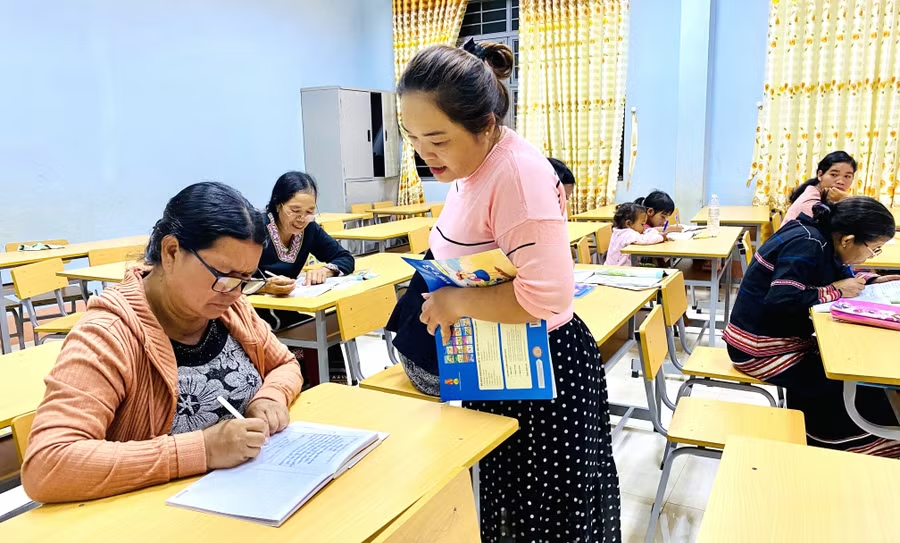
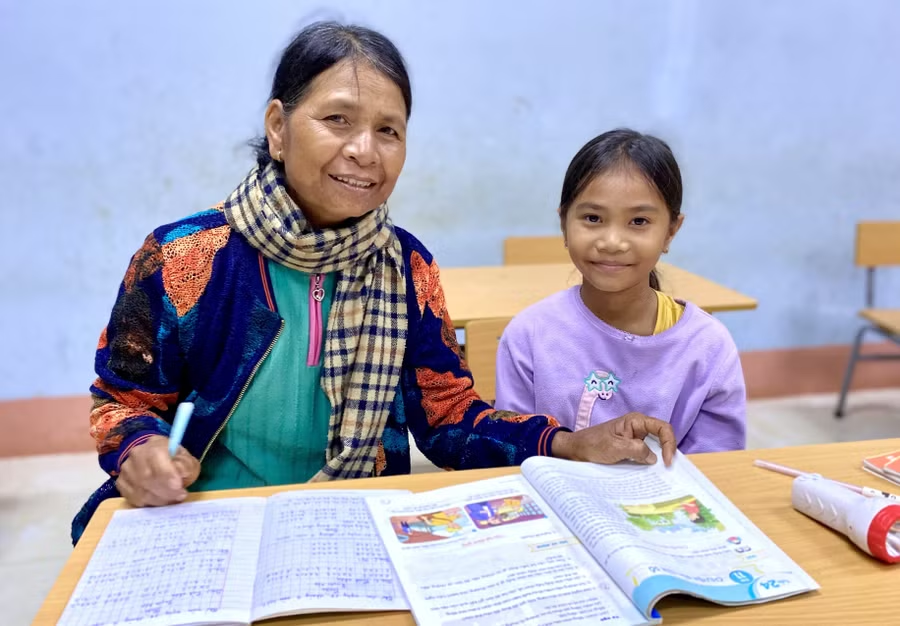
In Hội Phú Ward, 56-year-old H’Chan studies alongside her granddaughter H’Như in a literacy class at Ngô Quyền Primary School. With the child’s father absent and her mother remarried, the pair rely on each other. Unable to afford formal schooling, H’Chan enrolled her granddaughter when the village opened a free class, hoping she would “know how to read and write so she won’t have a hard life.”
Teachers say the classes attract students aged 30 to 60, mostly from ethnic minority communities, with varying levels of learning ability. “What moves us most is that everyone tries their best,” said Nguyễn Thị Ánh Dương, a teacher at Bùi Thị Xuân Primary School. “They want to learn so they can be more confident in life.”
Litigation classes are held five times a week, but reduced to two or three sessions during harvest season. Local organizations and benefactors supply notebooks, pens, chalk, and even mobilize residents door-to-door. Most learners complete each course able to read, write and perform basic calculations, gaining not only knowledge but also confidence in daily life.
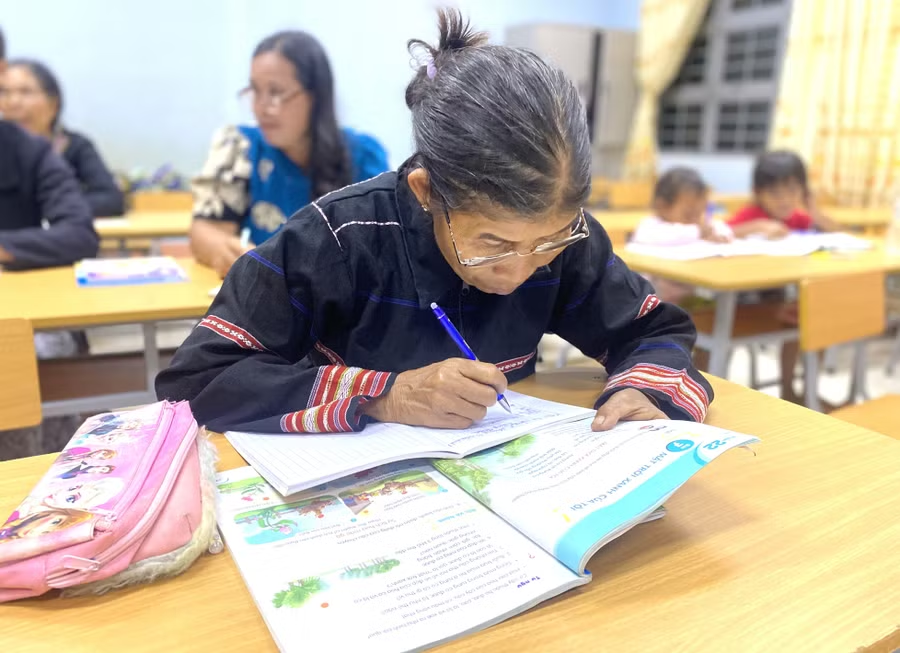
Local leaders say culturally sensitive mobilization is key. Ia Dơk Commune Party Secretary Siu Luynh said village elders and respected community figures play an important role in encouraging participation. “Many families have three generations studying together. This is a very positive sign for efforts to improve public education,” he said.
For the 2025–2026 period, the province plans to further strengthen universal education and literacy efforts under the National Target Program for 2021–2030. Deputy Director of the provincial education department Trần Thanh Hải said the goal is to expand lifelong learning opportunities for ethnic minorities and promote the movement “Lifelong Learning for All.”
Under Plan No. 49/KH-UBND on universal education and literacy, Gia Lai aims by 2025 to have 17 communes and wards meet Level 2 primary education universalization standards and 118 reach Level 3, with the entire province achieving Level 2. At the lower secondary level, targets include 9 communes and wards reaching Level 1, 90 reaching Level 2 and 36 reaching Level 3. For literacy eradication, 4 communes and wards are expected to reach Level 1, 131 Level 2, and the entire province to meet Level 1 standards.
To achieve these goals, education authorities are enhancing monitoring of illiteracy, while communes and wards organize supplementary classes and mobilize dropouts to return to school. School leaders are held accountable for maintaining universal education and literacy outcomes.