Tourism remains a standout performer in Vietnam’s economy, acting as a major growth driver in the third quarter and the first nine months of 2025, according to the National Statistics Office (NSO) under the Ministry of Finance.
Thanks to a favourable visa policy and effective promotion, the number of tourists has risen significantly.
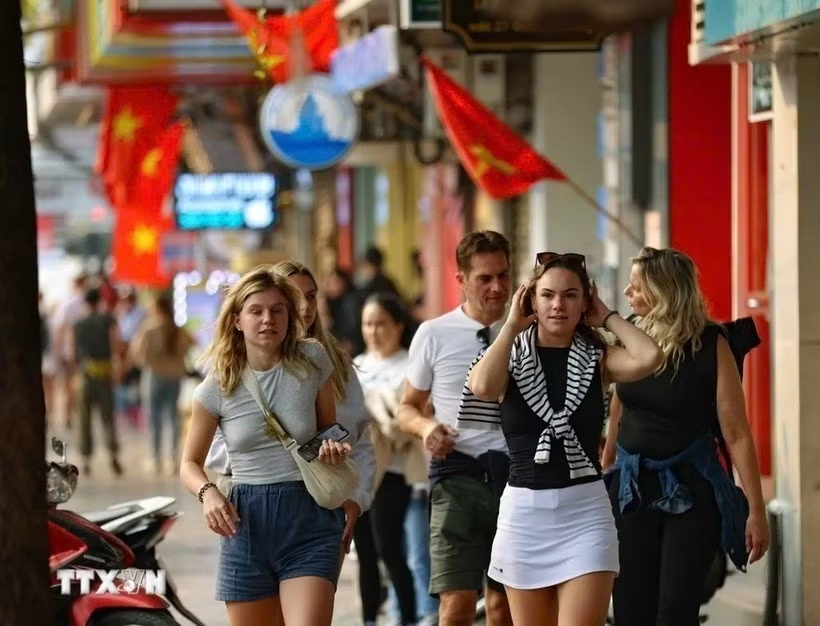
The country welcomed about 1.5 million foreign visitors in September — down 9.6% from August but 19.5% higher year-on-year. Total international arrivals surpassed 15.4 million in the first nine months, up 21.5% from 2024, with 84.5% arriving by air. China and the Republic of Korea continued as Vietnam’s largest source markets, accounting for nearly half of all foreign visitors. China posted 3.9 million arrivals, up 43.9%, followed by the Republic of Korea with 3.2 million, while India climbed to the sixth place with growth of 42.9%. European markets also strengthened, particularly Russia with a surge of 173%, France (22.6%), the UK (21.7%), and Germany (17.5%).
Tourism revenue reached an estimated 69.6 trillion VND (2.64 billion USD) in the first nine months, up 20.5%, led by strong performances in Ho Chi Minh City (24.3%), Hanoi (21.9%), Quang Ninh (20.2%) and Da Nang (13.2%).
Accommodation and restaurant services generated 624.4 trillion VND, a year-on-year increase of 14.8%, while other services rose 12.1% to 534.1 trillion VND.
Industry experts anticipate further gains in the final quarter, buoyed by peak-season travel and festive events.
Vietravel reported a 125% increase in international tourists' bookings for year-end holidays, with strong growth from China, India, Europe, and English-speaking countries.
Saigontourist noted a 25% rise in European travellers' bookings for long tours to Vietnam and is developing luxury products combining heritage, islands, and modern destinations. Meanwhile, BestPrice Travel saw 130% growth over 2024, projecting 150% by year’s end, with tourists now diversifying into leisure, adventure, cultural and wellness travel.
Vietnam ranks seventh globally in Google Destination Insights for travel interest, up 10–25% since early 2025. The UN World Tourism Organisation also named Vietnam the world’s fastest-growing international tourism market in the first half of the year, with a 21% rise.
According to Chairman of the Vietnam Tourism Association Vu The Binh, the association will host 300–400 representatives from major source markets to develop customised tour products. Long-term strategies include boosting digital marketing and strengthening cooperation with international travel firms through familiarisation trips to showcase Vietnam’s attractions and sustain growth, he underlined.
(Source: VNA)