Shiitake mushrooms are prized for their high nutritional and medicinal value and have become a lucrative agricultural product in Japan due to their resilience across diverse climates.
Building on these advantages, Japanese experts conducted field surveys in Gia Lai province, whose ecological conditions resemble those of Japan’s mushroom-growing regions, to assess the suitability of local environments for shiitake cultivation.
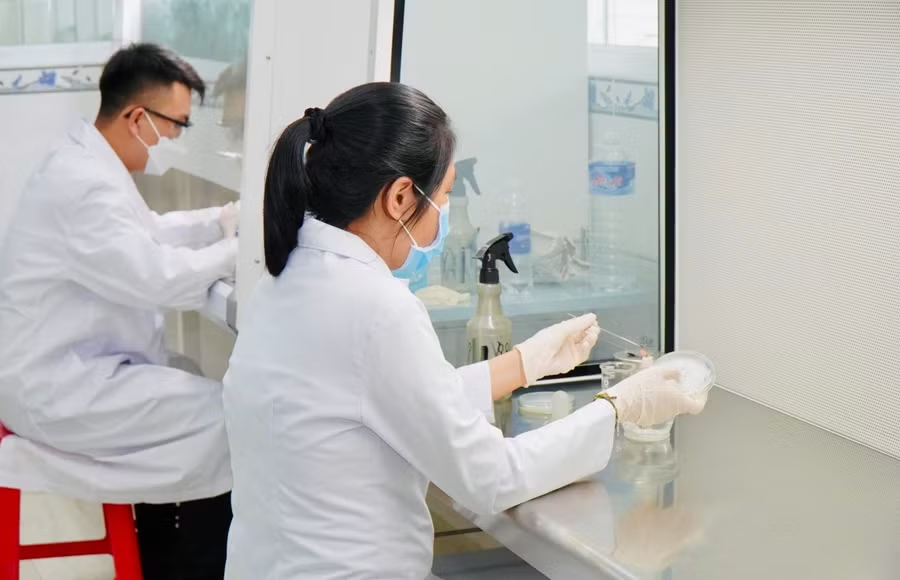
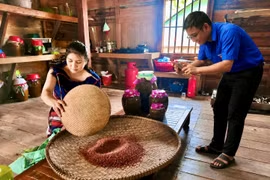
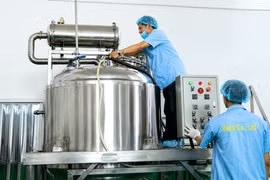
Following promising initial results, both partners launched a collaborative research program to propagate and evaluate shiitake mushroom growth under Vietnamese conditions. Since May 2025, the Institute’s researchers have been producing mushroom spawn, comprising spores from mature shiitake, using domestic rice grains as the main substrate.
Each batch of spawn weighs between 300 and 600 grams (equivalent to approximately USD 0.40–0.80 based on local production costs). High-quality spawn ensures robust growth, uniform fruiting, and strong disease resistance, key indicators for commercial viability.
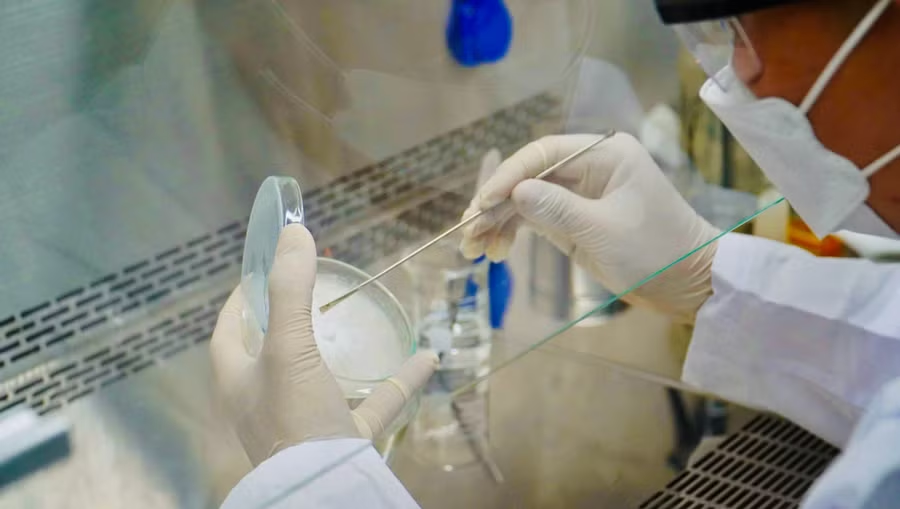
Early experiments on PDA (Potato Dextrose Agar) medium yielded encouraging results. After 21 days, mycelia developed evenly, forming dense, white networks with rapid growth rates.
“Given the mycelial development observed, we are confident this shiitake strain can adapt and thrive in Vietnam’s Central and Central Highlands regions,” said Kawaue Kazumasa, Technical Director of Nikko Kinoko no Mori Co., Ltd.
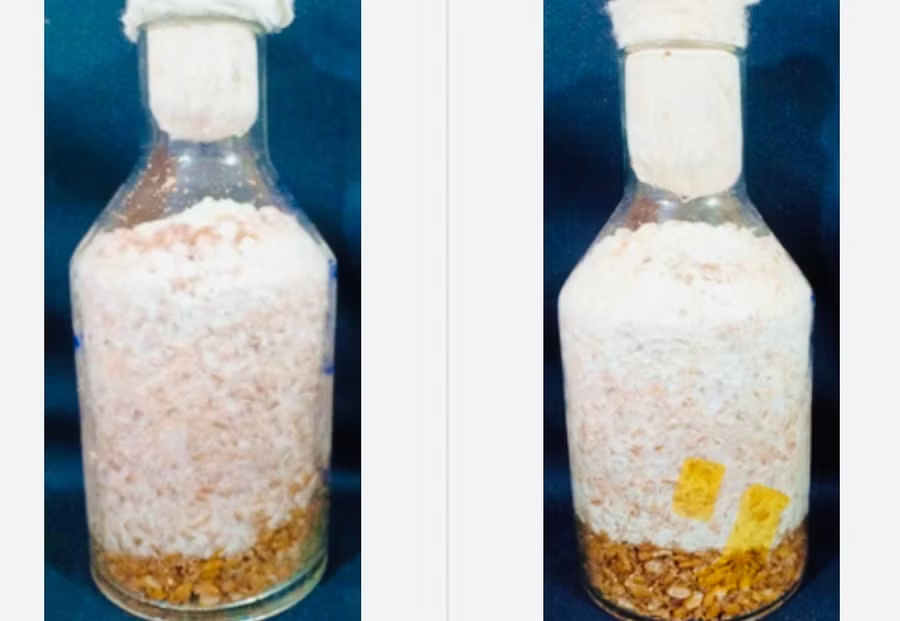
Continuous monitoring confirmed that the spawn develops uniformly on rice-based substrates, an affordable and locally abundant material. This innovation could significantly reduce production costs compared to imported mushroom spawn, which can cost up to VND 250,000–400,000 (USD 10–16) per kilogram.
“Our spawn samples grown on rice substrates have shown excellent vitality and structure,” said Nguyen Van Trung, MSc, from Quang Trung University’s Institute of Applied Biological Research. “The mycelia are dense, white, and durable, proving that local materials can meet the technical requirements for shiitake cultivation.”
In the next stage, the team will transfer the spawn to experimental substrates composed of rubber tree sawdust, rice bran, wheat bran, and hydrated lime to assess fruiting and yield potential. Tests are underway in both laboratory and greenhouse conditions.
Results from these trials will provide a foundation for evaluating the commercial feasibility of shiitake production in Vietnam, ensuring a stable domestic spawn supply and reducing reliance on imports.
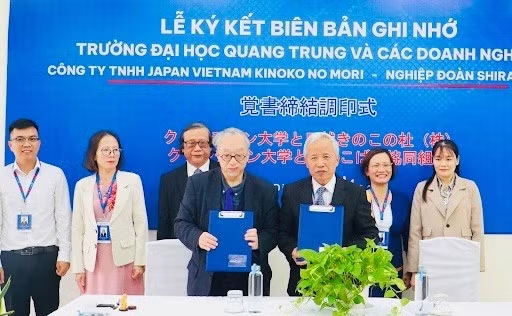
The initiative also opens doors for technology transfer and expanded cooperation between Vietnamese and Japanese partners, supporting sustainable agriculture and rural development.
“We aim to continue working with local and international organizations to develop high-value mushroom varieties like shiitake, promoting innovation and economic resilience,” Nguyen Van Trung added.