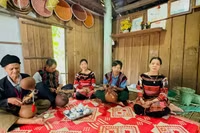
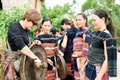
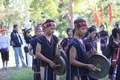
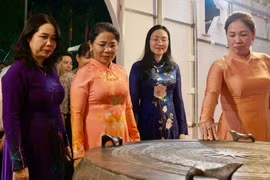
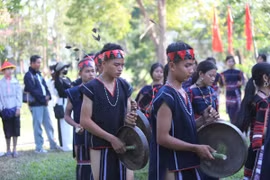
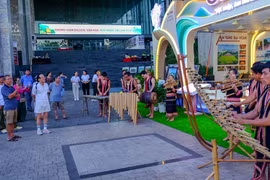
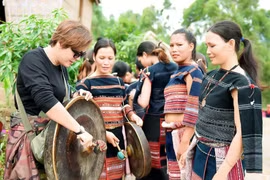
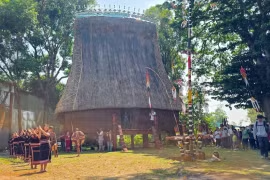
The proposed artifacts hold exceptional historical, cultural, and scientific significance. The Kơ Đơ gong set, comprising eight pieces, represents the traditional musical heritage of the Jrai ethnic group in Vietnam’s Central Highlands.
Acquired by the Pleiku Museum in 1997 from the family of Mrs. Rcom Hblon in Broái Village, Ia Tul Commune, Ayun Pa District, the gongs were once valued as highly as dozens of cattle, estimated today at tens of millions of Vietnamese dong (approximately USD 1,500 - 2,000).
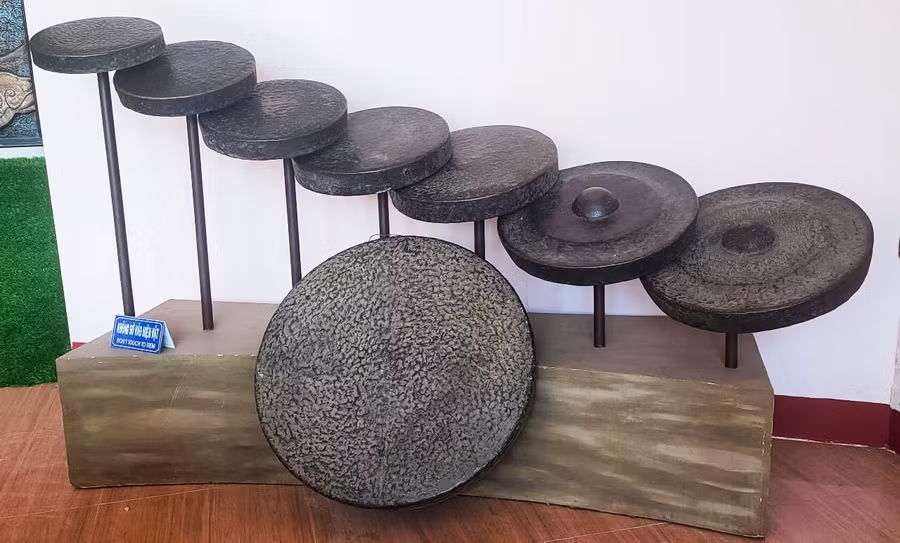
According to Mrs. Hblon, her family, among the most affluent and respected in the former Cheo Reo region, had safeguarded the set through generations. The ensemble includes one large gong, two bossed gongs, and five flat gongs.
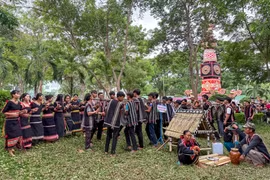
Traditionally, the Kơ Đơ gongs are played during festive occasions such as housewarming ceremonies, weddings, and health-blessing rituals, but never during funerals. The artifact exemplifies the Central Highlands gong culture space, which has been recognized by UNESCO as an intangible cultural heritage of humanity.
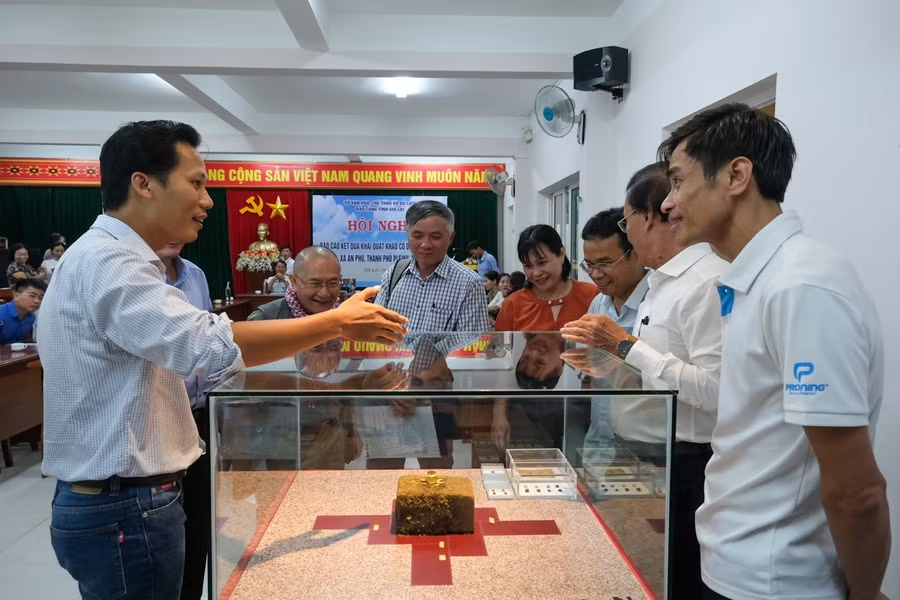
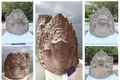
The second artifact group includes gold votive objects unearthed at the An Phú Cham archaeological site, located about 10 kilometers east of Pleiku city center.
The discovery comprises a gold vase placed on an eight-petal lotus and several gold leaves engraved with ancient characters. Archaeologists from the Pleiku Museum and the Southern Institute of Social Sciences uncovered the items within a sacred cache (hố thiêng) featuring a swastika-shaped foundation, evidence that the site once hosted an ancient Buddhist temple. The cache also contained colorful gemstones and small glass beads.
The application dossier for national treasure recognition includes detailed provenance, photographic documentation, technical drawings, reference materials, and 3D digital data. A council of archaeologists and museology experts will assess the proposal before submitting it to the Ministry of Culture, Sports and Tourism.
Gia Lai’s effort to recognize these artifacts as national treasures underscores the province’s commitment to cultural preservation and community awareness. It also enriches the local heritage collection and provides valuable resources for education, research, and exhibition.