The village's doctor
As evening approached, the rain grew heavier, blurring the road leading into Đak Đoa Commune behind a curtain of water. Yet, the stories we heard about Dr. Nay Blum and his family only made us more eager to reach our destination.
Inside their modest home, the walls are adorned with certificates of merit from the Prime Minister, the Ministry of Health, the province, and the district - testaments to more than three decades of quiet dedication.
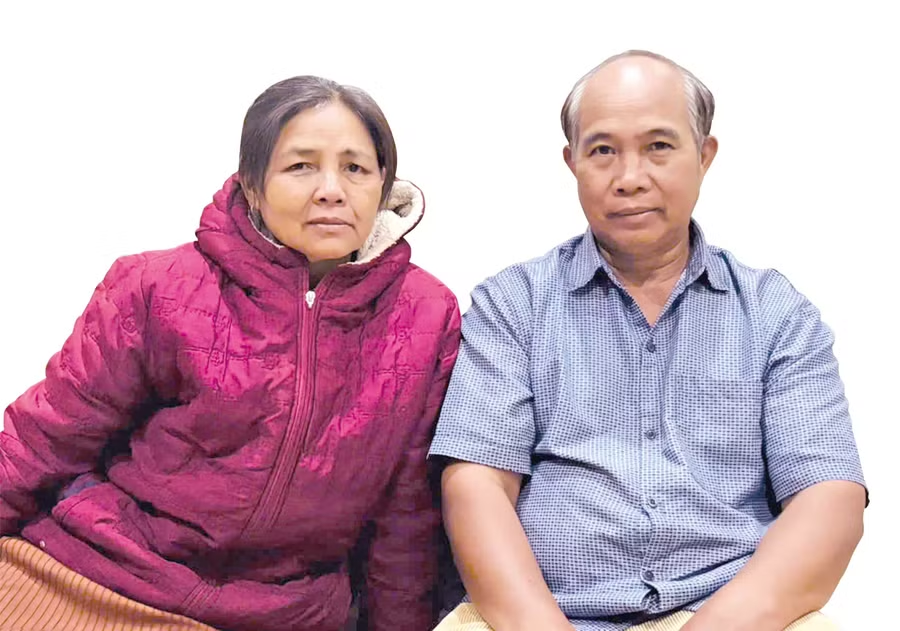
Both Nay Blum and his wife H’Nơn were born in Tươl Ktul village (Glar Commune, now part of Đak Đoa Commune). They fell in love as students and married in 1990. At the time, H’Nơn was a midwife at the Glar Commune Health Station, while Blum was studying at Gia Lai Medical Intermediate School. In 1991, after graduation, Blum was assigned to work at the Mang Yang District Medical Center (formerly).
Though each had their own specialty, they shared the belief that “saving lives comes first,” always supporting each other in their duties. However, working conditions back then were extremely challenging. From 1991 to 1994, the government had yet to implement a salary policy for mobile medical staff at the grassroots level. Despite this, driven by a desire to serve the community, Blum volunteered to return to Glar Commune to join his wife in caring for the villagers’ health.
“At that time, the commune health station was just a room of over 10 square meters within the grounds of Glar Primary School No. 1. The cramped facilities meant few people came; those who fell ill would come to our house for treatment. There were times when cholera, malaria, and dengue fever were rampant, and my wife and I would leave home at dawn and not return until late at night,” Blum recalled.
Rain or shine, day or night, whenever they heard of a woman in labor or someone suddenly falling ill, the couple would hunch over their old bicycle, braving muddy red slopes to provide timely care.
Remarkably, in over 30 years, they have never accepted payment for their medical services. Grateful villagers would sometimes offer vegetables, fish, or a few sweet potatoes as tokens of appreciation. “It’s from the heart,” they say. Mr. Khom from Tươl Ktu village still remembers: “In 1995, I had a severe case of malaria and thought I wouldn’t survive. Fortunately, Dr. Blum came to my house and treated me for five days straight, never leaving my side.
Only when I was out of danger did he return home. Moved by the kindness and dedication of Dr. Blum and his wife, from then on, whenever anyone was sick, they would go to the health station instead of making the couple go door to door. And no one relied on rituals for healing anymore.”
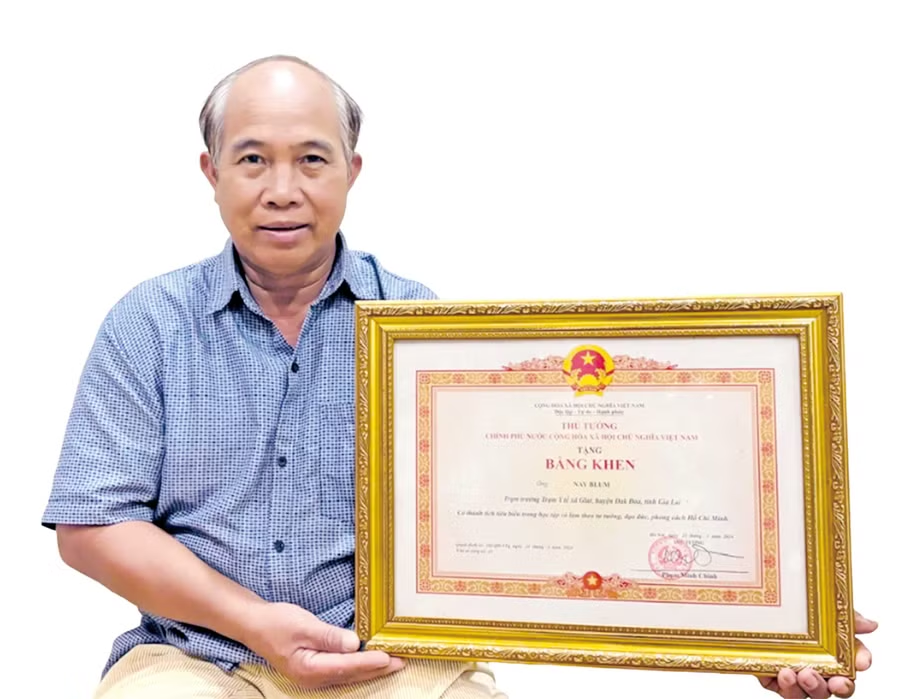
In 1995, Blum decided to pursue a five-year general medicine degree at Hue University of Medicine and Pharmacy. After graduation, he returned to the commune health station and was later appointed head of the station. Despite increasing responsibilities, he never stopped encouraging villagers to abandon outdated customs such as burying children with their mothers or making offerings to spirits when ill.
In 2003, when the commune planned to build a new health station but couldn’t find suitable land, the Blum couple moved the entire community by voluntarily donating 6,000 square meters of their family’s farmland—a significant asset—to build the station. “We knew the land was valuable, but if the station was built in a convenient location, it would be easier for people to seek care. That’s why we decided to donate the land,” Blum shared simply.
Throughout more than 30 years at the health station, the couple devoted themselves to caring for the community. Currently, Blum is Deputy Head of Đak Đoa Commune Health Station, Facility 3; although H’Nơn retired in 2019, she still volunteers daily to help her husband with cases in need around the village.
Mr. Sưu, Head of the Tươh Ktu Village Fatherland Front Committee, affirmed: “The Blum couple are a pillar of the community. Thanks to them, people’s awareness of primary healthcare has improved significantly: they seek medical care earlier, use medication properly, and no longer rely on herbal remedies or rituals. Moreover, they help anyone in need, no matter the hardship.”
A pillar for the vulnerable
The story of Dr. Blum and his wife’s compassion extends far beyond healthcare. What earns them the deepest respect is their kindness and generosity, especially toward the most vulnerable.
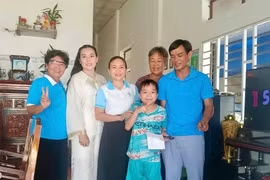
H’Nơn showed us a family photo. “We have five children, but only one is our biological child. The other four are adopted. Adopted or not, we love them all the same!” she said with a gentle smile.
She then took us to visit Nay Thuym—the first child they adopted, saved from the old custom of burying children with their deceased mothers, a practice still deeply rooted among the Bahnar in Hlang village (Hnol Commune) at the time. After giving birth to Thuym, his mother suffered severe postpartum hemorrhage. By the time the Blums arrived, she had already passed away. Knowing the Bahnar custom that the child must be buried with the mother so “she won’t be lonely,” H’Nơn urgently whispered to her husband, “We must do everything we can to save the child.”
No sooner had she spoken than the villagers gathered, preparing to follow tradition. Thuym’s father and grandmother dared not go against the village’s will. H’Nơn bravely stepped forward to ask to raise the child. Even before she finished speaking, voices of protest rose. But the village elder remained silent, and after a long pause—reflecting on the couple’s virtue and dedication—he finally nodded in approval.
“When the elder agreed, my husband and I were overjoyed. Thuym was born premature, weighing only 1.7 kg. Every day, we took turns keeping him warm against our chests. We were poor, but every few days we sold some rice to buy him milk,” H’Nơn recalled. Thuym grew up healthy and excelled in school, eventually becoming deputy head of Tươh Ktul village. Looking at his mother, he said, “If it weren’t for Mom and Dad Blum–H’Nơn, I wouldn’t be here today. When I got married, they even gave me two plots of coffee land to help me start my life.”
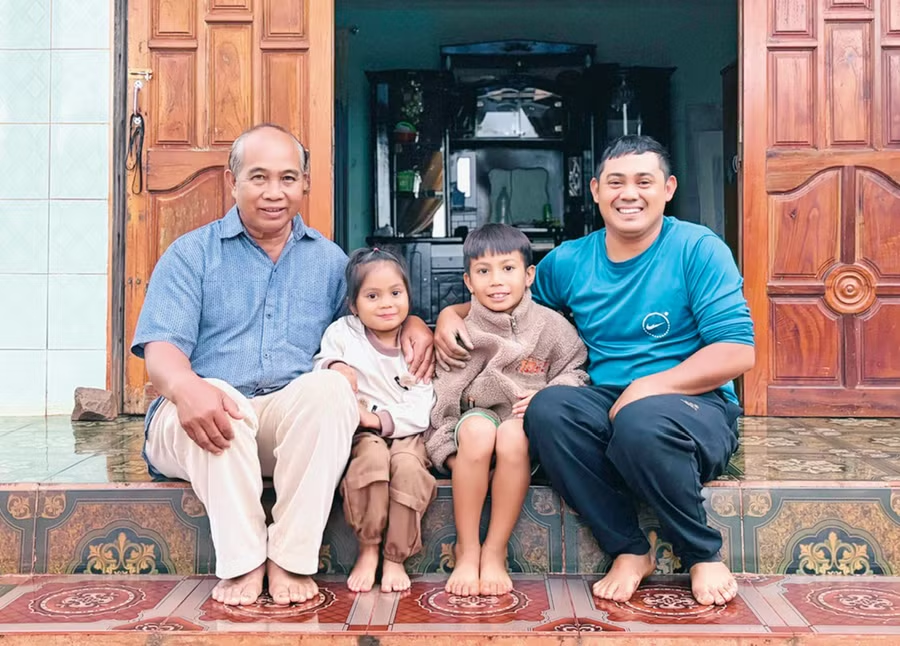
But their story of adoption did not end there. After Thuym, the Blums took in three more children from the village: Mới (born 1983), Kuưm (born 1989), and Jứi (born 1992). All three were children of poor patients, suffering from chronic malnutrition and illness.
“Back then, every family struggled. But we loved the children so much that we decided to adopt them. To have enough rice, we asked for unused plots of land to cultivate. In good seasons, we had enough; in bad seasons, we mixed sweet potatoes with our rice. But the children all grew up healthy. Now, three of the four have families of their own. When they got married, we gave them land to farm and build stable lives,” H’Nơn recounted.
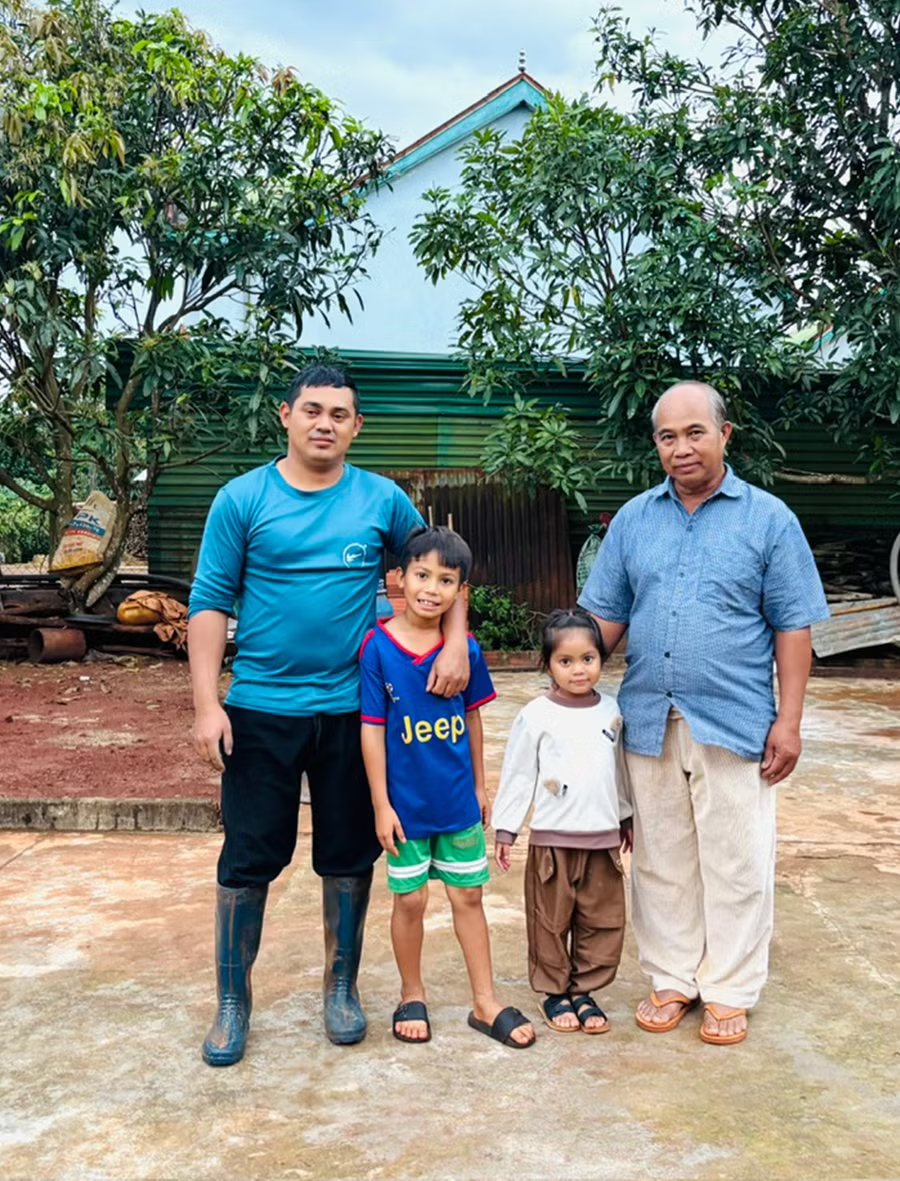
In addition to their four children, the couple has also cared for many elderly people living alone or suffering from illness. For those who passed away, they arranged funerals; for those still healthy, they happily welcomed any family willing to take them in.
Mr. Siu, Head of the Village Fatherland Front Committee, added: “The people of Tươh Ktu village deeply admire the compassion of Mr. and Mrs. Blum–H’Nơn. They live honestly and sincerely, never seeking attention. Whatever they can do to help, they do wholeheartedly.”
In the peaceful village, their kindness quietly spreads like a warm flame, illuminating the entire community. They are not just the village doctors—they are the “builders” of the village, shaping it with their medical ethics, compassion, and boundless generosity for every life they touch.
*
* *
We left Dr. Nay Blum’s home as night fell and the rain continued to drizzle. Yet our hearts were warmed by the story of this Bana couple who have devoted their lives to sowing love and kindness.
A shining example for the village
Nguyễn Thị Thúy Nga, Head of the Party Building Committee of Đak Đoa Commune and former Secretary of the Glar Commune Party Committee, shared that during more than 30 years at the commune health station, Dr. Nay Blum and his wife made tremendous contributions to public health and tirelessly advocated for the abandonment of outdated customs. Not only are they exemplary professionals, but they are also models of compassion, always helping those in need. “The doctor and his wife are outstanding examples for officials and residents to learn from and follow!” Ms. Nga emphasized.