Digital transformation is reshaping everyday life across Gia Lai province, where residents from urban wards to remote mountainous areas are increasingly relying on digital tools for business, public services, and community connectivity.
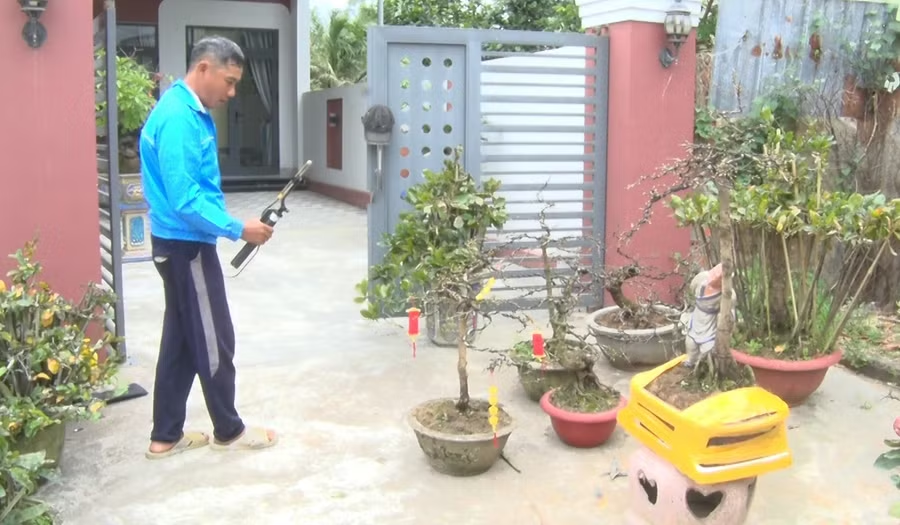
Young people are driving much of this shift, using social media platforms to expand local commerce, most visibly through online sales of yellow apricot blossoms ahead of the Bính Ngọ Lunar New Year 2026. In An Nhơn Bắc and An Nhơn Đông wards, livestream selling has become a mainstream method alongside traditional garden-side purchases.
For six years, resident Huỳnh Quang Thịnh has livestreamed Tet apricot blossom sales, showcasing each tree, from roots to flower buds, on Facebook and TikTok to reach buyers nationwide. His sessions attract tens of thousands of views, enabling the sale of hundreds of trees annually. Orders are recorded digitally, and customers receive door-to-door delivery with full payment made via bank transfer.
Some young sellers also support local garden owners by livestreaming on their behalf. Nguyễn Chí Công of An Nhơn Bắc ward said he can sell more than 200 apricot pots online during Tet, helping reduce transport and venue costs while widening market access.
Local authorities estimate that 50 youth union members in An Nhơn Bắc are now running online apricot sales channels, prompting plans to expand and replicate the model.
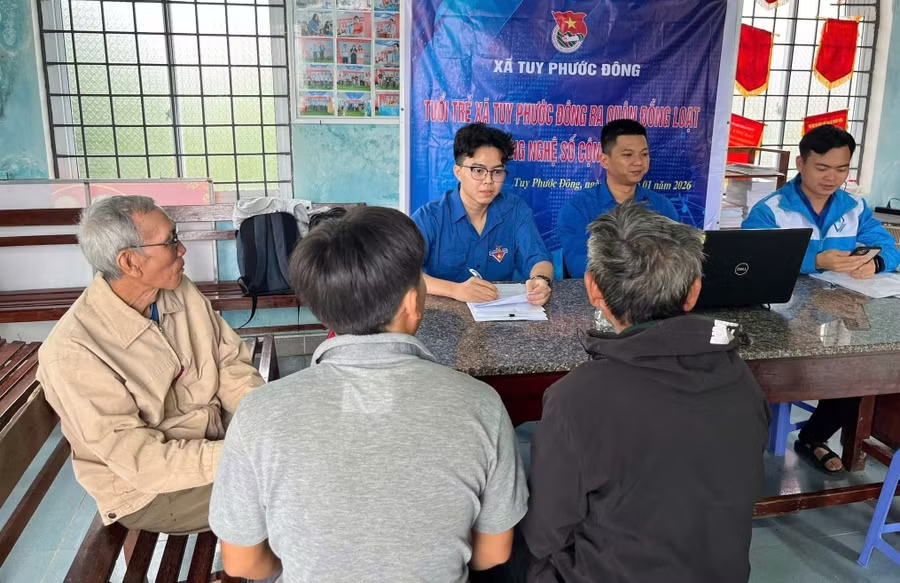
Digital adoption is also accelerating in public service access. Many communes have created community digital technology teams that guide residents through installing the VNeID app, using e-wallets, submitting administrative documents online, and making cashless payments.
In Tuy Phước Đông commune, 29 village-level teams and one commune team, primarily composed of college-educated youth members, are supporting residents in transitioning to online services. Pilots for village-level digital document submissions are underway, reducing workloads at the Public Administration Service Center and giving residents hands-on experience with digital processes including birth, death and marriage registrations.
Cashless transactions are becoming common across rural markets, shops and eateries as authorities work with banks to set up QR payment codes for business households. Bank transfers and QR scanning are now routine for many residents.
Local officials credit a grassroots culture of mutual support, “those who know guide those who don’t”, for the quick uptake. The model has contributed to the formation of digital households and community technology teams that help spread digital literacy.
Authorities also use digital platforms such as Zalo to deliver timely information. In Phú Mỹ 2 hamlet, a Zalo group linking more than 100 household heads has improved the distribution of government notices, support policies and disaster warnings. During the 2025 storms and floods, the group’s updates helped families reinforce homes and evacuate early.
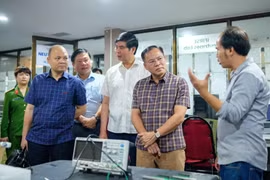
According to Nguyễn Minh Thảo of the provincial Department of Science and Technology, widespread adoption is supported by investments in telecommunications infrastructure. By the end of 2025, mobile and broadband coverage reached 100% of commune and ward centres, with fibre-optic services available in most residential areas. The province aims to expand 5G service in industrial zones to enhance digital-economy readiness.
Sustaining momentum will require continued training of core digital teams, especially youth union members and digital-transformation officers. Officials say the population’s growing appetite for technology has already turned digital transformation from a movement into an essential pathway for raising incomes and opening new socio-economic opportunities across both urban and rural Gia Lai.