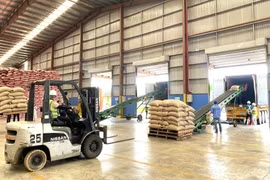
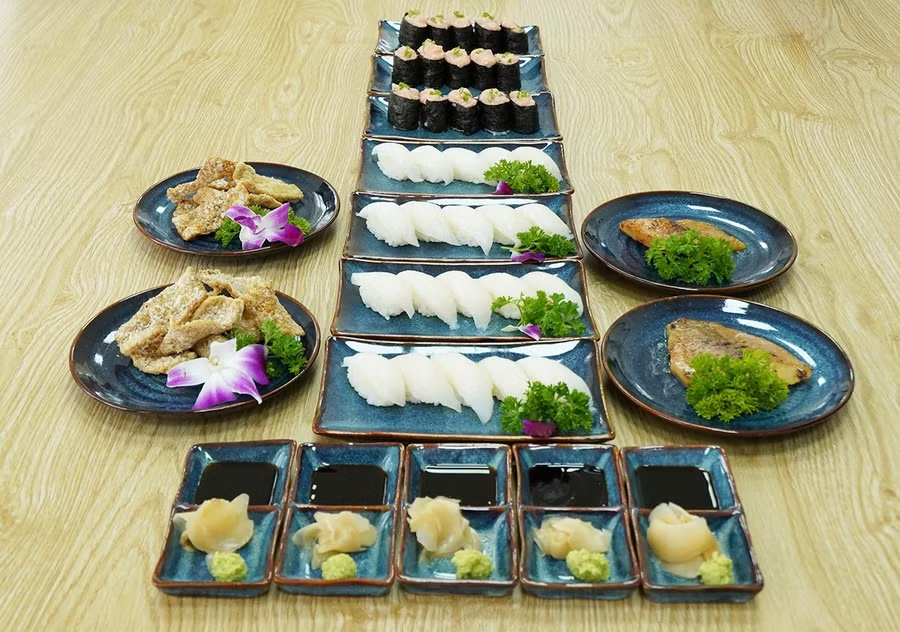
The shipment comprises 11 tonnes of finished red tilapia sushi products in three formats, sliced, cut-off and centre-cut fillets, which will be distributed through Besia, a major supermarket chain operating 135 stores across Japan.
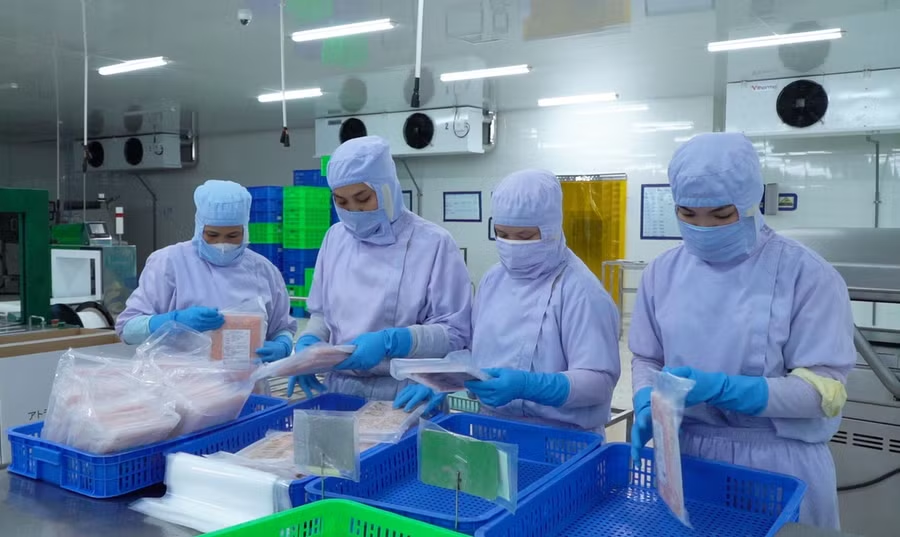
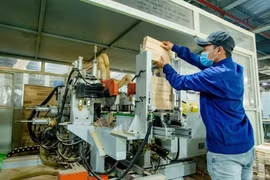
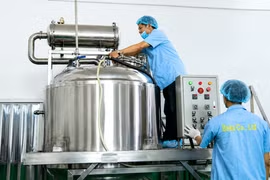
According to Phan Bich Ngoc Hoa My, Deputy Director of Mai Tin Binh Dinh Co., Ltd., the company sourced 35 tonnes of raw red tilapia from cage farms on Dinh Binh Lake in Vinh Thanh Commune. The fish underwent 26 scientific processing stages to ensure food safety, traceability and compliance with Japan’s stringent sushi-grade standards.
The successful export holds particular significance for Gia Lai province, as it demonstrates that locally farmed aquatic products can meet the requirements of one of the world’s most demanding markets. It also validates the province’s strategy of developing cage aquaculture alongside deep processing, creating opportunities to increase product value, expand standardized farming areas, attract investment and gradually bring local aquatic products to international markets.
Huynh Viet Hung, Director of the Agricultural Extension Center under the Department of Agriculture and Environment, said the center has coordinated with Mai Tin Binh Dinh Co., Ltd. since 2023 to survey cage farming areas on Dinh Binh Lake, collect and analyse water samples for quality, heavy metals and antibiotic residues, and transfer technical know-how to farmers to meet export standards.
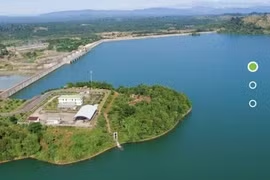
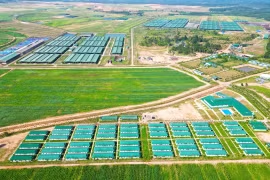
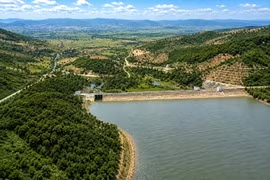
The province currently has 283 irrigation reservoirs with a total capacity exceeding 1.2 billion cubic metres. Large reservoirs such as Dinh Binh, Nui Mot, Dong Mit and Hoi Son not only support agricultural production but also provide stable water surfaces suitable for cage aquaculture.
Statistics from the Fisheries Sub-Department show the province has 1,235 freshwater fish cages in reservoirs, with a total volume of about 126,570 cubic metres, farming species including tilapia, sheatfish and catfish. Red tilapia is regarded as the main species due to its adaptability, fast growth, low disease incidence, firm flesh and strong market demand.
Despite its potential, cage aquaculture in reservoirs has largely remained small-scale and fragmented, lacking sustainable value chains and falling short of expected economic efficiency. The first successful export to Japan is therefore seen as a turning point for local farmers.
Le Minh Thong, Chairman of the Vinh Thanh Commune People’s Committee, said 24 households currently operate 390 fish cages on Dinh Binh Lake, with market access long seen as the main challenge. He said local authorities will now plan and support the maintenance and expansion of production while improving fish quality.
Huynh Viet Hung added that, following the first export shipment, authorities will continue working with businesses and farmers to refine processes, expand standardized farming areas and secure stable export supplies, with the goal of achieving long-term, sustainable development for the province’s cage aquaculture sector.