After dinner, Nay Tuy (35 years old, from Phu Ma Nher 1 hamlet, Ia Sao commune) hurried to the village cultural house to attend the Basic Household Electrical Course organized by Gia Lai College in coordination with the commune’s People’s Committee. Having no knowledge of how to install electrical panels or repair household appliances, Nay Tuy had to hire someone to install the electrical system when he and his wife built their own house.
Whenever a light bulb or switch broke, he wanted to fix it himself but was afraid of getting an electric shock, so he had to ask his neighbors for help. Therefore, when he heard that the commune was opening a basic electrical course, he immediately signed up. Thanks to his diligent attendance, never missing a class, he made rapid progress.
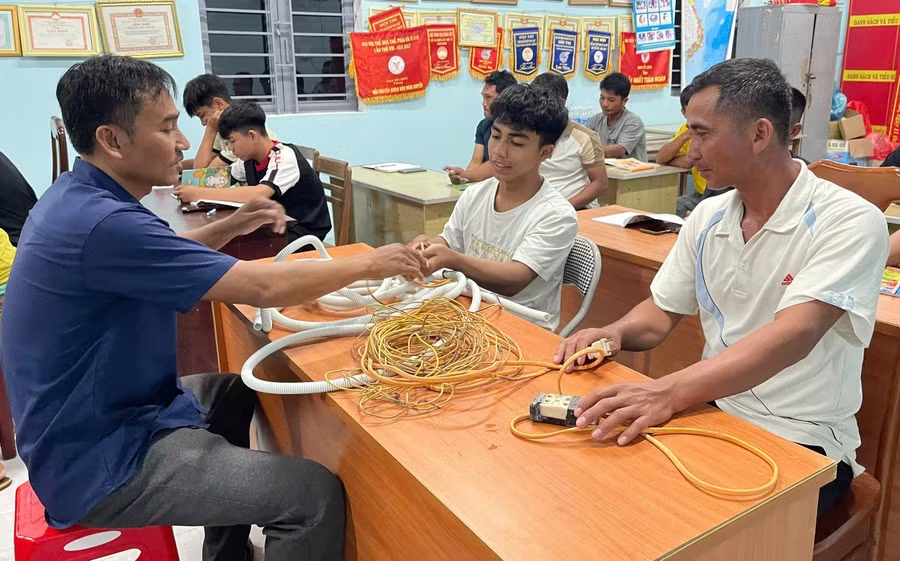
Tuy shared, “At first, I felt a bit shy coming to class, but seeing that the other students were about my age made me more confident. Everyone learns together and shares their experiences. After class, I would take household appliances and electrical devices at home to practice. I hope that by the end of the course, my skills will improve enough to join the local electricians’ group and help install electrical systems for villagers.”
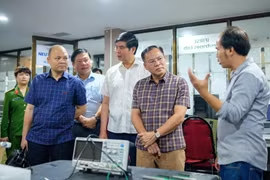
Directly teaching the class, Rcom Thuyên, a lecturer at Gia Lai College, could not hide his joy at seeing the students’ enthusiasm and active participation. Many brought broken electrical devices from home to class so that teachers and students could repair them together.
Thuyên said the class started on October 28 with 25 students, all of whom are farmers and 100% from ethnic minority backgrounds. The goal is not only to provide a Level 1 vocational certificate but also to equip participants with practical skills so they can form work groups to install household electrical systems or apply for jobs at factories and enterprises to increase their income and improve their lives.
With the same spirit of learning for practical application, in Kơ Nia hamlet (Ia Pa commune), a High-Yield Rice Cultivation class was launched half a month ago, attracting 30 farmers who have long been attached to the fields. The class is funded by Subproject 1, Project 4 under the National Target Program for Sustainable Poverty Reduction.
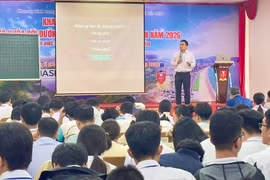
Hoàng Văn Thủy, a lecturer at Gia Lai College, said rice is the main crop in the area, but until now, farmers have mostly relied on experience, resulting in low yields. The class is organized to help students master techniques in sowing, fertilizing, pest control, harvesting, and storage to improve both yield and rice quality. Lessons are scheduled flexibly: theory in the evenings from 7 to 9 p.m., and practical sessions in the fields the following afternoon. This approach makes learning more vivid, hands-on, and relevant.
Ngô Thị Tuyết (of the Tày ethnic group, Kơ Nia hamlet) shared, “My family cultivates three sào (about 1,080 square meters) of rice. Previously, because I sowed too densely and overused fertilizers and pesticides, yields were low—only about 700 kg per sào. Now, with the knowledge I’ve gained, I’ll apply proper techniques in the upcoming winter-spring crop to increase yields, reduce costs, and protect the environment.”
Having worked in the fields for many years, farmer Ksor Lét (Chư Knông hamlet, Ia Hiao commune) understands the hardships faced by rural laborers like himself. His family owns a pesticide sprayer, but it often breaks down. Many times, the machine malfunctioned right in the field, forcing him to abandon his work and take it to a repair shop, which was costly. Determined to solve this, he enrolled in a class on repairing brush cutters and pesticide sprayers organized by the commune.
“Throughout the classes, instead of bringing books, I brought my toolkit—wrenches, screwdrivers, and so on—to practice. Now, I’ve learned how to diagnose faults, replace parts, and perform regular maintenance. This helps me save money and be more proactive during the farming season,” Lét said enthusiastically.
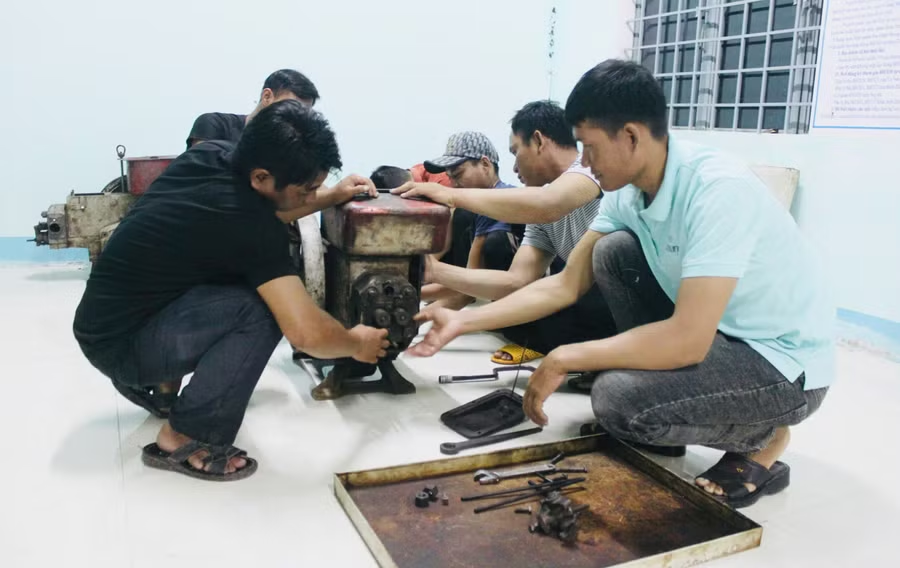
Phan Công Đương, Head of the Department of Culture and Society of Ia Hiao commune, said that as part of the national target program, many vocational training classes have been implemented to improve the skills of rural workers. These classes are organized based on the needs and aspirations of local residents, focusing on practical trades such as household electricity, agricultural machinery repair, cooking, and animal husbandry. With a hands-on, step-by-step training approach, many students are able to apply their knowledge in real life after completing the courses, opening up job opportunities, increasing income, and contributing to poverty reduction in the locality.