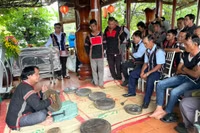
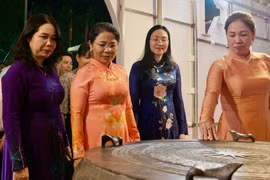
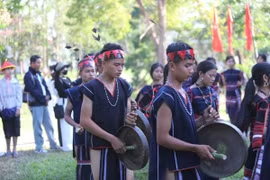
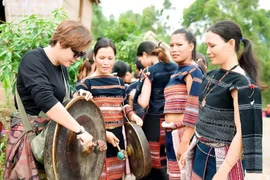
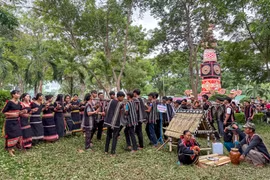
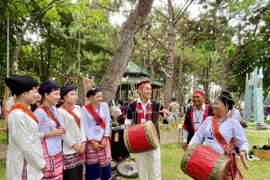
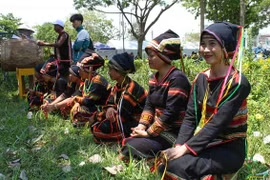
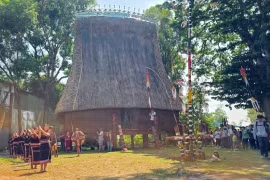
The Department of Culture, Sports and Tourism recently organized two consecutive workshops aimed at brocade weaving, gong tuning, and wood carving, giving artisans an opportunity to pass on their skills to the next generation.
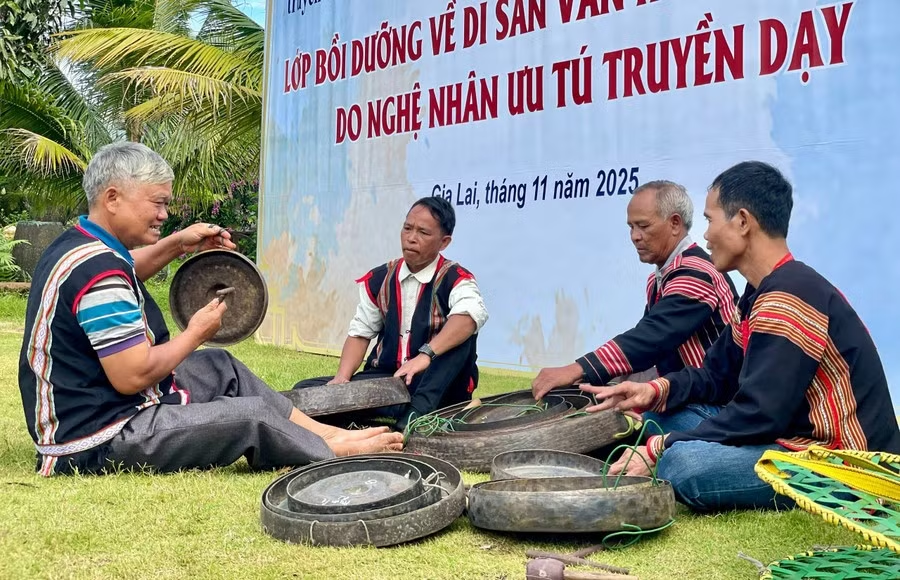
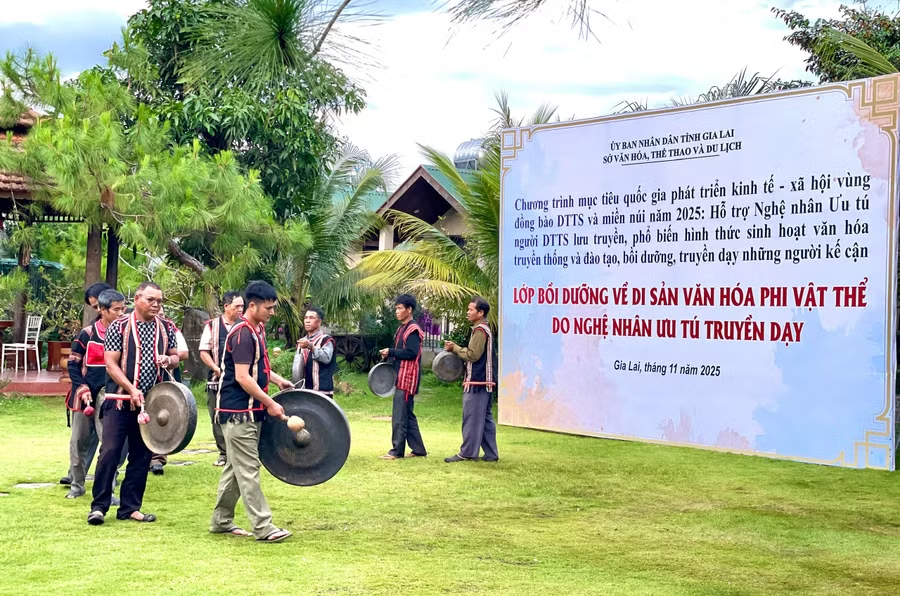
The first course, held on November 24 in Dien Hong Ward, focused on brocade weaving and Bahnar gong tuning, attracting 21 participants. Earlier, on November 17, four classes covering Bana and Jrai gong tuning, brocade weaving, and Bana wood carving drew 40 participants.
All classes were led by Meritorious Artisans, officially recognized for their dedication to preserving intangible cultural heritage.
Not only in this training course, we sincerely hope that the Meritorious Artisans will continue to "ignite the flame" and proactively maintain the teaching and support of younger generations in their localities, ensuring the preservation and promotion of traditional cultural identities.
We also believe that, driven by passion, the participants will continue to practice these forms of intangible cultural heritage after the course, improving their skills and eventually passing them on to others.
The initiative is critical as the number of “living human treasures” in the region declines.
Since 2014, 32 artisans from western Gia Lai have received the Meritorious Artisan title, but eight have passed away.
With heritage practice shifting from villages to urban areas, many artisans travel long distances to attend these workshops.
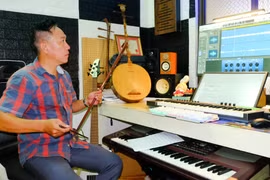
Meritorious Artisan Nay Phai of Phu Tuc Commune, a specialist in Jrai gong tuning, emphasized the importance of passing on knowledge: “I hope the students will learn and support each other in preserving the gong culture. Only by mastering the craft can we teach future generations and ensure this heritage is not lost”.
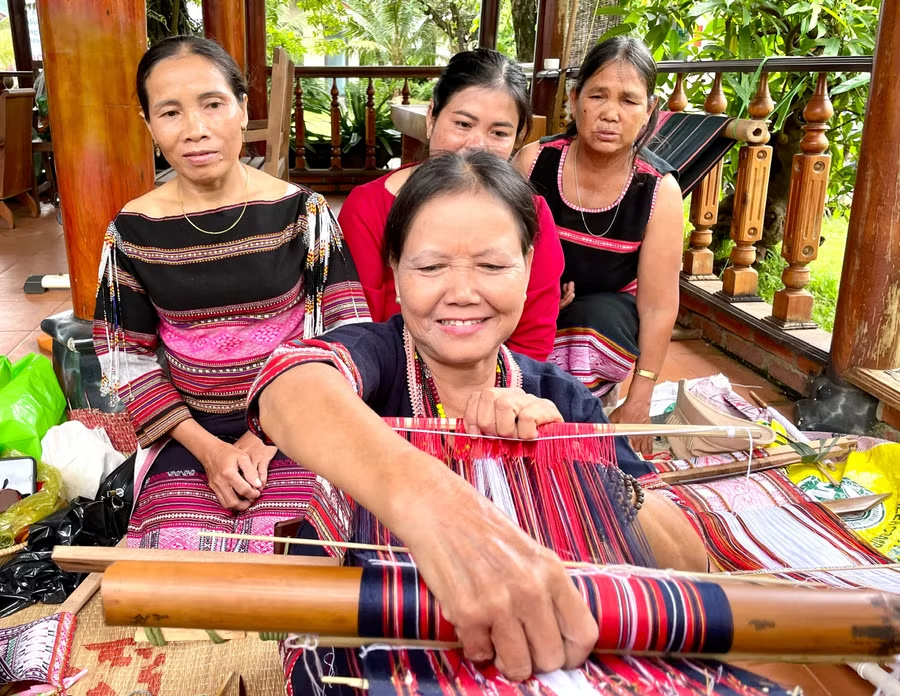
Brocade weaving instructor Dinh Thi Hrin, head of the Brocade Weaving Club in Nghe Lon Village, Kong Chro Commune, highlighted the growing interest in ethnic textile traditions. Her club alone has attracted hundreds of members eager to learn unique patterns and techniques.
Among the participants, Dinh Mi Huy from Kim Son Commune traveled from the eastern midlands of Gia Lai to join the class, motivated by a desire to reconnect with her Bana heritage. “Rain or shine, no matter how far, I have to go and learn so as not to abandon my ethnic traditions,” she said.
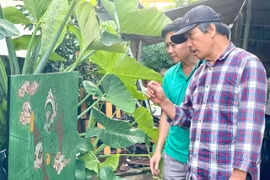
Wood carving student Dinh Hot, born in 1994 in Tpon Village, Cho Long Commune, has embraced multiple cultural crafts, including gong performance and brocade weaving.
He stressed the urgency of preserving Bahnar traditions: “The Bahnar ethnic identity has many wonderful and beautiful aspects, but they are gradually fading away. I am passionate about them and want to pass them on to the younger children in my village”.
These training courses, part of the National Target Program for Socio-Economic Development in Ethnic Minority and Mountainous Areas for 2025, underscore Gia Lai’s commitment to keeping intangible cultural heritage alive while inspiring a new generation of artisans.