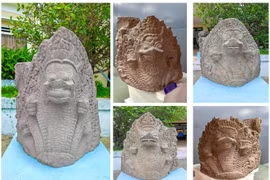
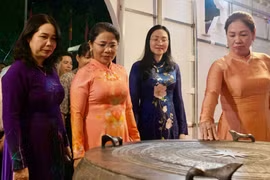
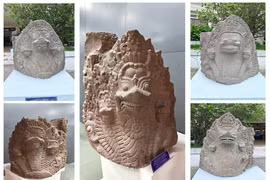
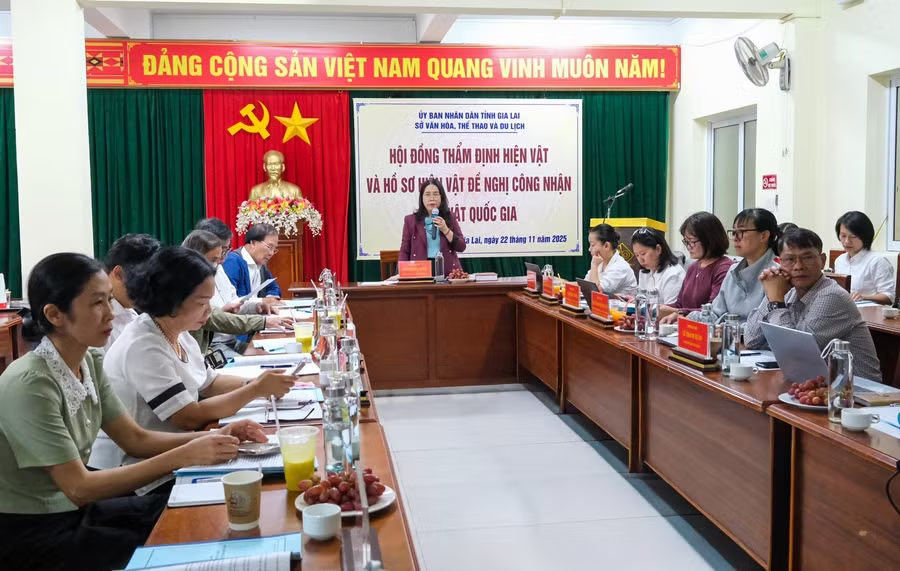
The meeting was held at the Pleiku Museum and chaired by Đỗ Thị Diệu Hạnh, Director of the Department of Culture, Sports and Tourism.
The Council, with participation from experts of the National Council for Cultural Heritage, the Vietnam National Academy of Music and the Southern Institute of Social Sciences, reviewed documentation and heritage value of both collections.
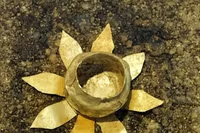
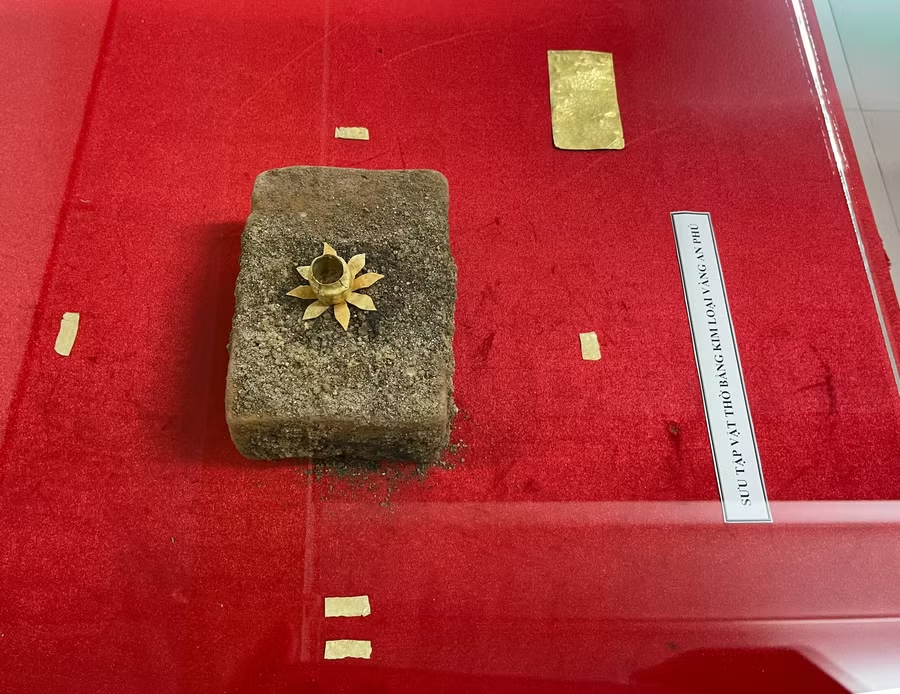
The An Phu gold ritual collection includes eight artifacts discovered in an intact swastika-shaped sacred cache at the An Phu Cham site in An Phu Ward. Items include a gold vessel, eight gold petals, a rectangular gold leaf and another inscribed with Buddhist scriptures.
The rare archaeological structure provides evidence of historical cultural and religious links between the Central Highlands and the wider Indian–Cham cultural sphere. Experts said the collection is a unique resource for studying religious life, economic exchange and cultural interaction within the region and with neighboring areas.
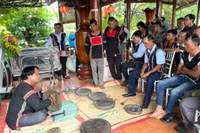
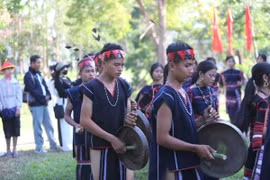
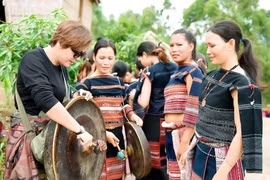
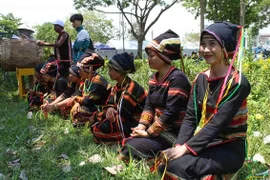
The second heritage group, the Kơ Đơ gong set, also known as K’Đơ, Nâm, Tơ Năh, Sar or M’Nâm, dates to the early 20th century and remains fully playable. Once owned by the family of community leader Siu Banh of the former Cheo Reo area, the set is attached to both spiritual and social traditions of the Jrai people.
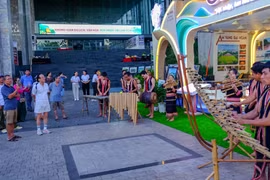
The gongs are used in ceremonies such as weddings, housewarmings and health blessings and are regarded as a conduit between the human world and divine spirits. The proposal is especially significant in the context of UNESCO’s 2005 inscription of the Central Highlands Gong Culture as Representative Intangible Cultural Heritage of Humanity.
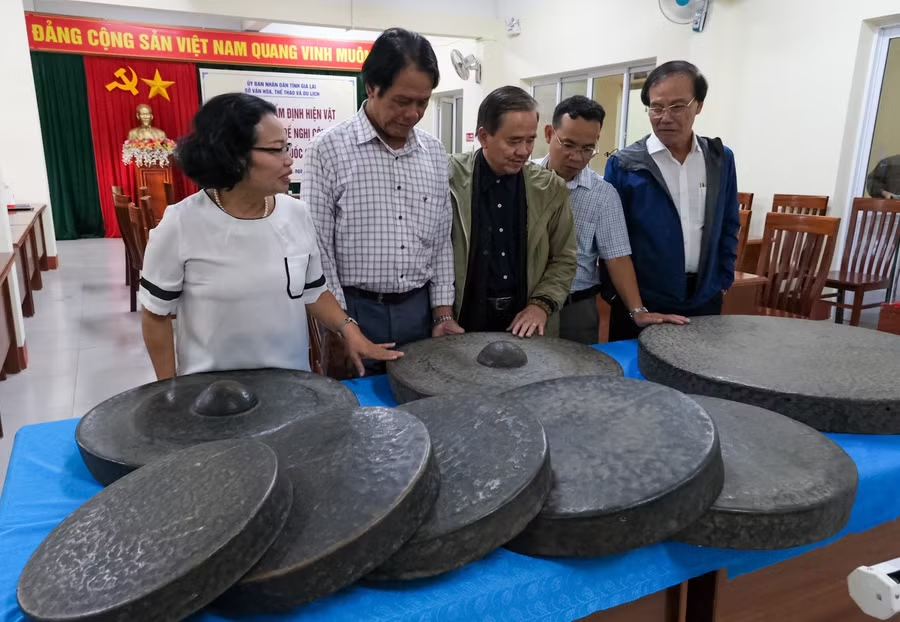
Council members praised the historical, artistic, cultural and religious significance of both artifact groups and their completeness and representativeness. They recommended refining the application by clarifying naming conventions, expanding the interpretation of the gong set’s historical context and detailing plans for preservation and promotion post-recognition.
All members unanimously agreed that both the An Phu gold collection and the Kơ Đơ gong set meet the standards for national treasure recognition and should be submitted to the appropriate authorities.