On September 5, 1975, the resounding sound of the school drum echoed through the peaceful streets of Pleiku following liberation, marking the beginning of a new journey.
Since that milestone, generations of teachers and students at Pleiku High School have tirelessly “sown knowledge, reaped the future,” together building a proud tradition over the past half-century.
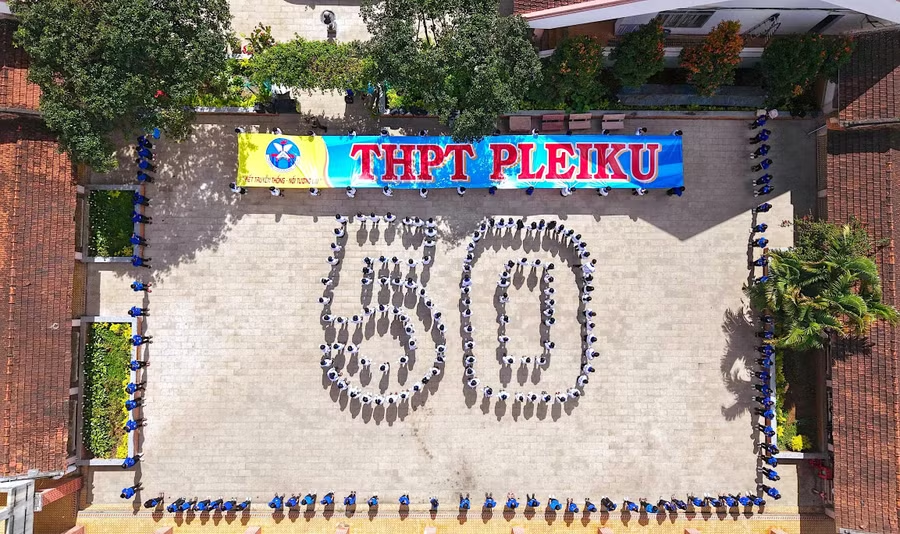
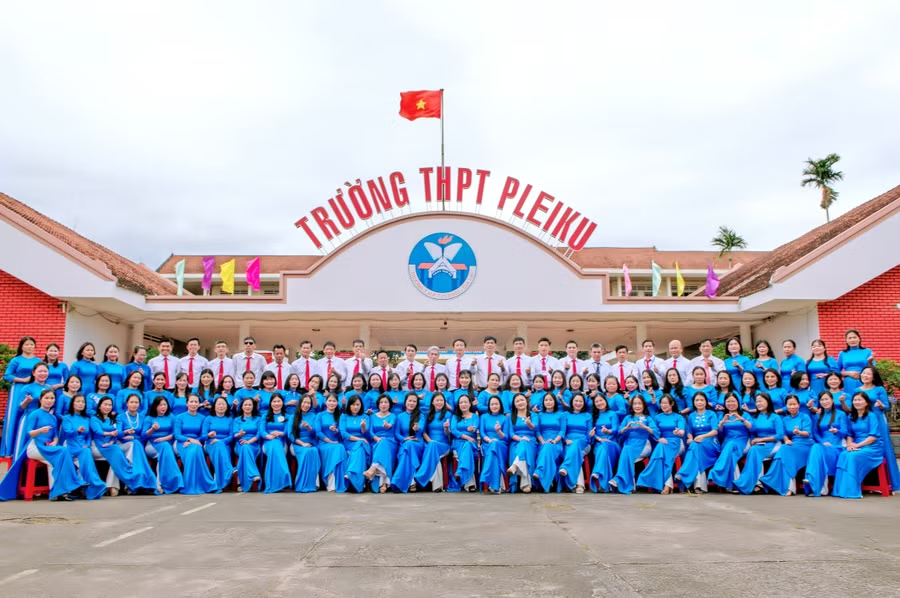
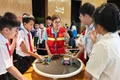
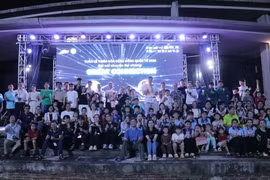
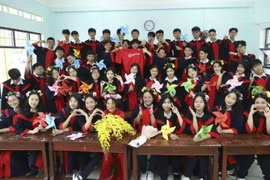
Students of Pleiku High School form a commemorative display to mark the school's 50th anniversary (1975-2025). Photo: Thanh Sáng
Beginnings from a historic autumn
In June 1975, as the nation celebrated reunification, the first decisions to restore and rebuild the education sector in southern Vietnam were put into action. Following directives from the Party Central Committee Secretariat, the Gia Lai - Kon Tum Department of Education began reorganizing the school network, separating upper secondary (grade 10-12) from lower secondary (grade 6-9).
Amid this steady, persistent progress, Pleiku Upper Secondary School (the predecessor of Pleiku High School) gradually took shape, marking a new beginning from that historic autumn exactly half a century ago.
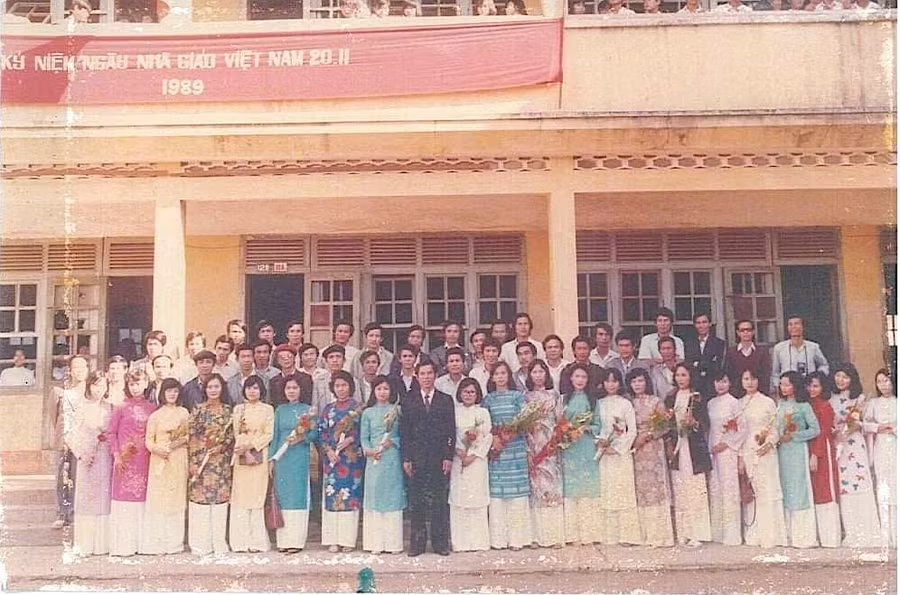
The school's teaching staff pose for a commemorative photo on Vietnamese Teachers' Day, 1989. Photo: Provided by source
In September of the same year, the school was officially established, taking over the facilities of Minh Đức Private Secondary School at 44 Lê Lợi Street, in the heart of Pleiku town.
In its early days, the school had only 34 staff members, including teachers and employees; the principal was also the sole member of the school's management board.
In the first academic year after liberation (1975-1976), the school had 22 classes with 1,020 students, along with three supplementary education classes.
At that time, students came from various lower secondary schools in Pleiku, such as Minh Đức, Bồ Đề, Plei Me, and Phạm Hồng Thái. Every day, they carried their books to school, full of dreams and ambitions, despite the many hardships of their learning environment.
Distinguished Teacher Trần Vẽ, former Secretary of the Pleiku High School Council and Head of the Geography Department, was among the school's first cohort of students. Fifty years have passed, yet the image of the old classrooms and the school itself remains vivid in the memory of this alumnus, now with graying hair.
Mr. Vẽ recalls: After liberation, the school's facilities, which had been inherited, saw little to no further investment. Teaching equipment was severely lacking, especially textbooks. Students had to share the few textbooks available in the library, painstakingly copying them into their notebooks to study gradually.
"Despite the difficulties, our enthusiasm for learning was immense. The teachers were also incredibly dedicated, sharing both the joys and hardships with their students," Mr. Vẽ shared.
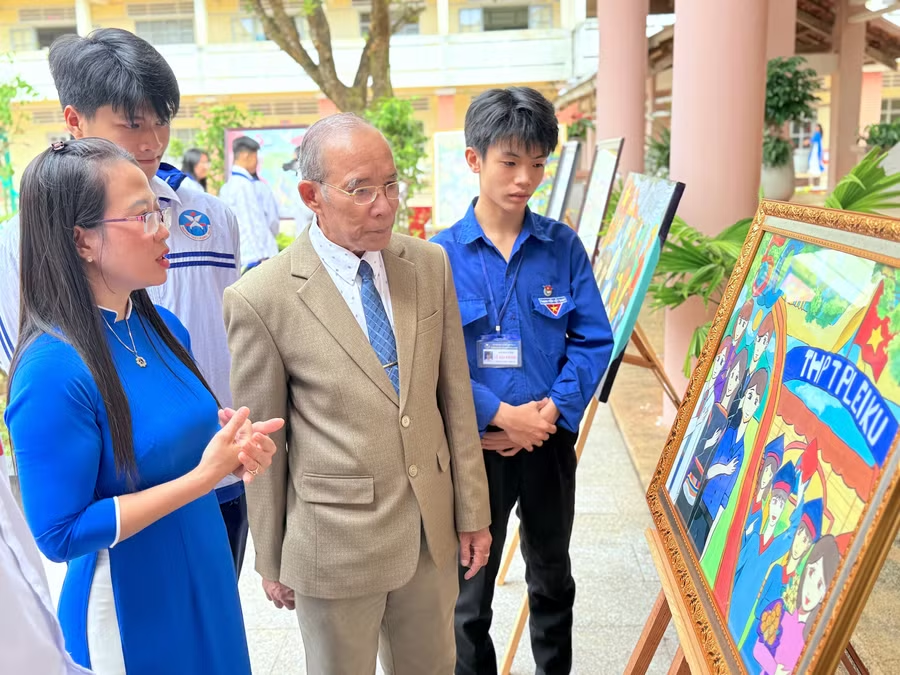
Distinguished Teacher Trần Vẽ—former Secretary of the Pleiku High School Council and Head of the Geography Department—returns to visit his alma mater on the occasion of its 50th anniversary. Photo: Mộc Trà
As Pleiku developed, the scale of the school continued to expand. In the 1980-1981 academic year, the provincial People's Committee decided to establish Pleiku Upper Secondary School No. 2 by splitting it from the original school.
From then on, Pleiku town had two upper secondary schools: Pleiku Upper Secondary School No. 1 and No. 2. By the 1990-1991 academic year, the two schools were merged again under the unified name Pleiku Upper Secondary School.
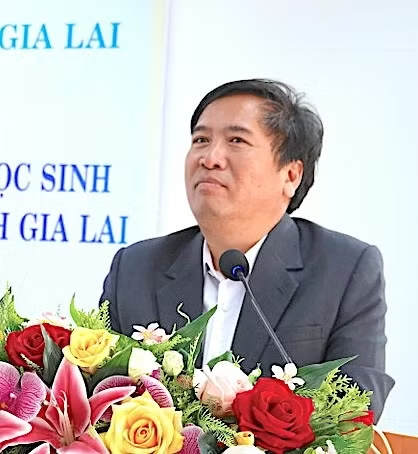
As an alumnus from 1981-1984, Mr. Nguyễn Đình Trung—former Principal of Pleiku High School (2018-2024)—reminisces with emotion about his school days.
Mr. Trung recalls: "Back then, Gia Lai - Kon Tum was the second largest province in the country, yet there were only four upper secondary schools, located in Pleiku, Kon Tum, An Khê, and Ayun Pa. I came from Chư Prông, carrying my clothes and books to the city to study.
For students from rural districts like us, attending upper secondary school was no easy feat. So, no matter how tough it was, I always tried my best to overcome the challenges. To this day, I still remember every seat, every teacher's voice in those small but warm classrooms.
Every word of guidance and encouragement from our teachers was a great motivation, inspiring us to strive for academic success and personal growth," Mr. Trung expressed.
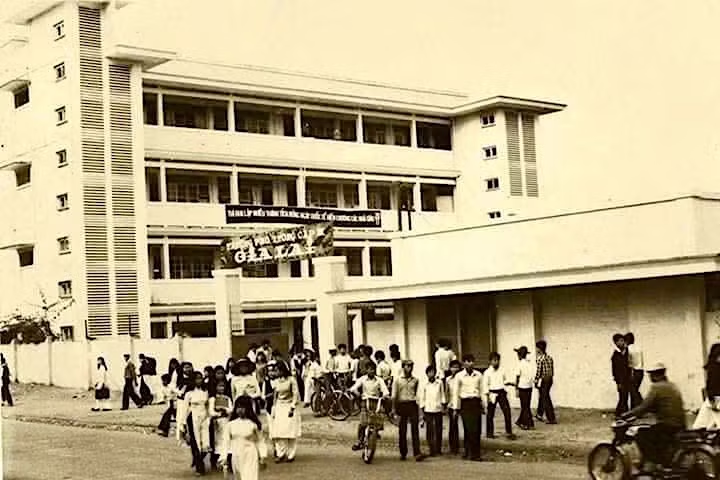
Pleiku Upper Secondary School No. 1. Photo: Provided by source
Sharing similar sentiments, Distinguished Physician Nguyễn Văn Vinh (58), former Deputy Director of Military-Civilian Hospital 16, reminisced: "From Hà Tam (An Khê), I passed the entrance exam and attended Pleiku Upper Secondary School No. 1 from 1982-1985. At that time, students from rural schools had not been exposed to English, so it became a real challenge for me at the school.
Undeterred, I sought out Ms. Giáng Hương, the English teacher, and asked her for extra tutoring. I attended regular classes during the day and diligently learned new vocabulary at night. Gradually, from knowing no English, I managed to pass the exams through sheer determination."
His three years at the school left Mr. Vinh with many fond memories. There, he found dedicated teachers and friends who were always willing to share difficulties and support each other in their studies.
For him, the old school not only provided knowledge but also taught him resilience and the belief that, regardless of one's starting point, as long as you don't give up, the road ahead will always be open.
50 Years of nurturing knowledge and character
Entering a new era as Pleiku was upgraded from a town to a city, local education faced greater opportunities and higher demands. Recognizing the school's growth, the Gia Lai Provincial People's Committee decided to relocate Pleiku Upper Secondary School from 44 Lê Lợi to a new campus at 90 Tô Vĩnh Diện (now 163 Tô Vĩnh Diện, Pleiku Ward), starting from the 2001-2002 academic year.
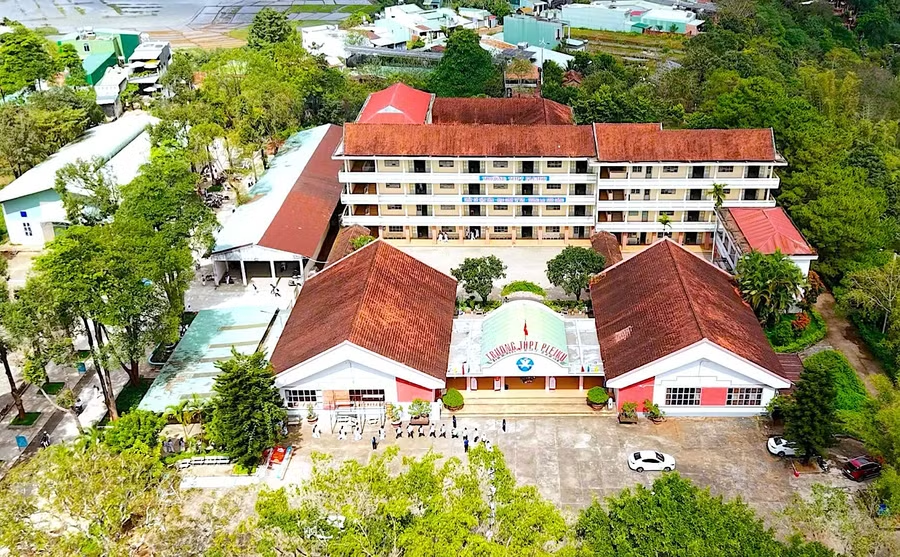
Pleiku High School is located at 163 Tô Vĩnh Diện (Pleiku Ward, Gia Lai Province) on a 3.2-hectare campus. Photo: Thanh Sáng
The new school was built to modern standards, with 30 classrooms and specialized rooms, situated on a 3.2-hectare site, meeting both teaching requirements and the national standards for upper secondary schools at the time.
Building on this foundation and the efforts of teachers and students, by 2013, Pleiku Upper Secondary School became the first in the province to achieve national standards for high schools.
From the 2015-2016 academic year, the school was officially renamed Pleiku High School and has maintained this name ever since. Its facilities have continued to be upgraded to meet the demands of teaching and learning in the new era.
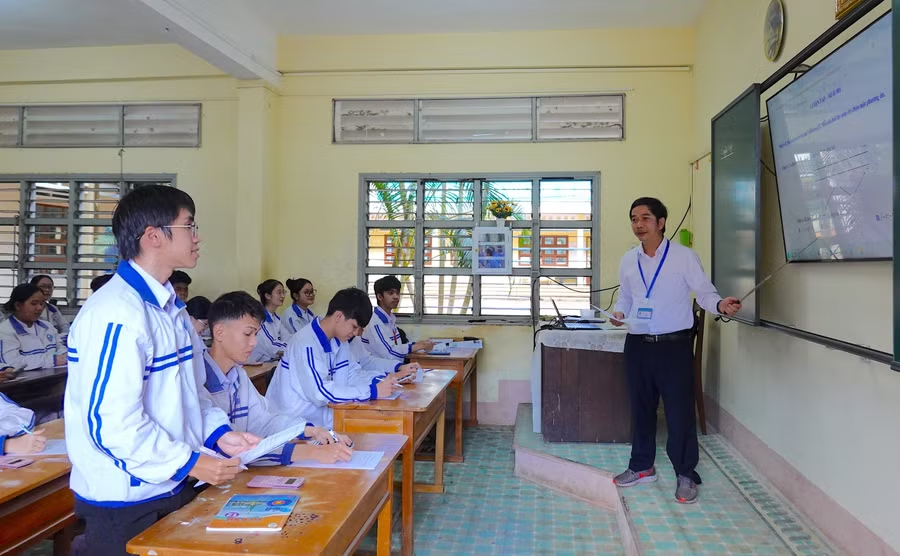
All classrooms are equipped with modern facilities, meeting teaching and learning requirements. Photo: Mộc Trà
According to Ms. Nguyễn Thị Đông Hải, Party Cell Secretary and Principal of Pleiku High School, all classrooms are now equipped with cameras; each room has a 55-65 inch TV with internet connectivity to support teaching and learning. The school has seven subject-specific classrooms, a multi-purpose hall, an administrative building, a library, a tradition room, online learning/conference rooms, playgrounds, and sports fields.
The school's scale, staff, and student body have also grown steadily. Currently, the school has 101 administrators, teachers, and staff—all meeting or exceeding professional standards. In the 2025-2026 academic year, the school will have 44 classes with 2,079 students.
"Over 50 years of development, Pleiku High School has achieved many accomplishments in education. The school is also a model in the ' Good Teaching - Good Learning' movement; it has been awarded the First, Second, and Third Class Labor Orders by the State, along with many other prestigious honors," Ms. Hải shared.
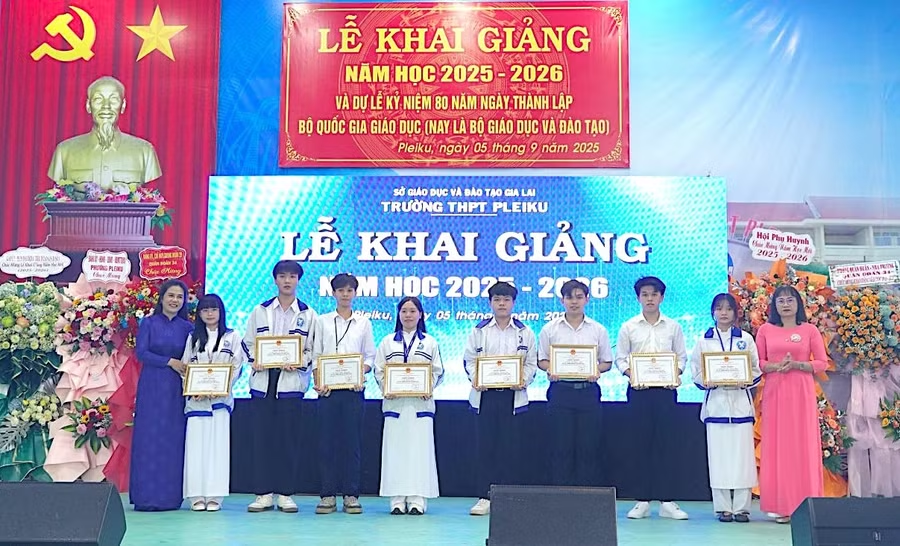
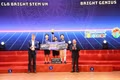
Ms. Nguyễn Thị Đông Hải—Party Cell Secretary and Principal (far left)—presents awards to students at the 2025-2026 school year opening ceremony. Photo: Provided by source
In addition to improving overall education quality, Pleiku High School has also excelled in nurturing gifted students. The school consistently ranks among the top high schools in the province for graduation exam results (in the 2024-2025 academic year, it achieved a 100% graduation rate, with 107 students scoring 9-10 points).
In some years, the school has led the province in training excellent students; many have become valedictorians and gone on to study at top universities nationwide.
With the trend of educational innovation and rapid technological development, the school actively fosters academic competitions, scientific research, and creativity among students.
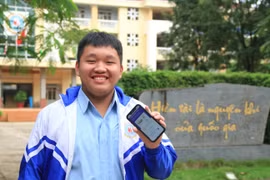
The OKRA CENTRAL HIGHLANDS project, "Pleiku Youth—Igniting Creativity," by Pleiku High School students, won third prize at the 7th "Students with Startup Ideas" competition. Photo: Provided by source
Recently, the school's students won third prize at the 7th "Students with Startup Ideas" competition in 2025 with the OKRA Central Highlands project, "Pleiku Youth—Igniting Creativity."
This project researched and developed products from okra—a local plant with significant potential in the Central Highlands region.
Trần Minh Khuê (class 12D2), a member of the award-winning team, shared: "My friends and I are very happy and proud to contribute to the school's achievements, especially on the occasion of its 50th anniversary.
This special milestone also reminds today's students of our responsibility to study and train hard to live up to the school's proud tradition."
Sharing this excitement, Mr. Nguyễn Quang Phú—Secretary of the School Council and Deputy Head of the Mathematics Department—said: "I am proud to be an alumnus and now a member of the Pleiku High School family.
As we enter a new chapter, my colleagues and I will strive even harder to build a progressive, humane, and creative educational environment, inspiring every student with a spirit of self-learning, a desire to live beautifully, and dreams for the future."
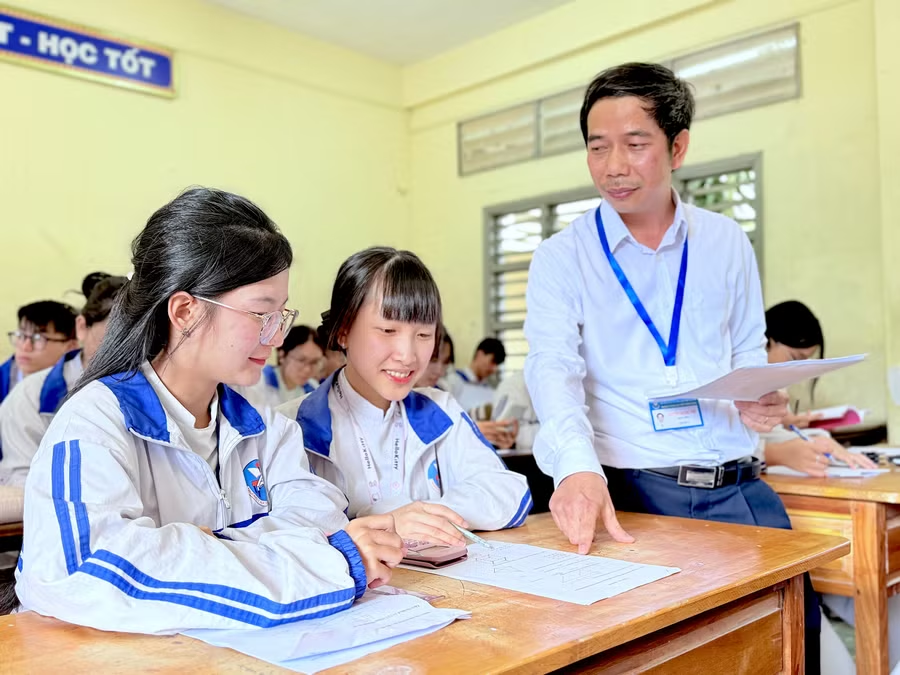
Mr. Nguyễn Quang Phú during a lesson. Photo: Mộc Trà
Reflecting on the school's proud journey, Principal Nguyễn Thị Đông Hải noted: The traditional values that define Pleiku High School are a love of learning, respect for teachers, gratitude for the past, solidarity, discipline, compassion, resilience, dynamism, creativity, and tireless dedication.
Thanks to these values, over 50 years of development, the school has become one of the province's most reputable educational institutions, making significant contributions to training high-quality human resources locally.
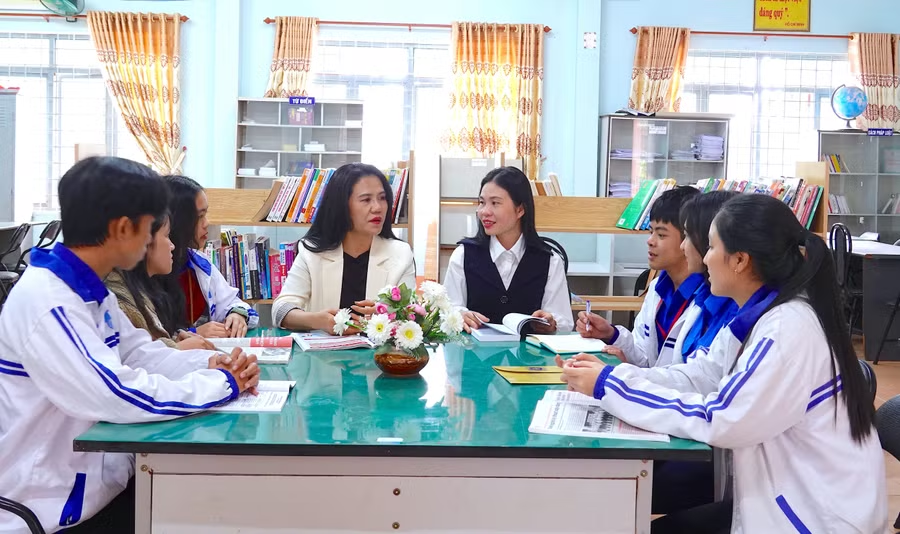
Ms. Nguyễn Thị Đông Hải (fourth from left), Principal of Pleiku High School, provides career guidance to students. Photo: Mộc Trà
Entering the "era of Vietnam's rise," education continues to play a pivotal role in the nation's sustainable development. Building on its affirmed values, the school continues to innovate teaching methods to develop students' competencies, promote IT application, personalize learning programs, and gradually adopt advanced and international educational models.
"With a broad vision, Pleiku High School aims to train well-rounded students: ethical, knowledgeable, and resilient; proficient in foreign languages and IT, ready for international integration; responsible, compassionate, and committed to community service. These qualities will equip our students to become confident, ambitious global citizens," Ms. Hải affirmed.
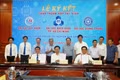
The management, teaching, and staff team of Pleiku High School for the 2025-2026 academic year. Photo: Provided by source
Looking back over 50 years, Pleiku High School has not only grown alongside the transformation of Gia Lai but has also established itself through a tradition of academic excellence, unity, and creativity—instilling pride in every generation associated with its name.
Photo: Mộc Trà
Pleiku High School is among the few high schools established immediately after the country's complete liberation. Over 50 years of construction and development, the school has affirmed its position and reputation.
With a tradition of solidarity, a wealth of achievements, and a desire to contribute, the Department of Education and Training believes and expects that in the coming time, the school's staff will excellently fulfill the tasks entrusted by the Party and State, deserving to be a trusted educational institution and contributing to meeting the demand for high-quality human resources in the new era.
Deputy Director of the Department of Education and Training TRẦN BÁ CÔNG
For more than a decade, Trần Duy Nhất and Võ Thanh Hưng have remained committed to voluntary blood donation, each giving blood more than 30 times in an effort to save lives and encourage others to contribute.
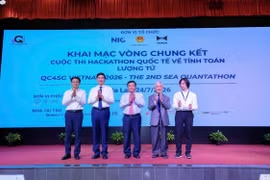
The International Hackathon on Quantum Computing for Social Good (QC4SG 2026) opened on July 24 at the International Center for Interdisciplinary Science and Education (ICISE), bringing together young researchers, scientists and technology entrepreneurs to develop solutions for challenges.
Hundreds of residents, students and science enthusiasts attended two free public lectures on astronomy and space at the Center for Science Discovery and Innovation in Quy Nhon Nam Ward, Gia Lai Province, on Saturday as part of the 2026 International Community Astronomy Week.
A free community summer program in Gia Lai is providing young people with practical opportunities to develop physical fitness, creative thinking and digital skills through classes in Vovinam martial arts, graphic design and artificial intelligence applications.
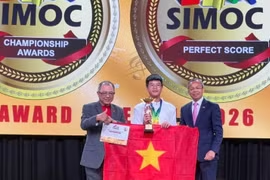
Two students from Vietnam's Gia Lai province secured top honors at the Singapore International Mathematical Olympiad Challenge (SIMOC) 2026, with one earning a gold medal and one of the competition's highest overall distinctions.
VCCA 2026, Control Automation Digital Transformation, technology transfer, smart automation, artificial intelligence, AI, Internet of Things, IoT, robotics, smart manufacturing, digital transformation, innovation.
Gia Lai will host a week-long series of international quantum technology events from July 23 to 29 under the Gia Lai Quantum Year programme, bringing together scientists, businesses and innovators from Vietnam and to strengthen collaboration and accelerate the application of quantum technologies.
Artificial intelligence may be transforming education and everyday life, but understanding the mathematics behind the technology is essential to using it effectively, educators and students at Vietnam’s 2026 Mathematics Summer School say.
Summer jobs are giving students in Gia Lai more than an opportunity to earn money for the new school year. For some, working during the school break has become a valuable introduction to adult responsibilities, practical skills and potential career paths.
Pleiku Traditional Medicine and Rehabilitation Hospital is strengthening its treatment capacity through specialist training and technology transfer from higher-level hospitals, allowing more patients to access advanced traditional medicine and rehabilitation services locally.
A mother and calf killer whale pair has been spotted hunting close to the shore off Vung Boi in An Luong Commune, Gia Lai Province, attracting large numbers of residents, tourists and wildlife enthusiasts over the past two days.
Doctors at Hoang Anh Gia Lai University of Medicine and Pharmacy Hospital have successfully performed the province's first Frey procedure to treat a patient with chronic pancreatitis caused by pancreatic duct stones, marking a milestone in the local adoption of advanced surgical techniques.
The International Community Astronomy Week 2026 will be held from July 24 to 26 at the Center for Science Discovery and Innovation in Quy Nhon Nam Ward, Gia Lai Province, under the theme "Gateway to the Stars".
Võ Đăng Tuệ, a Class 12A2 student at Chi Lăng High School in Gia Lai province, has emerged as the top scorer in Vietnam’s national high school graduation examination for the A0T subject group, crediting his achievement to a study approach focused on deep understanding.
Several students in Gia Lai province delivered outstanding performances in Vietnam’s 2026 National High School Graduation Exam, earning top provincial honors while highlighting the importance of disciplined study, perseverance and effective learning strategies.
Winning a silver medal at the 2026 European Physics Olympiad (EuPhO), Nguyễn Vũ Mạnh Khang, a student at Lê Quý Đôn High School for the Gifted in Quy Nhơn Ward, Gia Lai Province, helped strengthen Vietnam's performance at one of Europe's leading international science competitions.
Families of Jrai artisans performed traditional gong music and xoang dances on Saturday as a special "Weekend Gong Show - Enjoy & Experience" celebrated the 25th anniversary of Vietnamese Family Day while highlighting the role of households in preserving indigenous cultural heritage.
Community initiatives that exchange recyclable waste for environmentally friendly gifts are encouraging more households in Bình Định Province to adopt waste sorting at the source, helping promote recycling and strengthen environmental awareness across local communities.
Women’s Unions across Gia Lai province are strengthening long-term support programs for disadvantaged children, orphans, and vulnerable youth through sustained sponsorship initiatives, financial assistance, and community-based care during the Action Month for Children 2026.
Gia Lai authorities have intensified food safety inspections across the province as officials seek to strengthen public health protections and promote a safe, trustworthy image for visitors during the peak summer tourism season.
The central province of Gia Lai is advancing the conservation of biological genetic resources through digital technology and modern molecular biology techniques, aiming to improve biodiversity protection and support future socio-economic development.
Entrusted capital from the local budget currently accounts for 12.4% of the total capital managed by the Gia Lai Provincial Branch of the Vietnam Bank for Social Policies (VBSP), helping expand policy lending and support local development priorities.
ICISE has been ranked sixth in Vietnam in the field of Physical Sciences in the latest Nature Index assessment, covering the period from February 1, 2025, to January 31, 2026.
Winning first prize at the 2025–2026 Provincial Excellent Homeroom Teacher Contest for lower secondary schools marks another milestone in the career of Trần Thị Mỹ Long, a Literature teacher at Lê Hồng Phong Secondary School in Quy Nhơn Ward.