As Storm No. 13 passed in late November, residents in multiple communes and wards had little time to recover before new, severe flooding submerged wide areas.
Alongside military forces, police, and local authorities, volunteer women mobilized significant relief efforts, transporting food, water and essential supplies into the hardest-hit zones.
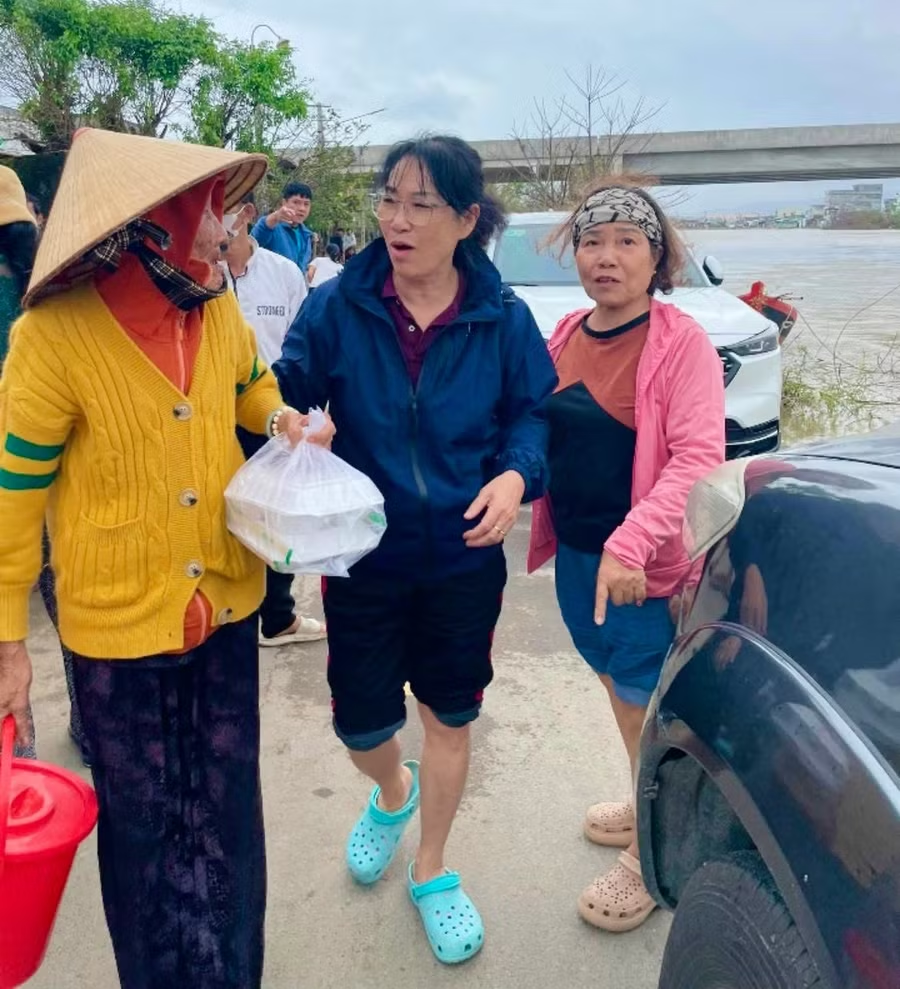
Among them was Trần Thị Kim Vân, 65, from Quy Nhơn Ward, who began calling for donations even before repairing her own storm-damaged home. As waters rose to mid-car height, she coordinated with dozens of volunteer groups, gathering several dozen tons of goods within days.
She organized 3,000 hot meals and hundreds of boxes of instant noodles and bottled water for isolated residents, and ordered 3,000 survival blankets. For ten days, she delivered aid by day and sorted supplies by night, using her family’s hotel and a borrowed youth center as temporary warehouses.
Another major effort was led by Phùng Thị Thanh Miền, 43, of Quy Nhơn Nam Ward, known locally as the head of the “relief truck team.” Returning overnight from farming work in the province’s western communes, she and her husband began transporting nearly 60 tons of aid from November 19 to affected areas in Gia Lai and Đắk Lắk.
Despite repeated attempts to pause due to overload and unfinished farm work, she continued after seeing families who had lost everything waiting in the rain. Drawing on her transport network, she mobilized eight trucks, guided convoys into slow-draining hamlets, and provided real-time updates on needs and passable routes.
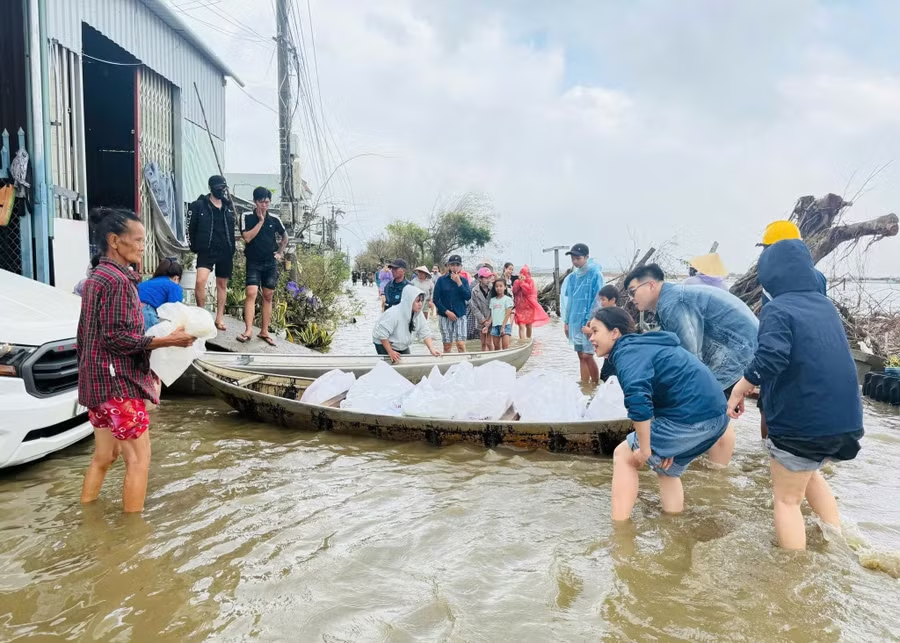
Joining the effort was Hồ Minh Úc, 38, from Hoài Nhơn Nam Ward, who both mobilized support and personally drove aid convoys. With a background in communications, she coordinated efficiently with authorities and donors to ensure transparent, timely distribution.
Many women involved had just recovered from illness or left their families temporarily to join the effort. Some were moved to tears as they encountered collapsed homes or elderly residents waiting for a warm meal. Their work brought essential support and renewed hope to communities facing severe losses.
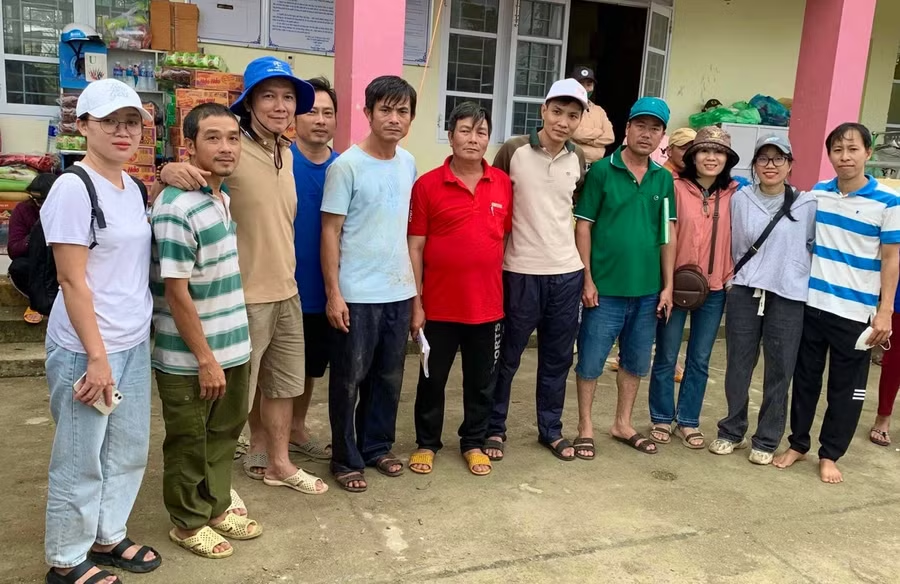
Though the floodwaters will eventually recede and reconstruction will begin, the image of these women leading convoys through rushing water, sorting tons of supplies through sleepless nights, and comforting survivors remains a lasting testament to compassion and resilience in disaster-hit regions.
The water kept surging in, rising as if to swallow everything...
In all my years, I have never seen the water rise so fiercely—almost reaching the roof, nearly two meters high. I was alone, and my house had no attic. When the water reached my waist, all I could do was huddle on a small chair in the freezing water, clutching the edge of the table, my heart pounding wildly.
The whole neighborhood was pitch dark from the power outage, and outside, the water kept surging in, rising as if to swallow everything. I was terrified—so scared I could hardly breathe. Fortunately, a neighbor waded over in time, carried me to their house, and brought me up to their mezzanine for safety.
In that vast, dark night, cries for help echoed everywhere, mingling with the sound of rescue boats circling the alleys. The house where I took shelter had two elderly people; five adults had only a tiny window for escape, and the tin roof rattled violently in the wind and rain.
We sat on the mezzanine, looking down as rescue boats prioritized evacuating families without attics first. Those of us with attics, like where I was, were told to stay put; they brought us water and food and promised to return if the water rose further. Only then did I feel somewhat reassured, praying the water would not rise any more.
At my age, death is perhaps not as frightening as it once was, but in that life-or-death moment, I felt for the whole neighborhood. After the flood, soldiers waded through the mud, clearing piles of debris and fallen trees to reopen the roads.
Then, hearing that the water might rise again, my heart sank as if the sky was falling. Luckily, the water only rose a little before receding... but the terror has never left me.
Nguyễn Thị Mùi (83 years old; Quy Nhơn Đông Ward)